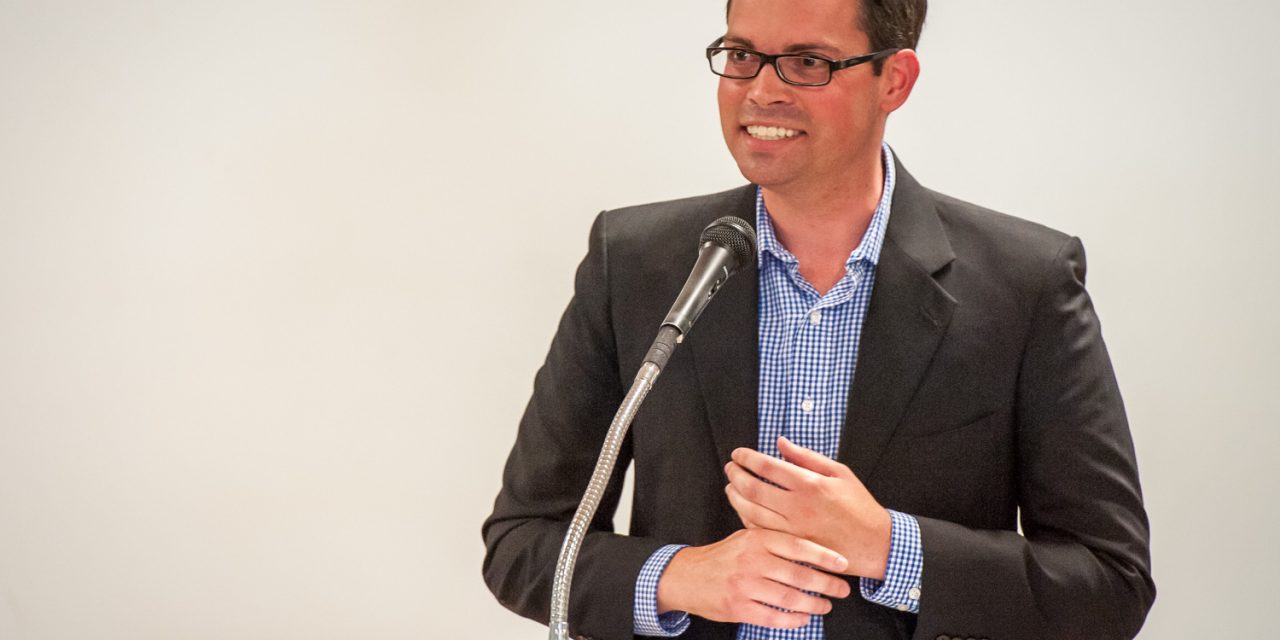
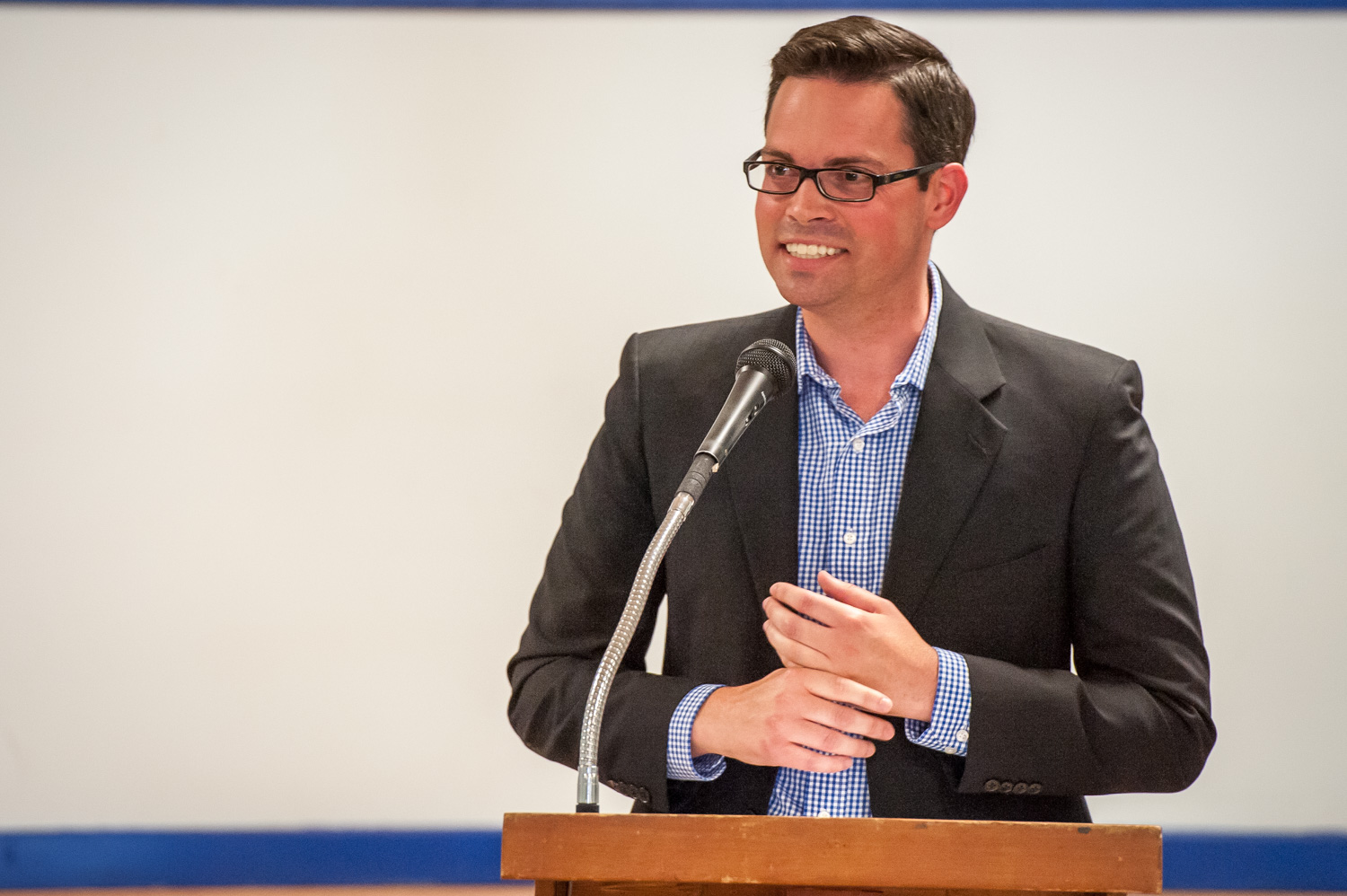
Marshall Neufeld is the Conservative candidate in South Okanagan-West Kootenay. His team was putting up campaign signs shortly after the writ for the federal election was dropped on Sunday. (Richard McGuire photo)
Federal election signs are already springing up in South Okanagan-West Kootenay (SOWK) in what will be the longest election campaign since the time of Sir John A. Macdonald.
The 11-week campaign leading to an Oct. 19 election was launched Sunday morning when Prime Minister Stephen Harper visited Governor General David Johnston.
There were signs of an early campaign last week when Okanagan-Coquihalla MP Dan Albas visited Osoyoos on Thursday to announce grants under the Canada 150 Community Infrastructure Program – money for a trail north of Osoyoos and for improvements to the International Curling Club – before heading off to Grand Forks for another announcement.
In total, on Thursday alone, the Conservative government made more than $1 billion in funding announcements, according to a tally by Sun Media journalist David Akin.
First to roll out local campaign signs was Conservative candidate Marshall Neufeld. His sign crew was busy in Penticton on Monday and Okanagan Falls on Sunday. Signs would also be going up shortly in Osoyoos and his sign crew will reach the Kootenays in the next few days, he said.
NDP candidate Richard (Dick) Cannings said his signs arrived last week and they are also starting to go up.
“The signs will go up gradually through the campaign,” said Cannings. “We don’t want to clutter the whole riding with signs for three months. We just want to get a few up now because the Conservatives have already put up big signs, so we want to show that we’re ready.”
Liberal candidate Connie Denesiuk said the lengthy election campaign means “the sea of signs is going to grow old very quickly.”
Canadians will grow weary of the long campaign, she said.
The Green Party has not yet nominated a candidate in SOWK.
Neufeld believes the 11-week campaign will benefit Canadians because they will have plenty of time to think about the issues and compare the choices.
Cannings, however, thinks the Conservatives called the early election because they have more money in the bank and the longer writ period increases the spending limits.
“Stephen Harper is very good at gaming the system,” said Cannings. “He’s not above putting a $125 million tax bill on the Canadian people so that his party can spend more money than ours. People see through that.”
Elections Canada says a usual 37-day campaign costs $375 million, but it doesn’t follow that costs for a longer campaign increase exactly proportionately. Taxpayers rebate parties 50 per cent for every dollar spent and the rebate to local candidates is 60 cents on the dollar.
Denesiuk thinks Harper perceived an advantage in the early election call, but she thinks the move will backfire as Canadians get weary with the campaign.
“I think Mr. Harper may have underestimated the intelligence of Canadians,” she said.
All three candidates, however, agree the official election call won’t make a big difference to their own lives since they’ve already been campaigning virtually full time in recent months.
Neufeld said his campaign until now has mainly been about door knocking.
“I’ve already surpassed 4,000 doors within the riding and I hope to do a lot more in the next 11 weeks,” he said.
Denesiuk, who was with Liberal Leader Justin Trudeau at his campaign launch in Vancouver during the Vancouver Pride Parade, said she already has a campaign office open in Trail and she plans to open another in Penticton later this month.
Cannings said he plans to continue knocking on doors.
“I’ll just keep talking to as many people as possible and getting the word out that if you want change, change is going to be happening through the NDP this time,” he said.
Asked what they see as the key ballot question in this election, Cannings and Denesiuk both said the economy, while Neufeld said it will be about leadership.
Neufeld said NDP Leader Thomas Mulcair would put Canada back into deficit with his “tax-and-spend” economic plan that so far has not been costed. He also pointed out that Mulcair is opposed to the fight against ISIS and to helping Ukraine against Russian aggression.
“The kind of statements he’s made on foreign policy I think are reckless positions and likewise on the economy,” said Neufeld. “So between Thomas Mulcair and Stephen Harper, there’s a great contrast. I’m proud to have (Harper) as our leader of this several trillion dollar economy and leading our foreign policy.”
Cannings, however, said the Canadian economy is faltering under the Conservatives.
“Then they have the gall to say you have to vote for us to maintain the status quo of the faltering economy,” Cannings said. “People are wondering why the Canadian economy is doing so badly when the American economy is starting to boom and it’s because of Conservative mismanagement. They are not the fiscal managers that they claim to be and we think we’ve got better ideas.”
Denesiuk points out that Canada has had eight straight deficits under the Conservatives after the Liberals balanced budgets and used the surplus to pay off debt.
“We’ve gone backwards during the Harper decade and we need to get Canada back on track economically,” Denesiuk said.
RICHARD McGUIRE
Osoyoos Times
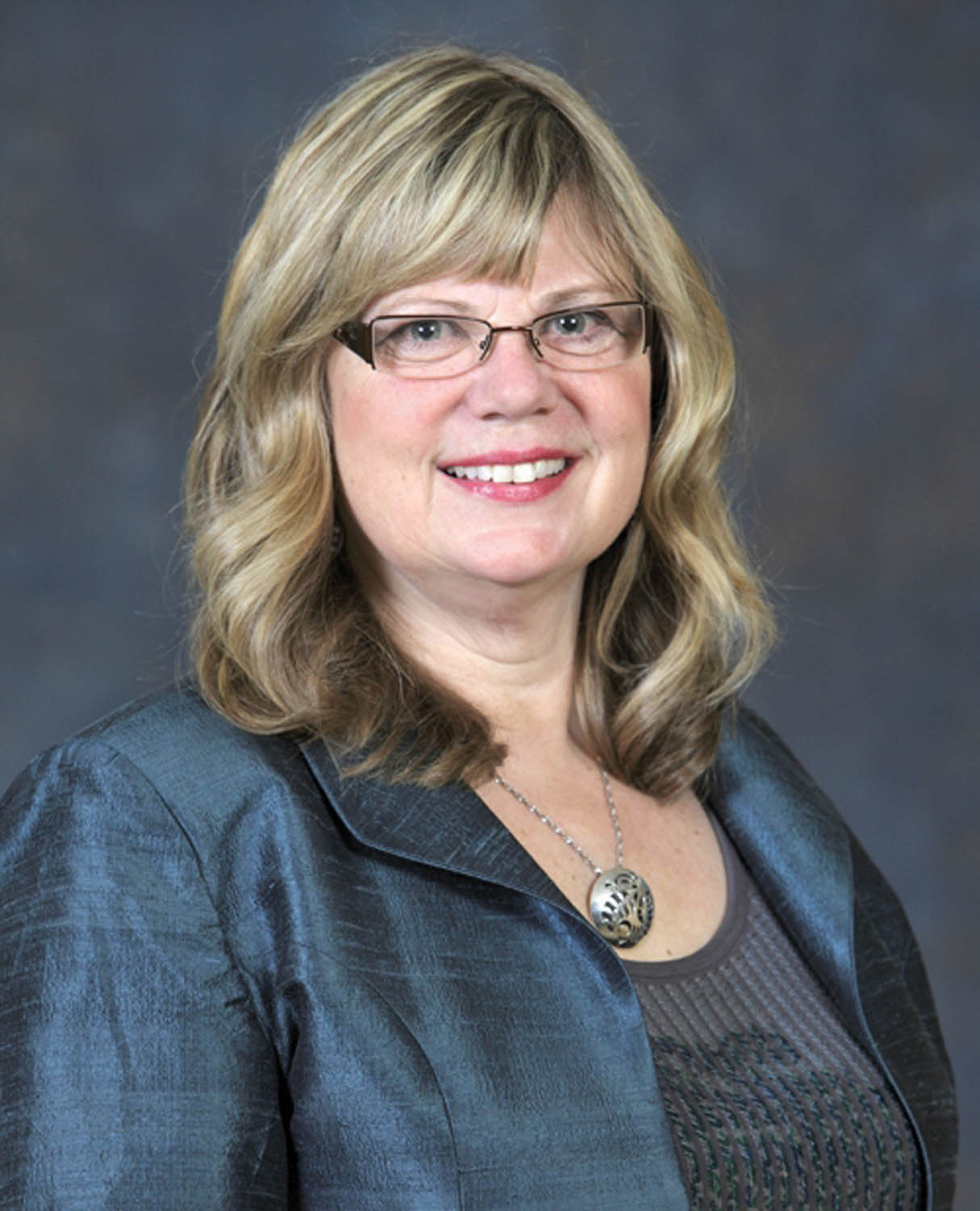
Liberal candidate Connie Denesiuk. (Photo supplied)

NDP candidate Richard Cannings (Photo supplied)