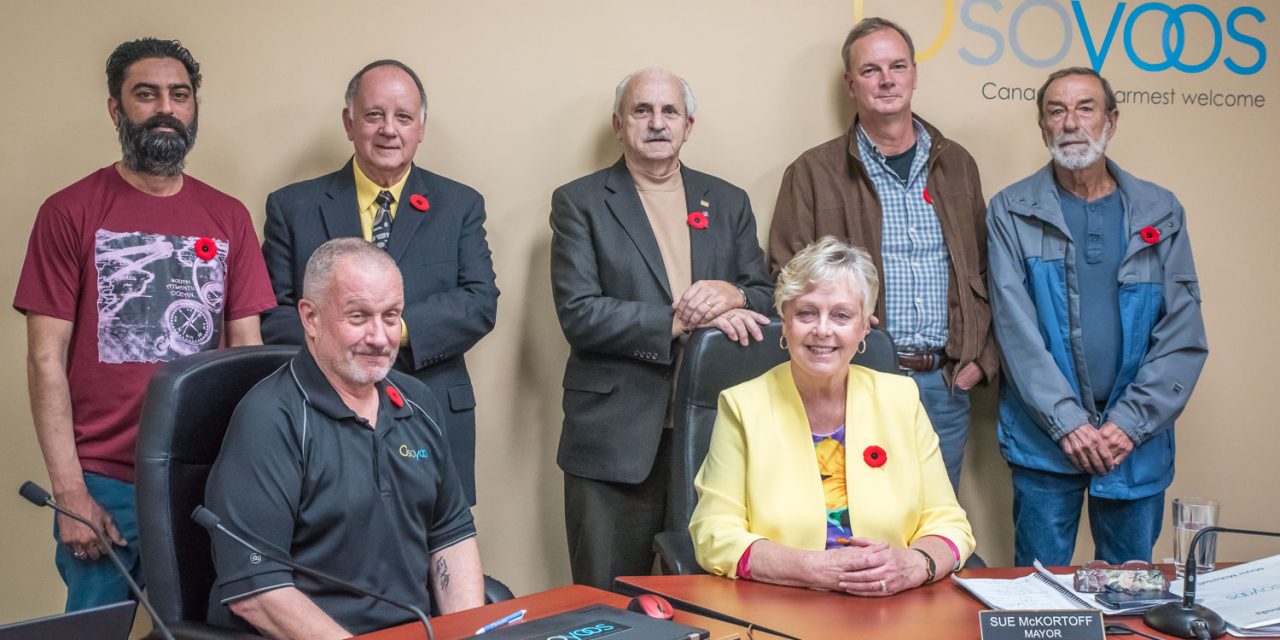
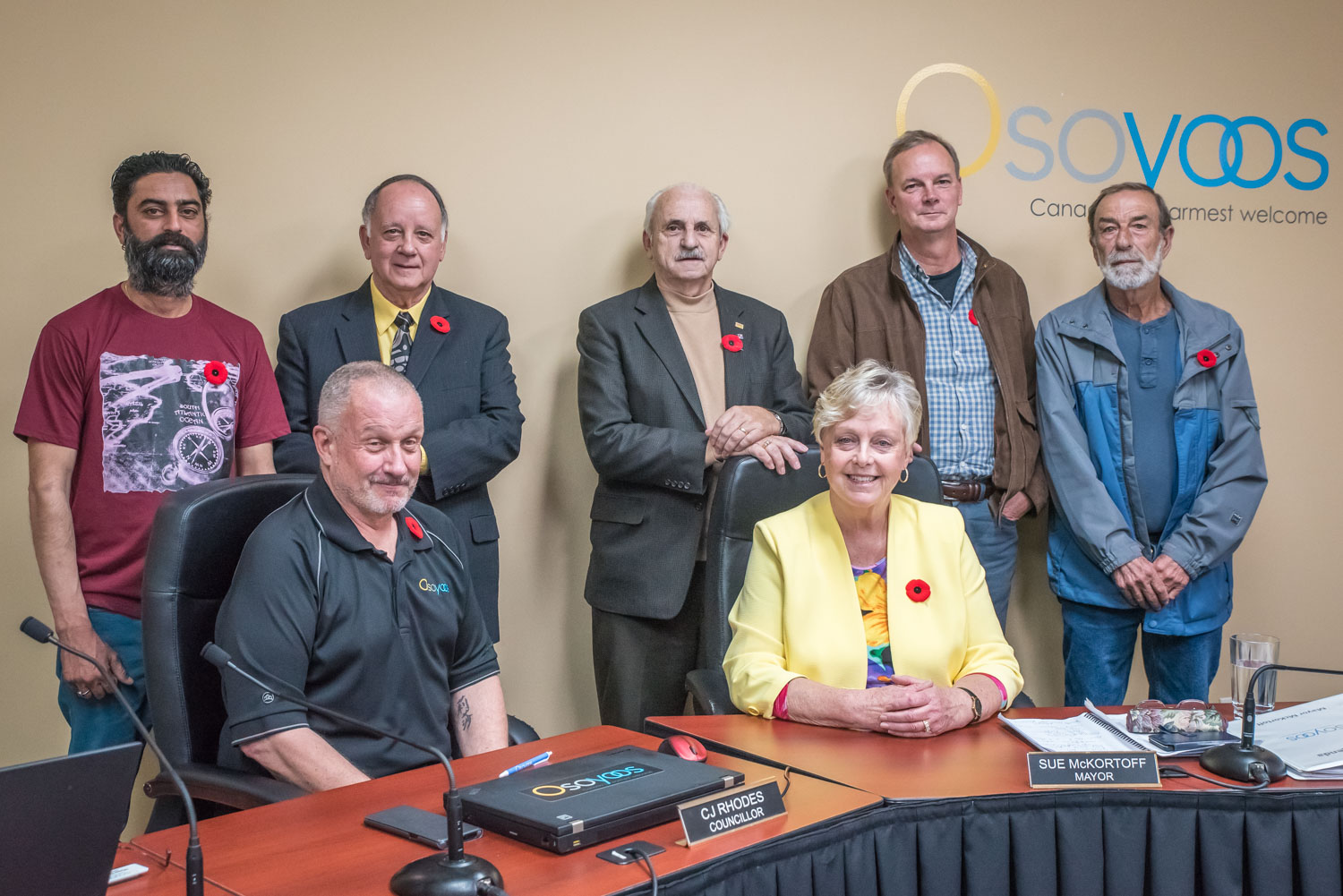
Osoyoos town council after being sworn in on Nov. 5, 2018. Water councillor Kuldeep Dhaliwal (left) has been disqualified from the position after missing four consecutive meetings. Now council is considering eliminating it altogether. (File photo)
By Vanessa Broadbent
Osoyoos Times
Osoyoos is down a water councillor, and town council is looking to eleminate the position altogether.
Kuldeep Dhaliwal, elected by acclamation in 2018 along with Claude Moreira, has been disqualified from the position for missing too many meetings, director of corporate services Janette Van Vianen told council on Monday.
To remain on council, members cannot miss more than four consecutive meetings, and water councillors are required to attend one meeting each month.
Dhaliwal last attended a meeting on March 4, Van Vianen said.
A byelection will be held to fill the position. Election dates will be brought to council at the July 15 meeting.
In the same report to council, Van Vianen said the order in council (a piece of legislation enacted by the provincial government) which established the water councillor position in 1989 is “outdated in every way.”
She presented five options including asking the province to make amendments to the order in council, appointing water councillors instead of electing them, incorporating rural water users and potentially Area A into town boundaries and creating a district municipality, having no representation from water users, or requesting the regional district create a service area for water district users.
Town staff recommended council ask the regional district to create service areas, and eventually request the province eliminate the water councillor position, instead offering water to rural residents through an extraterritorial agreement with the RDOS.
• Read more: ALR sparks council debate
“In this scenario, the town would bill for water in the rural water district area and the users in that area will have representation through the Area A director,” Van Vianen explained.
Coun. C.J. Rhodes said although creating a district municipality is preferable, an agreement with the regional district is more practical.
“The RDOS service area request is probably the most appropriate way for us to go right now because really at the end of the day we don’t really have anything else that’s satisfactory that will get us to where we want to be with this.”
Water councillor Moreira shared opposition for removing the position from council.
“I can’t support actually any of these (options),” he said. “The rural area, water areas want representation.”
The most favourable course of action, he responded when asked by mayor Sue McKortoff, would be to ask the province to update the order-in-council.
“This could take years,” McKortoff said. “My concern is we need to deal with this. If we did go along with that, we’d have to have something in place before that happened.”
Council, however, has three years until another municipal election, Moreira pointed out.
Working with the regional district would not mean a lack of representation, CAO Barry Romanko said. Discussions would take place to decide whether the Area A director would represent rural water users or if they would be appointed.
With the exception of Moreira, council voted to direct town staff to send a letter to the RDOS asking them to consider creating a service area for water district users.