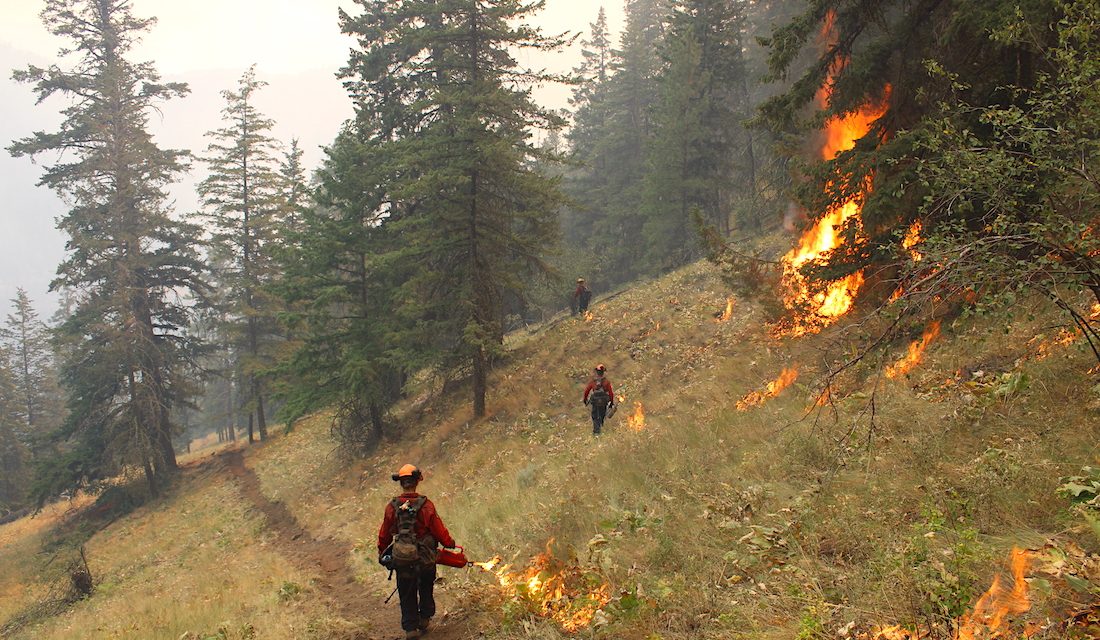
Monday saw fire crews working on guards on the northern flank of the Keremeos Creek wildfire as wind conditions have been more favourable over the weekend and should remain that way as a high pressure ridge moves in.
“It’s going on three days where we haven’t been massively challenged by wind. The last time we were was when the Olalla evacuation order was given,” Bryan Zandberg, B.C. Wildfire Service information officer said in reference to the windy conditions last Friday (Aug. 5). “Wind is the primary factor behind fire behaviour,” he added.
Olalla is “looking pretty good and stable around the area,” he said. He notes it’s a major improvement from late last week when the fire was jumping from one drainage to another, as the wind pushed the fire further and further towards Olalla. But he did caution: “We don’t have it 100 per cent contained, we’re not there yet.”
“Fire behaviour is increasing, and aggressive fire behaviour persists in the naturally free-burning areas of the fire where wind and slope align,” the BCWS assessed.
In its daily update today (July 8), the BC Wildfire Service (BCWS) said weekend weather conditions were favourable and progress has been steadily made on the 6,836 hectare fire. Although it is still categorized as ‘out of control’, “good strides are being made,” Zandberg added.
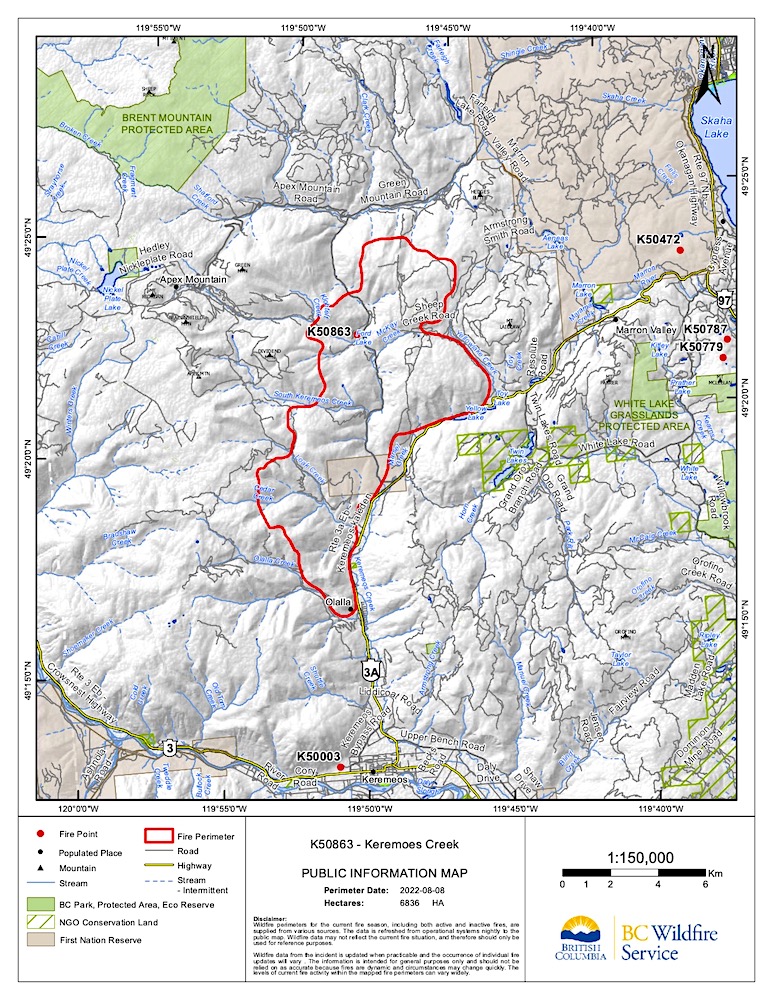
Fire crews comprise over 400 firefighters (structural and wildland), 16 medium and heavy helicopters and 43 pieces of heavy equipment including line locators, skidders, feller bunchers and lowbeds. “There are a lot of local operators helping out in putting in really good containment lines,” he said.
Joining the dots is what Zandberg says much of the operation is revolving around now as the crews work to join up the containment lines that criss-cross the varied and in many places, difficult terrain.
“We are continuing with planned ignitions today just trying to have solid lines of black all the way back to the fire,” Zandberg said. Zandberg also noted there has been a transition from front country focus with Hwy 3A and other areas getting quieter because there is no more fuel for the fire to get at.
“Really it’s ‘connect the dots’ now – we’ve got a lot of sections of guard that are connected where we’ve burnt off a lot of the fuel by hand and a little bit of air support with those controlled ignitions. We are continuing this now.”
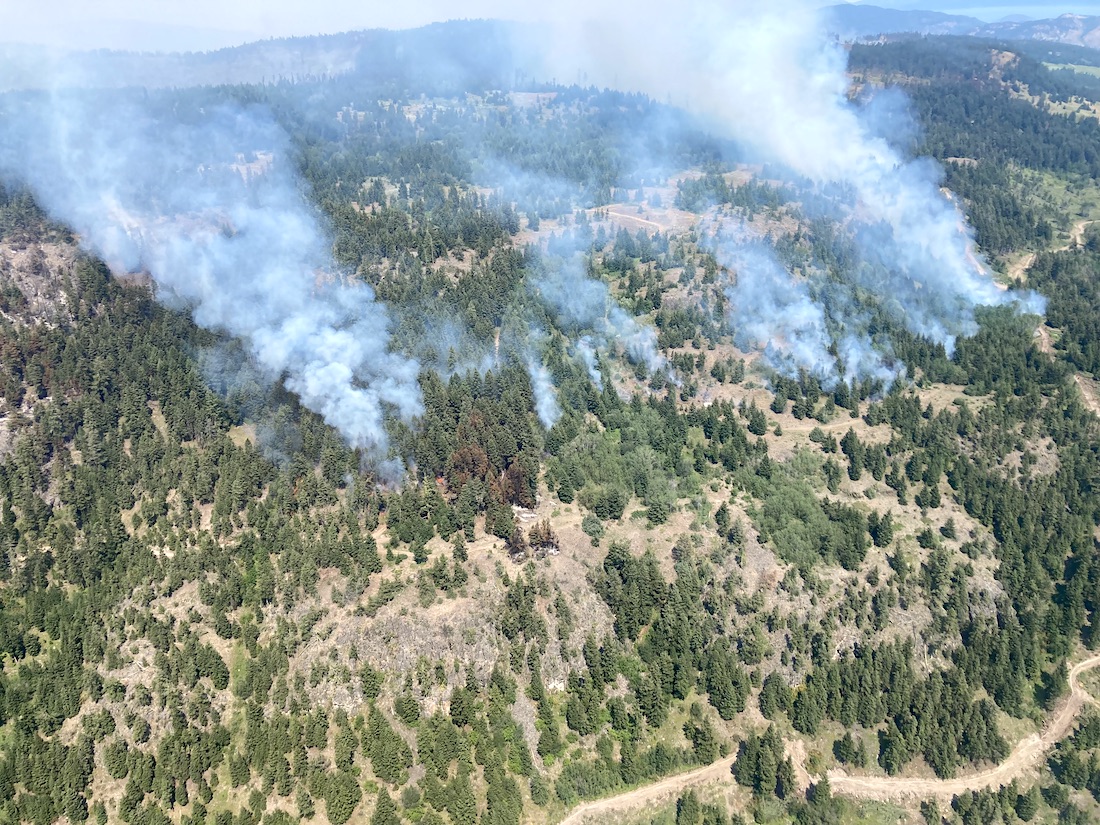
Small hand ignitions along Sheep Creek. BCWS photo
At Apex Mountain he said guards are being built as close to the fire as possible with secondary and tertiary contingency lines “to prevent the fire from ever making a run at Apex Mountain.”
This is some of the work being undertaken on Monday. He notes the difficulty in reaching some of that area: “Some of these deep valleys and steep topography and heavily forested areas between the fire and Apex Mountain Resort are hard to reach.”
This required a helicopter drop of a Rapattack team whose first job was to build a helipad to enable wildland firefighters to be extricated from the area if the fire took off.
“It’s a bit of a dicey area for us in there but we’ve got really good safety standards and protocols in place before we put our people into these places.
Fire crews coming off their night shifts also continue to report dangerous conditions during the night with rocks and debris including burning rolling logs coming down the mountainsides. In part, this is caused by downdrafts that occur at night Zandberg said.
When asked yet again why waterbombers have not been more fully utilized, Zanderberg said they have been utilized nearly five days ago to drop water and retardant to help cool an area where crews were on the ground and was getting particularly active.
“It’s not a magic wand for us. A bunch of waterbombers won’t put out a fire, you need a lot of other pieces especially boots on the ground and people actioning the fire,” including mop up which is very intensive hands-on work he said.
“They’re a good tool but they’re not the be-all-end-all,” he added.
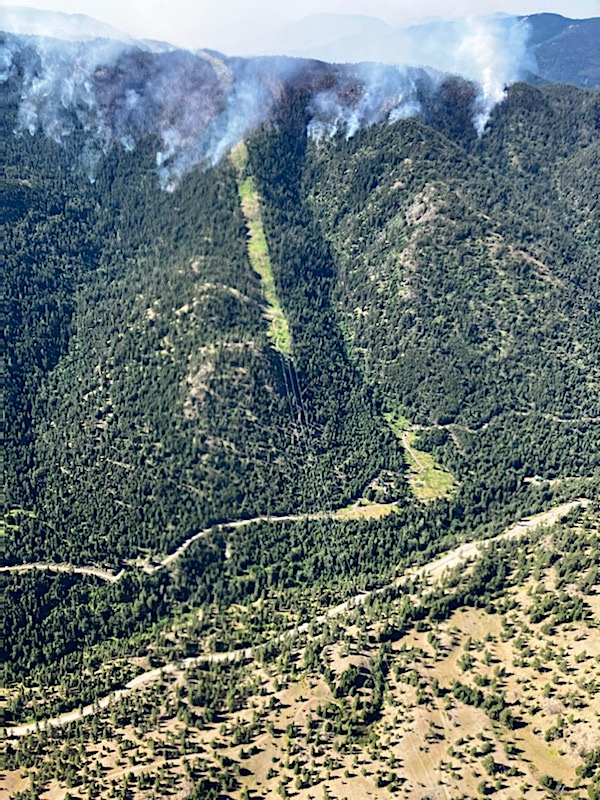
Green Mountain with Green Mountain Road below and machine guard.
The Regional District of Okanagan-Similkameen (RDOS) has also urged residents under Evacuation Orders to follow the instructions and leave their homes. Both RDOS and Zandberg believe the small number staying behind is fairly typical and so far has not caused any problems.
The bigger problem is residents who have left their homes showing up at roadblocks wanting to get back into their properties.
“I’ve seen people trying to get in and being very belligerent and it’s a draw down on the work that we’re trying to do, because of just handling these people. Please do comply and please understand we are empathetic with the people impacted and are doing the best job we can.”
A key objective today is to continue reducing impacts on the public in a timely fashion, the BCWS said. This requires completing mop-up operations in the wildland-urban interface to facilitate residents returning home in a safe manner.
“Crews continue to mop up the fire along Highway 3A corridor to facilitate the return of evacuees and the reopening of this travel corridor. We are working with MOTI (Ministry of Transportation and Infrastructure) to mitigate fire impacts and risks prior to re-opening roads.”