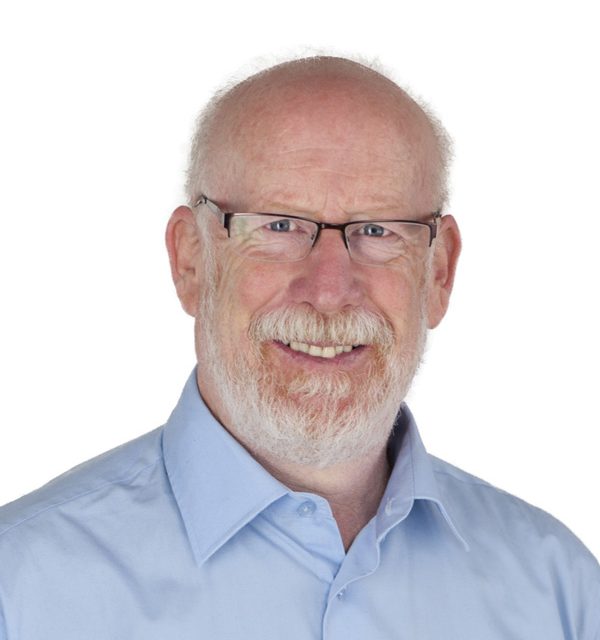
Richard Cannings, MP (Photo supplied)
Federal backbench MPs normally only get one kick at the can to bring a private member’s bill or motion forward for debate and a vote in each Parliament.
MP Richard Cannings has decided to use his one chance for a bill supporting the forestry industry in his South Okanagan-West Kootenay riding.
Cannings’ bill promotes the use of wood in federal infrastructure projects.
He picked this one over five other bills and motions he has tabled during the first two years of the 42nd Parliament.
Bill C-354 had its first hour of debate in the House of Commons on Nov. 27.
If passed, the bill would require the federal government to consider the use of wood in federal infrastructure projects, taking into account the associated costs and reductions in greenhouse gas emissions by using wood products.
“Wood technologies have come a long way, and as companies like Structurlam have shown us, we can build amazing structures with wood that are beautiful, environmentally friendly and cost competitive,” said Cannings. “Bill C-354 will help to further promote these advances and help to support forestry communities all across the country.”
Cannings expects the bill to come back for its second hour of debate in the first week of February. It would then go to a vote where it would either be sent to committee for study or would be defeated.
By choosing this bill, Cannings will not be able to bring his other bills and motions to a vote in this Parliament. Several of these, however, have been made redundant by circumstances.
These include bills to tighten a loophole in species at risk legislation and to amend the Navigation Protection Act for certain lakes and rivers in B.C.
He also had motions to establish a Department of Peace, require labeling of genetically modified foods and require the government to apologize to Canada’s British Home Children for past injustices. Those motions were originally introduced by Cannings’ predecessor, former MP Alex Atamanenko, and Cannings was encouraged to reintroduce them.
Bills must pass through three readings, committee review and a number of votes in the House of Commons and Senate. Motions merely express the will of the House and are not binding on the government.
A motion on British Home Children introduced by another MP was adopted unanimously by the House, making Cannings’ motion redundant.
Another MP introduced a bill to require labeling of genetically modified foods, but it was defeated.
Cannings acknowledged that the Ministry of Peace motion, though supported by some peace groups, had no hope of succeeding and would only have been to make a point in debate.
Cannings said the government was unprepared to support his bill to close a loophole in the Species at Risk Act that allowed governments to ignore timelines to make a decision on listing species at risk.
This loophole allowed the Conservative government of Stephen Harper to avoid making any decisions between 2011 and 2015 about the listing of 82 species that were assessed as needing protection.
Cannings said the current Liberal government agreed to enact a policy requiring the government to make a decision on listing species within three years.
While this timeframe was longer than he wanted, and it’s not written into law, it provided a partial victory, he said.
He acknowledged that his bill on navigable waters was meant as a political point to show that the Liberal government had not acted on its election promise to undo changes brought in by the previous Conservative government.
Cannings said about three quarters of MPs get one chance per Parliament to bring a bill or motion to a vote, while the remaining quarter get no chance.
MPs, however, can table as many bills or motions as they want to score political points, even if they are never debated or voted on.
The order in which MPs can bring bills or motions for debate is determined by lottery at the start of each Parliament.
RICHARD McGUIRE
Osoyoos Times