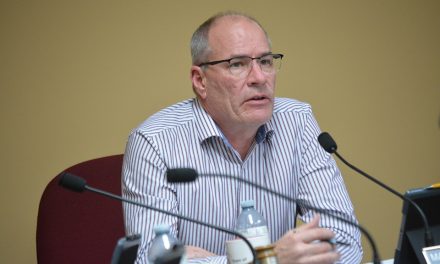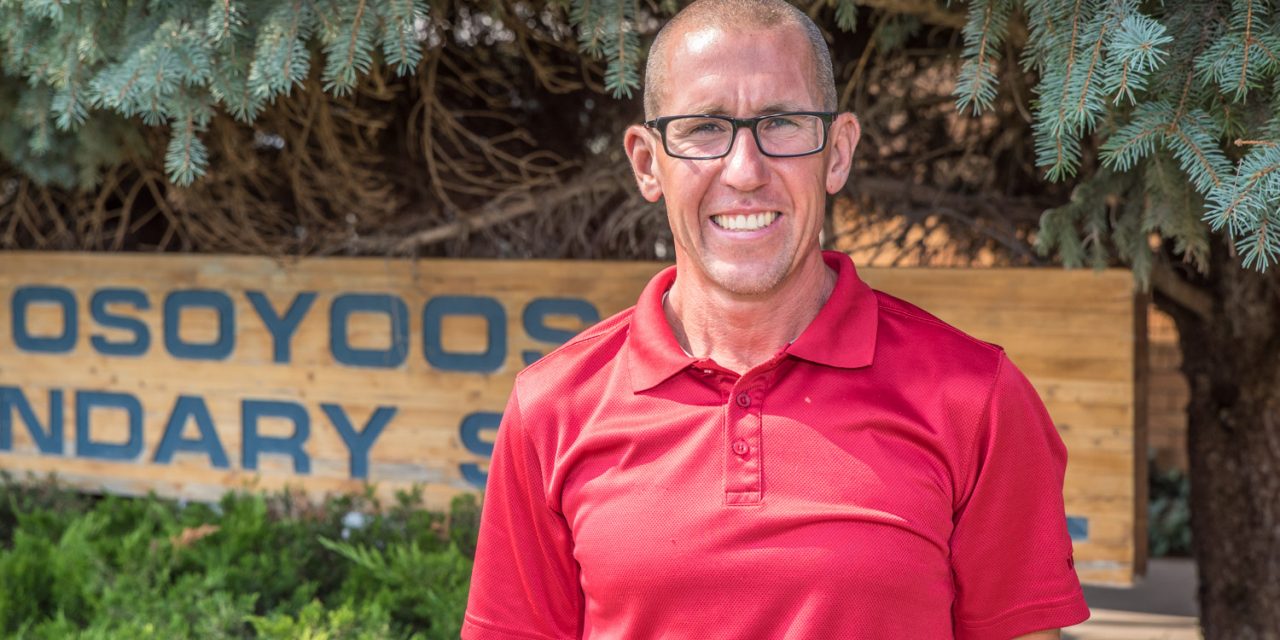
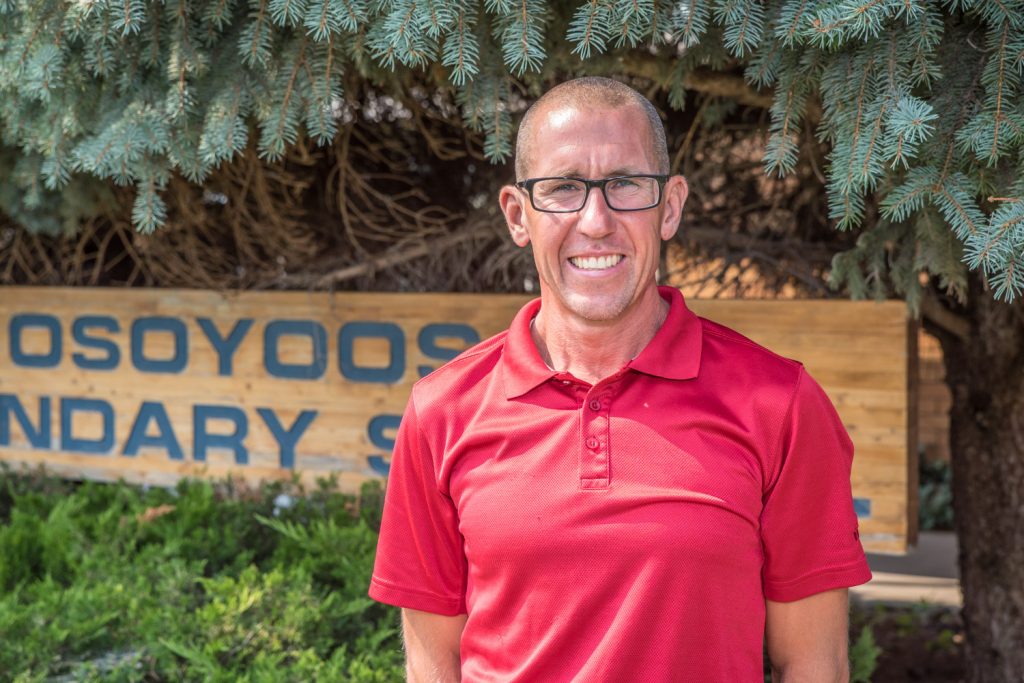
Principal Scott Tremblay spoke to the Rotary Club of Osoyoos recently as he and Vice Principal Brad Burns introduced themselves. Tremblay spoke about how Osoyoos Secondary School’s flexible timetable system is working. He has replaced former Principal Mike Safek, who retired this past summer. (Richard McGuire file photo)
The flexible timetable at Osoyoos Secondary School (OSS) is now in its second year as a new principal and vice principal take on the initiative launched by their predecessors.
Principal Scott Tremblay and Vice Principal Brad Burns spoke recently at the Rotary Club of Osoyoos about the system that is intended to give students more course options.
The two also introduced themselves and spoke about their backgrounds as educators.
Former Principal Mike Safek and former Vice Principal Lyle Chapman launched the timetable initiative in the 2016-17 school year. Safek retired this year and Chapman has transferred to another school district.
“To fully understand what the timetable is and how and what it does for kids and what it does for the educators in the building, you actually have to live in it for a while,” Tremblay told the Rotarians.
“It was a huge eye-opening opportunity for me,” he said, noting that on top of the new timetable system, he’s also been adjusting to a new school, staff, students and community.
“I’ve never worked so hard in my life,” Tremblay added, emphasizing that he doesn’t regret it and he finds the work rewarding. “We’re both feeling like we are making improvements.”
At the heart of the new system are “Learning Centres” (LCs) in which students of different ages may work in the same room on different, but usually related subjects.
The teacher in the room may be a specialist in math and science, for example, and they go around the room as facilitators helping the students.
“They are not necessarily homework time, but they are areas in which kids should be extending their learning from the classroom,” Tremblay explained.
While the system offers students the flexibility to choose what they want to learn on a particular day, it isn’t a free-for-all.
Students see an advisory teacher at the beginning of the day with their agenda. The teacher may observe, for example, that a student is struggling in math, so a math and science LC would be a better choice than a physical education LC.
“So there is guidance along the way,” said Tremblay. “However, the kids still have a choice.”
Students at schools such as Southern Okanagan Secondary School (SOSS) in Oliver or Similkameen Elementary Secondary School (SESS) in Keremeos may see their subject teachers for between 75 and 80 minutes a day.
By contrast, OSS students in Grades 10, 11 and 12 see their subject teachers three times a week at an hour each while students in Grades 8 and 9 see their subject teachers five hours a week.
“There are instructional minute differences, however LCs are embedded during the day to help with children’s learning,” said Tremblay. “It does speak to the B.C. curriculum where it creates individualized learning and self-directed opportunities.”
The timetable was in part modeled after A.L. Fortune Secondary School in Enderby, which has been running a flexible system for five years. Other B.C. schools are also adopting this approach.
It has allowed the school to offer more information technology (IT) courses as well as trades programs such as woodworking and metalwork, Tremblay said.
“It was able to open up more opportunities for kids,” he added.
It’s meant that OSS students should not need to take a distributed learning course, he noted.
The change has also affected the way teachers teach.
“Teachers are teaching to more big ideas,” said Tremblay. “They are now teaching more to better study skills, better ways to navigate through their textbooks to find information as opposed to just spoon feeding them information.”
Several Rotarians questioned Tremblay about how many students there are in an LC and how well the timetable is working for students with different learning styles or who might be struggling.
Tremblay said the maximum number of students in one LC is 30.
“They obviously fluctuate,” he said. “I would say on any given day at least 15 students are in an LC.”
One Rotarian noted that his daughter last year was once the only student in an LC, but he said that kind of thing hasn’t happened this year and it seems to be running better.
Harold Cox, a retired educator, observed that good students thrive under any system and should strive especially in this kind of system. He asked whether less able students are buying into it and adapting.
“It’s got to be a challenge I would imagine,” said Cox.
Tremblay said he’s talked to staff members who have been at the school longer and they say the students having problems are the same ones as in previous years.
“The kids are working together more and problem solving together as opposed to being in a classroom where your teacher is the keeper of knowledge always,” he said. “At any given time in any of my LCs, you’ll have a kid up at a whiteboard teaching three other kids. That doesn’t happen often in a classroom.”
As a smaller school, when reluctant learners do fall through the cracks, they are noticed right away and problems can be addressed, Tremblay said.
RICHARD McGUIRE
Osoyoos Times
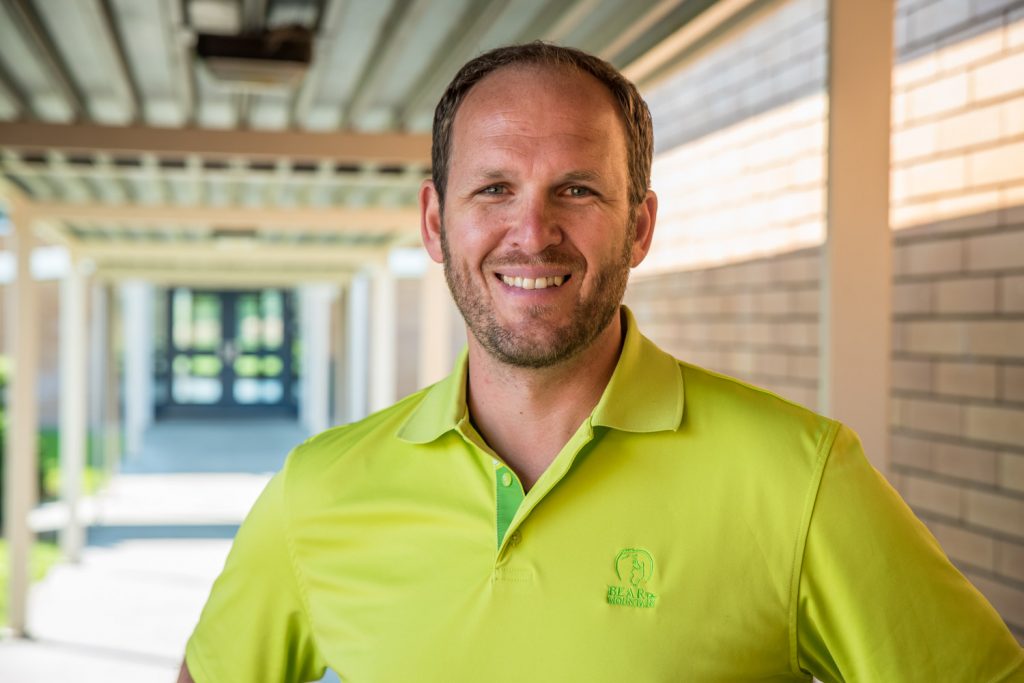
Vice Principal Brad Burns introduced himself to the Rotary Club of Osoyoos recently when he and Principal Scott Tremblay spoke to the club about Osoyoos Secondary School. Burns was previously teaching in Camrose, Alta. and he replaces former Vice Principal Lyle Chapman. (Richard McGuire file photo)