By Don Urquhart, Times Chronicle
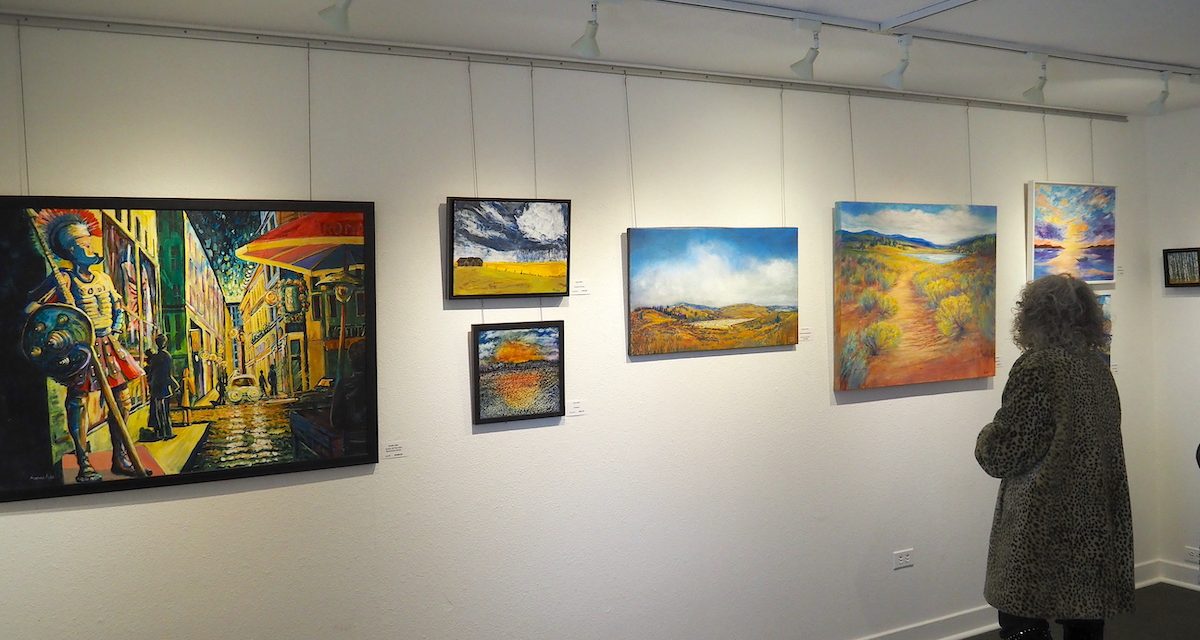
The Osoyoos Art Gallery is hosting the annual juried show by the South Okanagan Similkameen Chapter of the Federation of Canadian Artists (FCA), with 39 pieces of artwork on display by 16 artists in the “Beauty is In” show.
“Waiting for Mom,” a watercolour by Nancy Gray, was awarded first place while second place went to Judy Millar for her encaustic painting, “Wildfire,” and third place went to Bev Alexander for her acrylic piece titled “Valley Birds.”
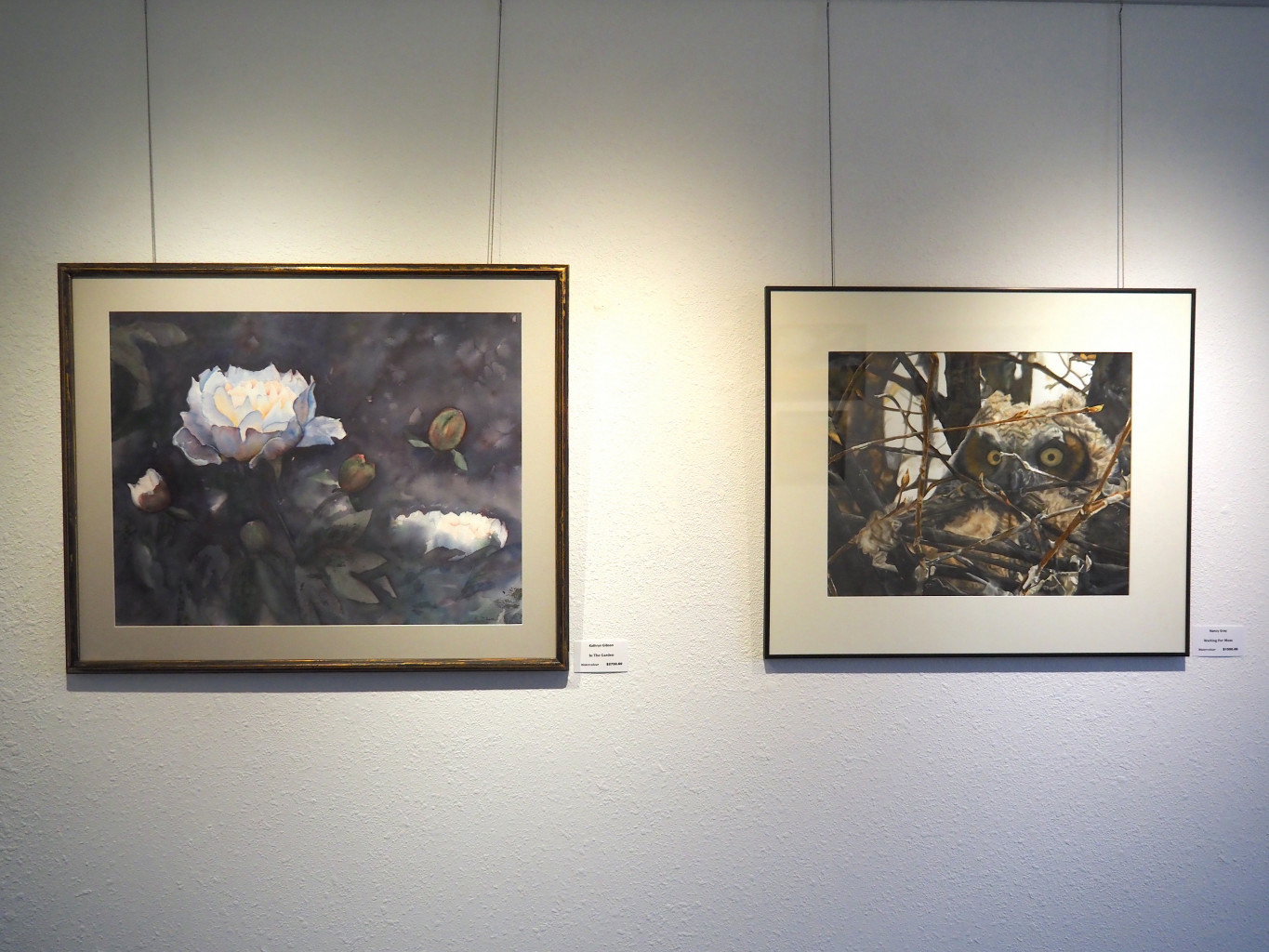
“Waiting for Mom,” a watercolour by Nancy Gray, was awarded first place (right).
The South Okanagan Similkameen Chapter is made up of nearly 90 members.
The annual show features works from Summerland to Osoyoos, and Greenwood to Keremeos. Artists may submit up to three pieces each with the stipulation that they have not been entered in any other show for three years, Chapter member and artist Michael Jorden explains.
This year’s contest was judged by two signature members of the federation because the main BC FCA organization in Vancouver was unable to do so this year.
“We have four signature members in our chapter and so two of them that didn’t have works in the show did the judging. It’s not perfect but it’s the best we could do under the circumstances,” Jorden says.
He explains there are three classes of membership – supporting, active and signature members – of which only active and signature members can participate in juried shows.
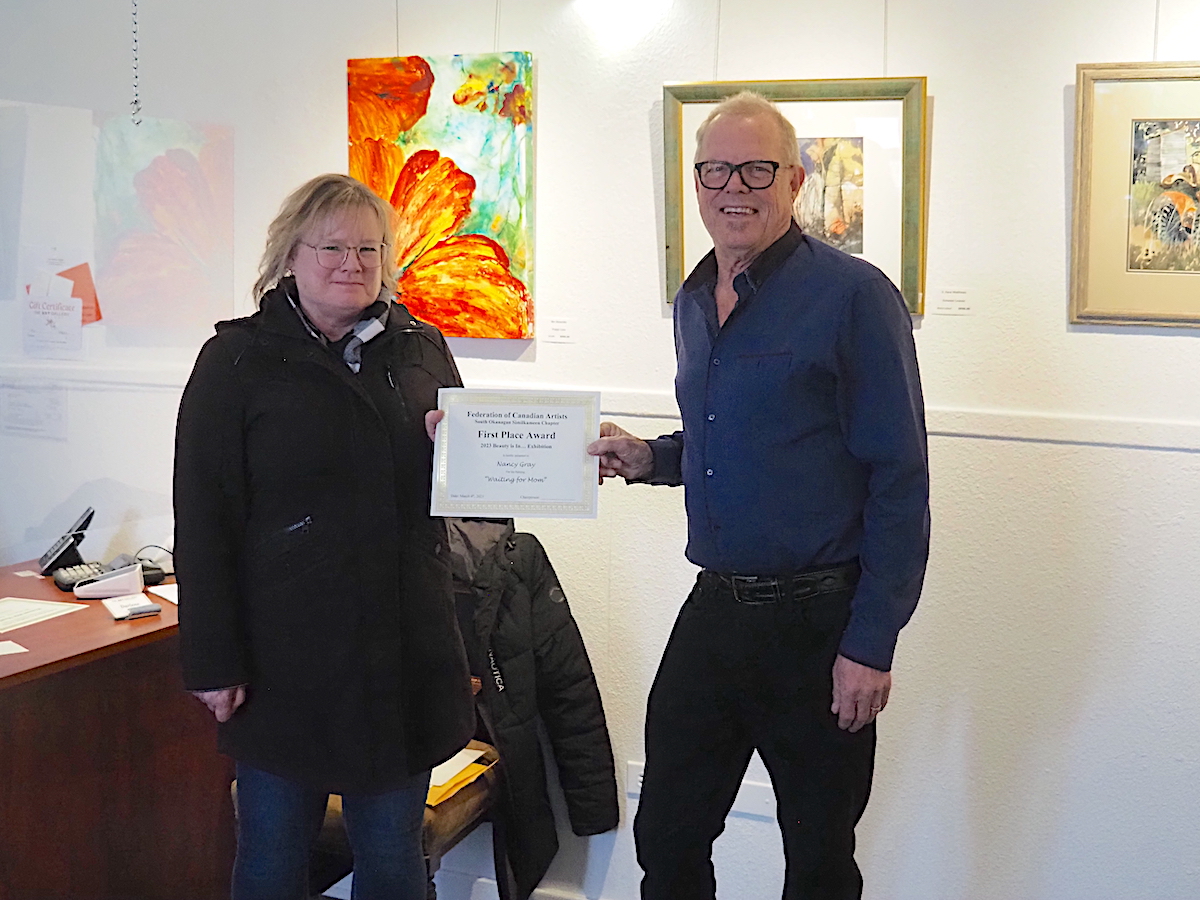
Nancy Gray is presented with the first place certificate by Ron Gladish of the South Okanagan Similkameen Chapter of the Federation of Canadian Artists (FCA).
“It’s always a good show. I think we’ve got some strong pieces here. They have what I would consider a reasonable level of confidence and some of them are excellent,” he adds.
Much of the show consists of the ever-popular medium of acrylics, with the odd unique medium such as Millar’s “Wildfire” which is an example of encaustic painting.
This painting technique involves mixing pigments with hot liquid wax. Artists can change the paint’s consistency by adding resin or oil to the wax.
Jorden admits he knows little about this age-old technique which he notes has been in use since ancient Egyptian times nearly 3,100 years ago. He adds that there is “quite an enthusiastic group of plastic artists in Penticton.”
Another variation on previous years is the fact traditional, transparent watercolours are well represented, marking a gradual return in popularity of this medium. The market for works under glass – which largely includes all traditional watercolours – “crashed and burned” in the 1990s after the realization that widespread poster art under glass was not in fact limited edition works of art that would increase in value.
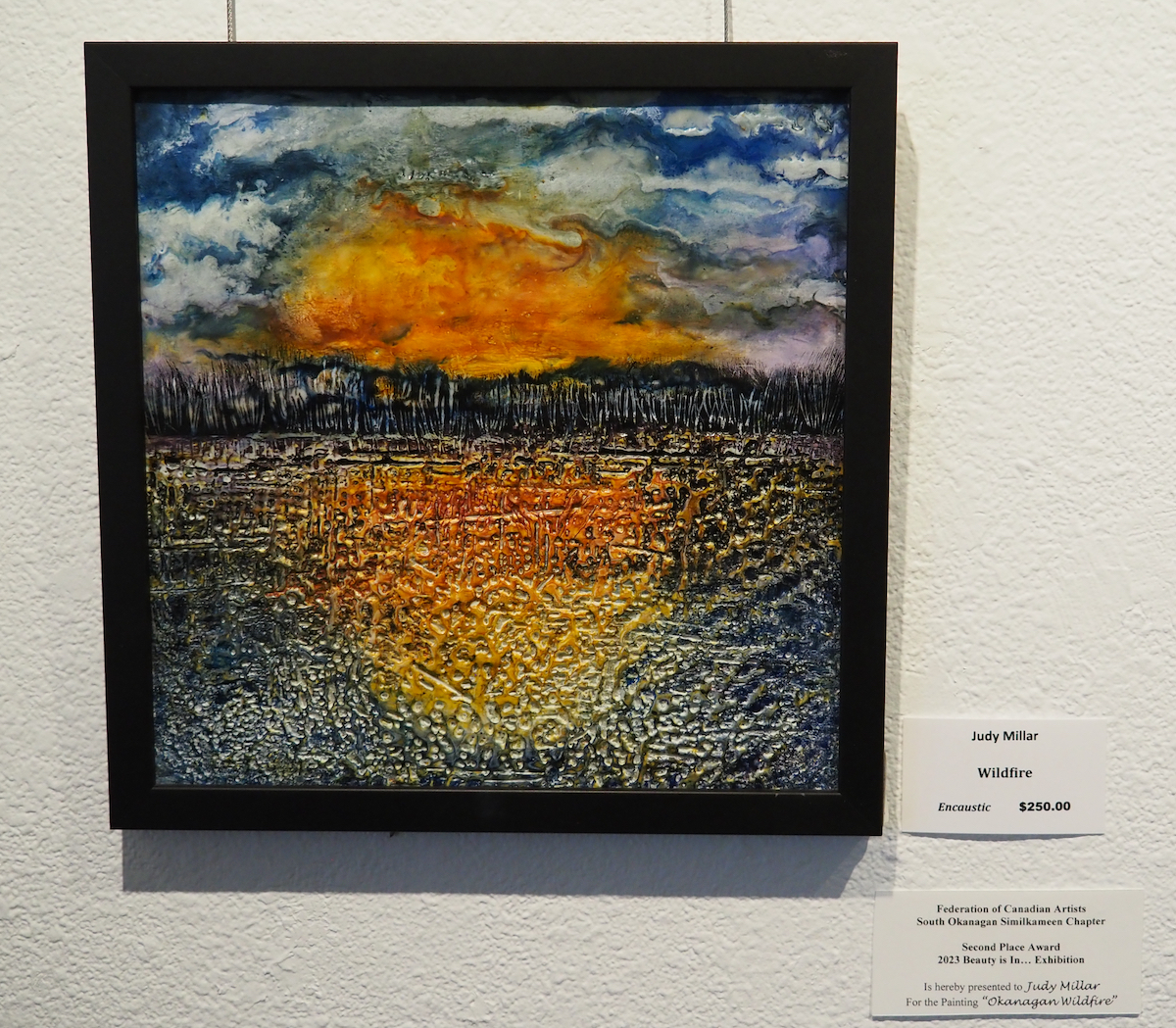
A painting created using the encaustic painting technique. This painting technique involves mixing pigments with hot liquid wax.
A variation of this can be seen in the works of Summerland-based artist Dale Matthews who works with transparent inks.
The difference between these two mediums colour-wise is that watercolour consists of particles of pigment suspended in water, whereas ink is more of a liquid stain, Jorden says. “This means that the watercolour hues will mix more, while layered ink will make the new colour more visible with the light shining through the different layers.”
Another difference is that Matthews’ transparent inks are typically glazed or sprayed for protection whereas watercolours are put under glass.
Another watercolour variation is gouache which is an opaque form of watercolour where layers are applied and can function as an under-painting, Jorden says, with either more watercolours painted over top or even acrylic and oil.
“There’s nothing like watercolour if you know how to wield it,” Jorden says, adding that he began his art journey with watercolour. The challenge he notes is that “you have to really, really push it if you want strong colours, so I switched to oils because it’s easier to do what I wanted but if I were to start today I would probably learn to use acrylics. It’s a great medium,” he says.
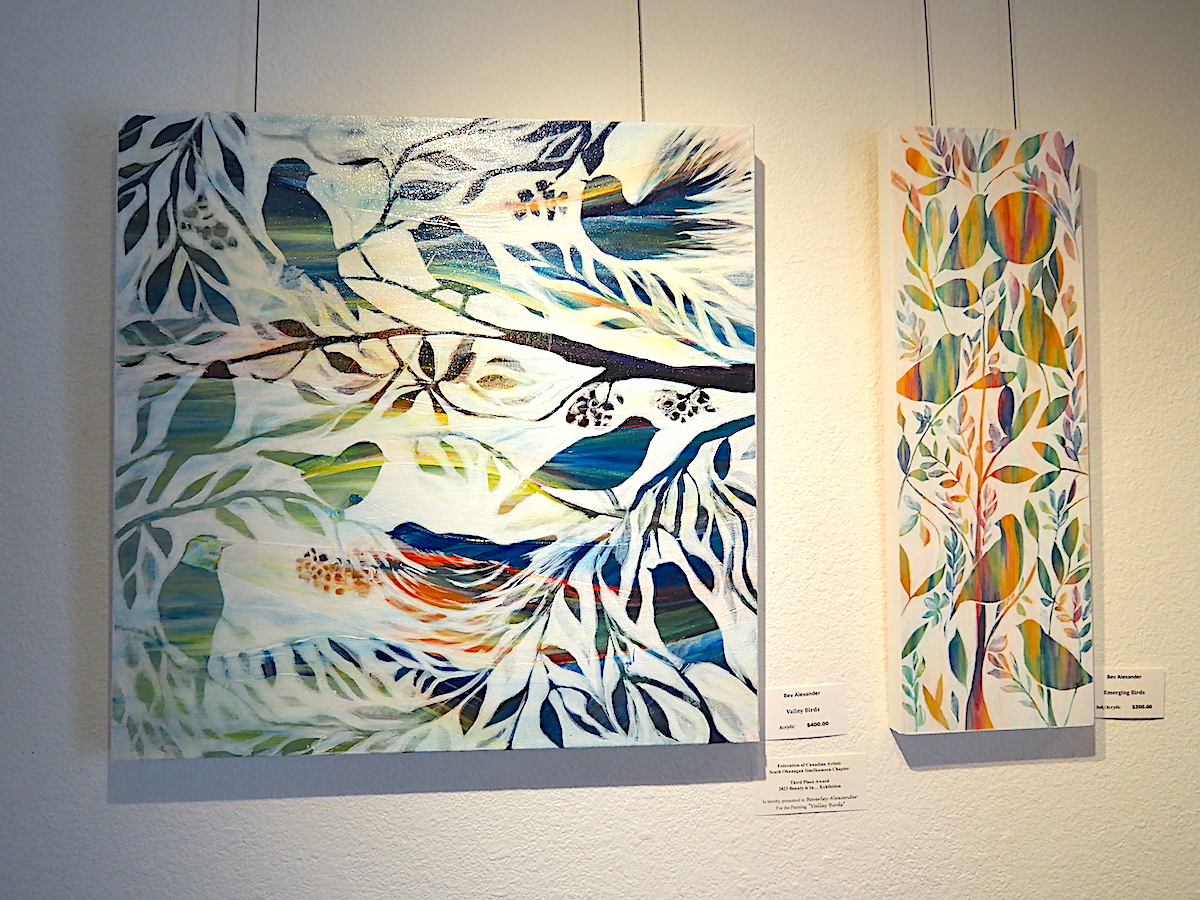
A unique painting technique known as “negative painting.” Bev Alexander’s “Valley Birds” which was created by painting white over a painting she says she was “tired of looking at.”
When asked if there is a common entry point to painting Jorden says no, “everyone comes to it their own way, but it’s always best to start learning to draw, learning to use a pencil.”
Another unique style featured in this year’s show is what’s known as “negative painting.” Bev Alexander explains using the example of her acrylic piece “Valley Birds” which was created using a painting she says she was “tired of looking at.”
The painting had ribbons of colours over which she painted white acrylic, leaving the colour to show through creating organic shapes in a sort of reverse painting process.
“I turned it sideways because I like the lines of colour and I painted over using the same technique, and then I put a little colour on top of the white just to soften it because it looked a little too stark. I’m a water colourist at heart, but I also love acrylics because it’s freedom,” she says.
Three honourable mentions were awarded to Claudia Punter, Kathryn Ada Gibson, and Valerie Rogers.
The Beauty is In show is on at The Osoyoos Art Gallery from March 4-25 at 8713 Main Street in Osoyoos. For more information call 250-495-2800.