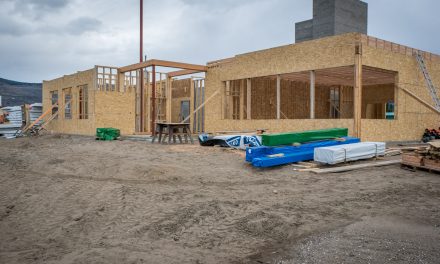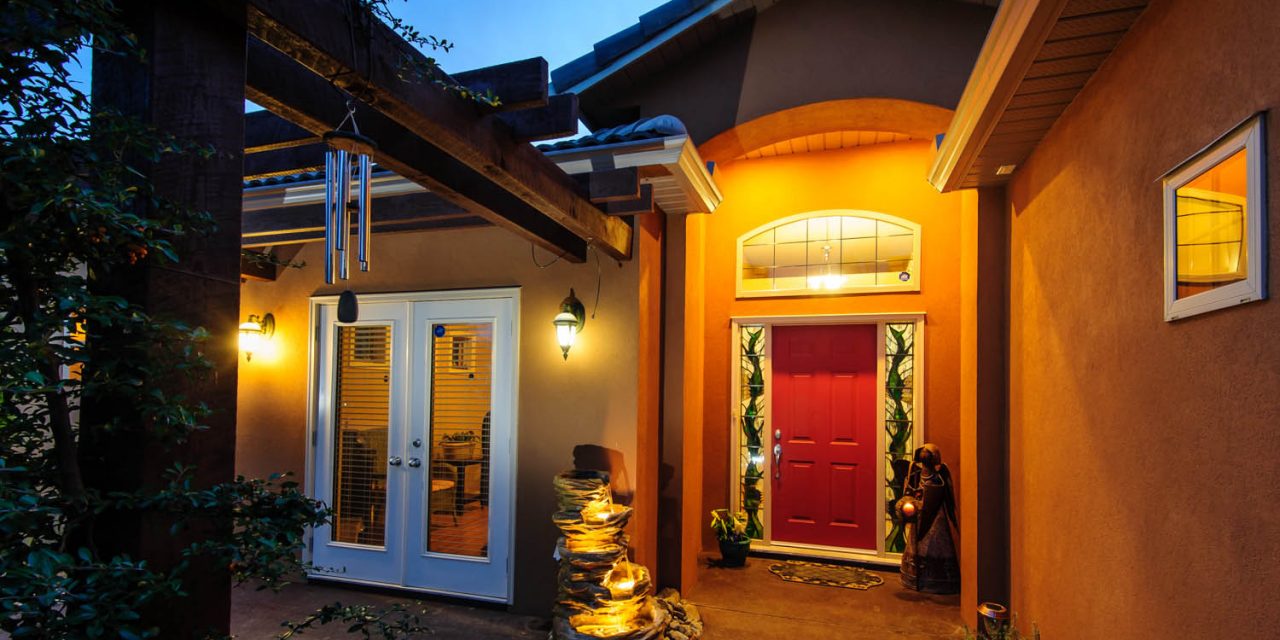
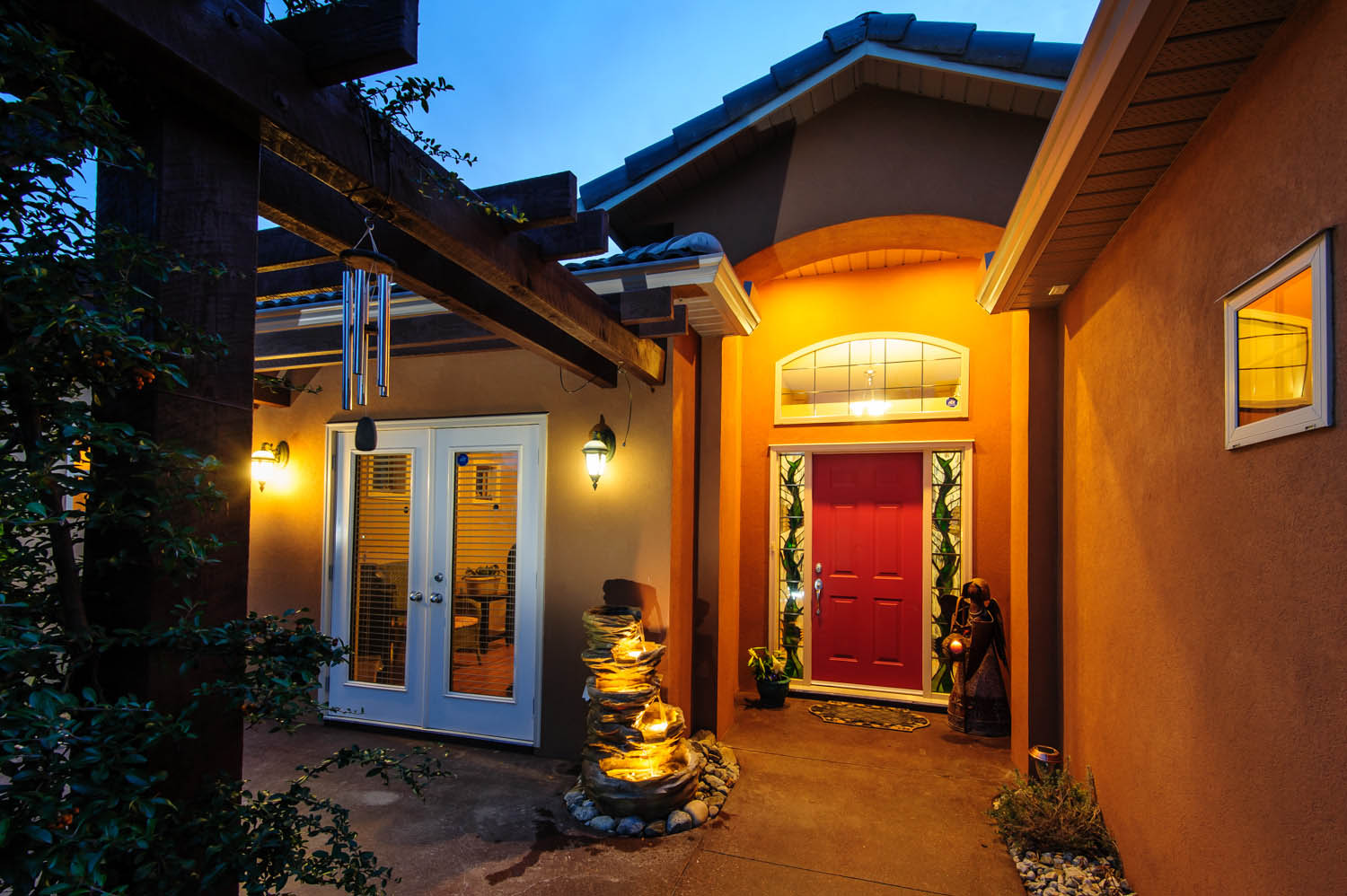
The average residential assessment in Osoyoos is up slightly this year for the first time since 2012. The increases here aren’t as strong as in the Penticton to Vernon commuter corridor. (Richard McGuire file photo)
For the first time since 2012, average residential assessments in Osoyoos are up slightly.
In recent days residents of B.C. have been receiving assessment notices indicating their property values for municipal tax purposes.
The increase in Osoyoos is very small – up to $364,000 for a typical residential property from $362,000 last year. But it is an increase after two years of slight declines in assessment values.
Communities north of Osoyoos saw more substantial increases, especially in Penticton, Summerland, Kelowna and Vernon.
Kelowna jumped to $521,000 from $491,000 last year; Summerland rose to $438,000 from $416,000 last year and Penticton rose to $383,000 from $370,000 last year. These figures exclude stratas.
Oliver, where average property values are lower than Osoyoos, saw a steeper increase – to $314,000 from $298,000.
Within the area that BC Assessment considers “South Okanagan,” Grand Forks was the only community to see a slight decrease – dropping to $195,000 from $199,000.
“Most homes in the South Okanagan are worth more in value compared to last year’s assessment roll,” said Jason Sowinski, deputy assessor with BC Assessment.
The typical homes that BC Assessment chose to illustrate the changes are close to the average, but are not the actual average, Sowinski explained. That’s because in some communities a few very large homes can skew the average without being typical of the community, Sowinski said.
Summerland, for example, has some very expensive waterfront homes.
“We are trying to paint a benchmark more of what a typical house would look like,” said Sowinski. “I looked at Osoyoos and the average was right around the $360,000 mark so in Osoyoos we’re very close to where we would expect.”
The changes this year are indicative of a stronger real estate market in the commuter corridor between Penticton and Vernon, Sowinski said. Even Oliver is benefiting from this trend.
“Oliver is a bit unique,” he said. “Even down in Oliver you do have more commuters so it is more of a bedroom community to the Penticton market. It’s just that much closer to the central and other areas of the Okanagan.”
The stronger real estate market reflects improved economic indicators in the Okanagan Valley over the years since the downturn in 2009, Sowinski said.
In B.C., as in many other provinces, assessments are based on a property’s market value.
The market value system was adopted in the 1970s and only in 2009 was it temporarily changed to a hybrid system based on the lower of 2007 or 2008 market values. This was done because of unstable market conditions at the time.
“Property owners who feel that their property assessment does not reflect market value as of July 1, 2014 or see incorrect information on their notice should contact BC Assessment as indicated on their notice as soon as possible in January,” Sowinski said.
While a typical home in Osoyoos has risen slightly in assessed value, homeowners may see an increase or decrease typically in the plus or minus five per cent range. Improvements to a property can have a greater impact on its value.
Commercial and industrial properties in the South Okanagan should see changes ranging from minus five per cent to plus 10 per cent, he said.
“If a property owner is still concerned about their assessment after speaking to one of our appraisers, they may submit a Notice of Complaint (Appeal) by Feb. 2 for an independent review by a Property Assessment Review Panel,” he said.
The panels, which are independent of BC Assessment, meet between Feb. 1 and March 15 to hear formal complaints. Last year 99.1 per cent of B.C. property owners accepted their property assessments without going to a formal independent review.
Although municipal taxes are based on a particular property’s assessment, municipalities determine how much money they need to raise in taxes and then adjust the mill rate to offset any overall increases or decreases in a community’s total assessment roll.
This means an increase in a home’s assessment will only result in the homeowner paying higher taxes if the assessment increase is higher than the average for the community.
Changes in property assessments reflect the local real estate market and can vary greatly from property to property. BC Assessment’s appraisers analyze current sales in the area and also consider other characteristics such as size, age, quality, condition, view and location.
BC Assessment’s Okanagan Region assessment office is located at 300-1631 Dickson Avenue in Kelowna. During January, office hours are 8:30 a.m. to 5:00 p.m., Monday to Friday.
Property owners can contact BC Assessment toll free at 1-866-825-8322 or online by clicking “connect” at www.bcassessment.ca.
RICHARD McGUIRE
Osoyoos Times