By Lexi McFarlane, Times Chronicle
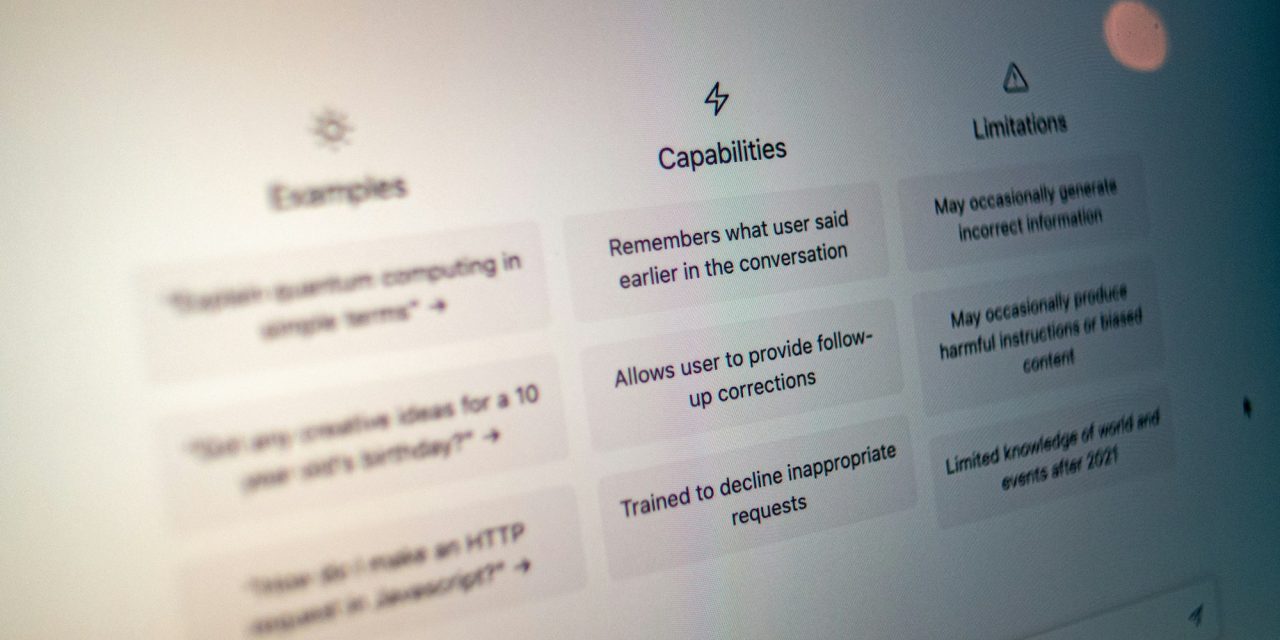
With the steady creep of artificial intelligence (AI) into daily life, the Town of Oliver is taking early steps to create operating procedures to guide its use within town operations as it expresses concern over open AI usage such as ChatGTP.
At the Committee of the Whole (CoW) meeting on Monday, Oct 27, staff presented council with background information and various options with a focus on crafting a policy for how to best moderate AI use at the municipal level. A potential policy would also serve to “meet the requirements of information security and privacy”.
Oliver does not currently use what are considered “open”, or generative, AI platforms such as ChatGPT, being limited to the “closed” system of Microsoft’s Copilot platform.
The “closed” system constrains prompts, data used, and answers generated within Microsoft’s system, shielding it from being publicly available. Copilot also does not come at any additional cost to the Town’s computer software budget.
An AI policy would seek to limit the potential for data and privacy breaches, boost efficiency by providing staff with a faster process for completing tasks and improving their quality, make it clear what is and isn’t allowed when using AI, limit financial costs, and “ensure compliance with FIPPA”, referring to the Freedom of Information and Protection of Privacy Act.
Council was presented with four possible directions to go in with the AI policy. The options were to either allow all AI use, prohibit all AI use, continue with the current “closed” system through Copilot, or draft a much more comprehensive plan detailing acceptable AI use.
Allowing all AI use would be the highest-risk option of the four, while in contrast, prohibiting all AI use would impact staff efficiency negatively, the staff report said..
Chairing the meeting, Councillor David Mattes asked how much the Town’s internal AI systems were used.
“Generally, I don’t think people are creating reports using AI, (but) we do queries, obviously, and that helps us out,” Chief Administrative Officer Wayne Anderson said. Anderson went on to note there is a separate internal document AI system that has been used occasionally, but that not everyone is trained on currently.
Councillor Aimee Grice asked for more clarification on the definition of closed AI, noting how online searches now feature an AI summary.
“If I do a Google search right now, I get an AI (overview) to that,” Grice said. “That would need to be defined within the policy, and I’m not quite sure how you could restrict that in the meantime.”
Town Staff reviewed AI policies from four other municipalities for this report, all coming from outside the South Okanagan. The City of Mission, Town of Creston, along with the City of Edmonton, and Ontario’s Haldimand County, were all used as references for the report.
Councillor Petra Veintimilla said she heard discussion from many other municipalities about AI use.
“This was a super big topic of conversation at FCM this year,” she said, referring to the Federation of Canadian Municipalities meeting.
Mattes’s biggest concern centred around the risk factor, and wanting the Town’s system to be as secure as possible.
“If (we) don’t address it today, then staff can use ChatGPT, as an example,” Mattes said. “And it puts our system at risk in the interim.”
The recommendation made to Council, that Town staff create an appropriate-use AI policy and, in the meantime, prohibit “open” AI use was put into a motion by Grice. The motion was seconded by Mattes, and carried.