The province is funding the creation of integrated child and youth teams for School District 53 (Okanagan-Similkameen) which is joining five other districts across the province in an attempt to create a more seamless mental health support system for school-aged youth.
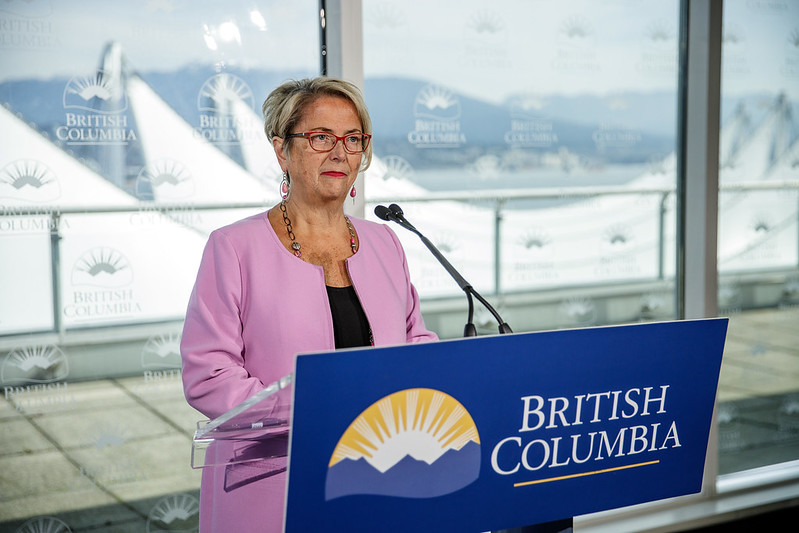
Judy Darcy, Minister of Mental Health and Addictions, announced Wednesday the Okanagan-Similkameen, Richmond and Coast Mountains school districts are joining the Pitt Meadows and Comox Valley districts which started getting the integrated mental health program underway last year.
The $2 million province-wide funding boost Wednesday for the five mental health teams comes on top of the $8.8-million investment over three years announced last September for all B.C.’s 60 school districts.
The integrated teams of medical, mental health and social support professionals and educators are intended to ensure more consistent support for mental health and substance use issues for students in the district.
“For too long, families have had to struggle to get the services that they need for their children. They’ve often had to knock on one door, after another, after another, at a really critical time when help is urgently needed and every day can matter. Well these teams are going to remove those roadblocks and deliver better care for everyone who is involved and especially more timely care,” Darcy said at a press conference in Richmond on Sept. 2.
The Okanagan-Similkameen was chosen along with the other four school districts based on the province’s criteria of “readiness,” Darcy said.
“Part of the assessment of readiness is the leadership in the school district, the kind of initiatives they have already taken, the leadership they have demonstrated, they leadership that they are willing to show in building the partnerships that are necessary to make this work,” Darcy said.
While she did not cite specifics for each school district chosen, Darcy said the selections were made following a “very, very careful assessment done of various child and youth service agencies, the readiness of the school district and the needs of school children in that school.”
“It’s a combination of factors and as I mentioned one of the factors is also leadership in the area of opportunities for reconciliation with First Nations people in those communities,” Darcy said.
The teams will be made up of a variety of youth-oriented professionals or cultural leaders including Indigenous support workers, elders, school councillors, youth substance use workers, mental health clinicians and psychologists to name a few.
“With these child and youth teams there is no one-size-fits-all. The composition of the teams will really vary according to the needs of the particular community or school district,” Darcy said.
However, the teams of professionals filling the gaps likely won’t be up and running for roughly a year, or possibly longer. Due to COVID-19 the province has yet to see the results from the programs launched in Pitt Meadows and Comox Valley last year, Darcy said Wednesday. While those districts were in the process of identifying and hiring needed professionals a pandemic struck the world.
“That work was certainly well underway until COVID hit, but like everything else this has been delayed by COVID. They have certainly made significant progress and we’ll have an update on when they are going live very soon,” Darcy said. “It does take about a year from when funding is announced for these teams to be in place, so sadly COVID has delayed that.”
The province also announced $3.75 million in funding for all districts and independent school authorities in the 2020-21 school year to promote mental wellness and provide additional supports for students. School districts will determine how funds are used based on their individual needs and funds may be used to enhance staff training, student workshops, family information nights or to develop new resource materials for educators and families, the province stated in a press release.