Cultural animation is a concept that comes from the French term animation socio-culturel, meaning “to animate” or “give life” to arts and culture in the community. A cultural animateur, in this sense, is someone who acts like a magnet, drawing out artistic energies that would stay hidden within people otherwise.
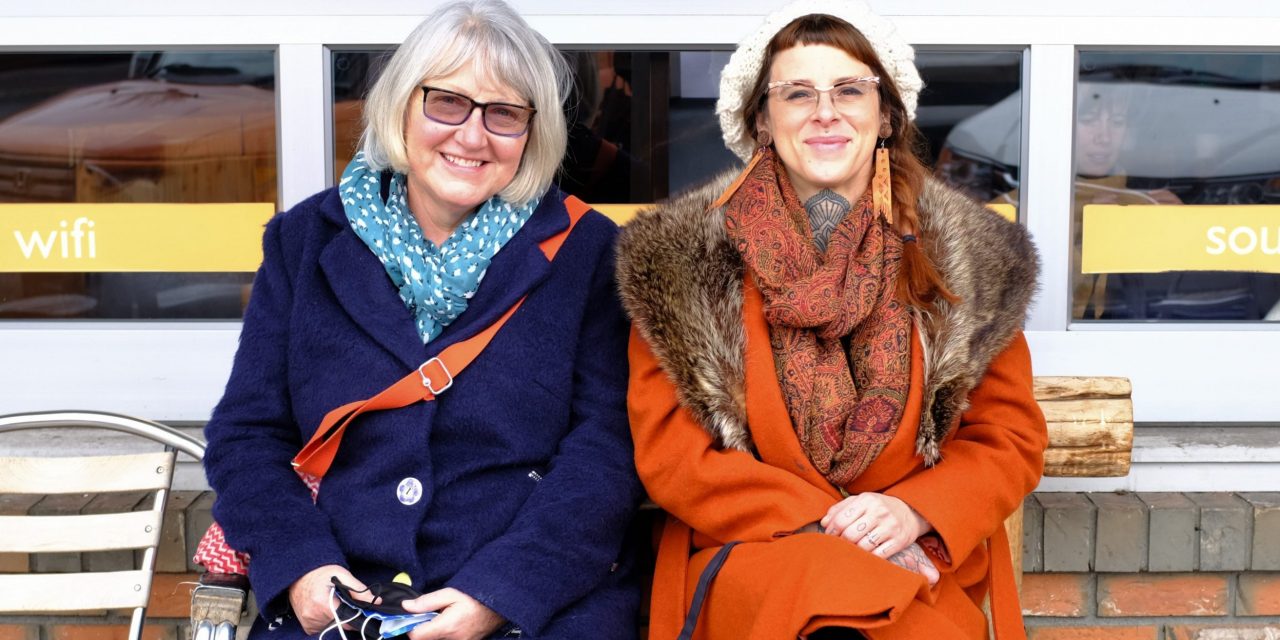
Kate Hobin and Wina Poliquin meditated on this idea as the central basis of their new arts society, to create a force in town that can draw out the arts and cultural dynamics of the community and its locals to the surface.
“What a cultural animateur does is actually an official position, working within a community with that title,” explains Hobin, “they work with all levels of communities, usually small communities, like in rural Quebec or wherever, and they look at the architecture, they look at the arts, they look at the craft and the businesses, and they bring it all together.”
The Wide Arts National Association (WANA) was incorporated as a B.C. not-for-profit arts society in January 2021. Hobin, the President of WANA, describes it as “an action-based society that is compelled to support artists of all genres from throughout the Okanagan and beyond by developing partnerships with other organizations, creating artist collective spaces, and planning activities and events designed to enrich community life as well as the lives of the creators.”
Being an “action-based” society is key for both Hobin and Poliquin. Hobin, who has worked within arts organizations for years (most recently as the curator at the ART Gallery Osoyoos says that she felt compelled to be part of something that could be an active platform for the community, making events, programs and experiences accessible for everyone that wants to be involved.
Given that the structure of the art world can be rigid at times, it’s intimidating for someone who isn’t familiar with the lingo or ins and outs to navigate that landscape, according to Hobin. Part of what WANA aims to do is break down some of those walls, and be welcoming to any creatives in the community.
Poliquin, vice president of WANA says, many artists stray away from jumping into the art world because there are “too many rules, too many bucks, too many protocols, so a lot of artists, just don’t care. They just want to do art, that’s it. And they don’t want to do all those extra steps,” she says. “Having too much rigidity and boundaries breaks the art.”
Another facet of the new arts society is to include more than just local community members in the art scene, by also involving foreign seasonal employees that work in farms and vineyards in the warmer months of the year.
“I need to include them in this; they are a part of this,” says Poliquin, who explains that in her own connections with seasonal workers, many are artists looking to support their creative life while doing other work on the side. “I think if they would have an outlet of them being able to do something with the arts as they pick [fruits] or something like this, that would be even more honorable for them to come,” she says, adding that these workers are essential to Osoyoos and the community as a whole.
“We do feel it’s a bit of a lost and underrepresented group of people very much. If we didn’t have them in this community, we would be at a loss,” adds Hobin.
Poliquin who runs the tattoo shop, Art Therapy Corp., says that the idea to create something like WANA has been brewing in her for years. Since she moved to Osoyoos 17 years ago, Poliquin says she has cultivated a tight knit community of creatives and artists in town, and talks about them like a proud mother.
“Just from a young age I’ve always been around [artists] for as long as I can remember how to speak and see…I always pulled that out of people, their creativity. It’s just a kind of gift I have,” says Poliquin. “It’s always what surrounds me, people come to me that have all those types of artistic abilities. I’m a cultural animateur.”
With Hobin’s in-depth experience in the more formal art world, and Poliquin’s local connections within Osoyoos arts community, the two joined forces to create a new space altogether. They met only in fall 2020 and have been simmering with ideas and visions for the town since.
The list of ideas is ambitious. It’s not limited to one category or group but extremely varied. There are discussions about creating public art projects like murals and sculptures, performing art events including music and theatre festivals, literary programs such as writing courses and poetry slams, and artist-in-residence programs.
“These are not all projects; these are the areas we can explore. These are our goals to explore. Then every year we’re going to maybe pick one or two out of those, and if it’s something that we can do regularly, it will be a consistent project like a mural project,” explains Hobin.
WANA also wants to start an art night market with local artisans selling their crafts, and people performing on the street (think buskerfest).
Poliquin says that right now, all the tourism is confined to just the Main Street in Osoyoos, but there’s many nooks and crannies that can use some livelihood and give the town more character. One idea for the night market is to have it in a back alley that can be lit up with outdoor lights and murals on the walls. They hope that when it’s established enough, it could become a well-known event that attracts tourists and locals alike.
These eccentric ideas continue to flow from Hobin and Poliquin as they work on setting up the foundational pillars of WANA. Currently, the team is working on establishing themselves in town and making connections with local organizations. They hope to have their gallery space up with the first exhibit within the next few months, and are working fast to make it happen. WANA has a modest location (right next door to Art Therapy) which is currently under renovations and will serve as a small gallery and their office once finished.
Both Hobin and Poliquin have seen, through their own art communities, the plethora of artists in Osoyoos and the whole Okanagan who are settled here, and more who continue to come each year. What they hope to do with WANA is push up the artistic energy bubbling under the surface by creating an avenue where these creatives can collectively work together and flourish.