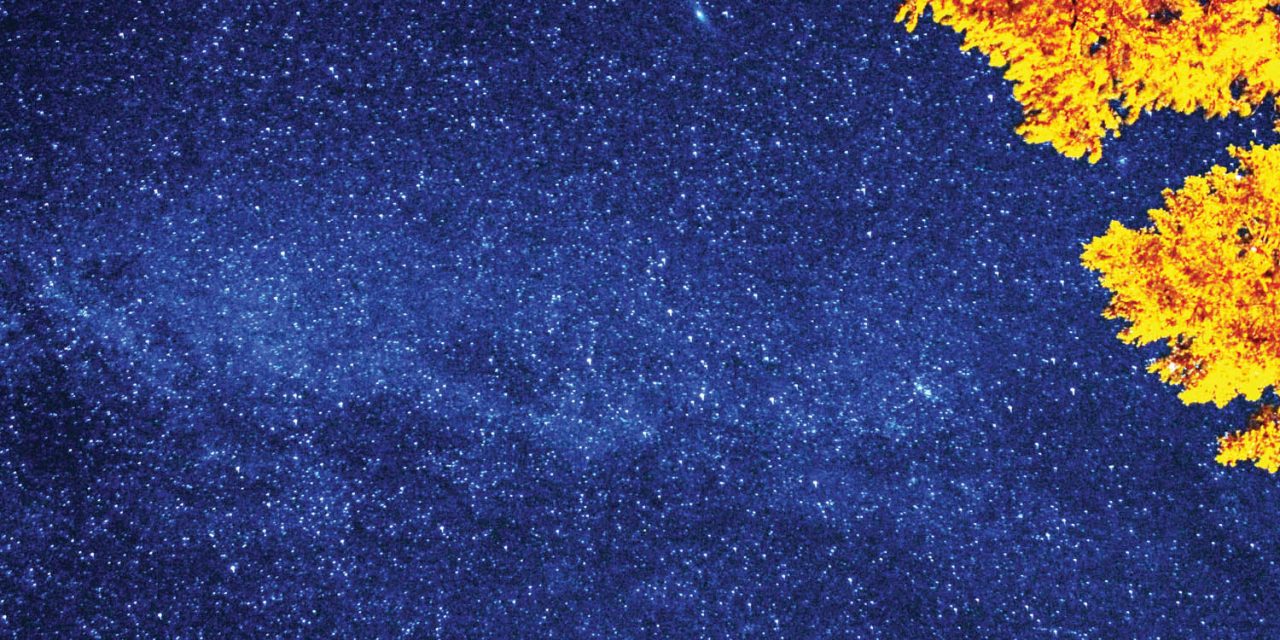
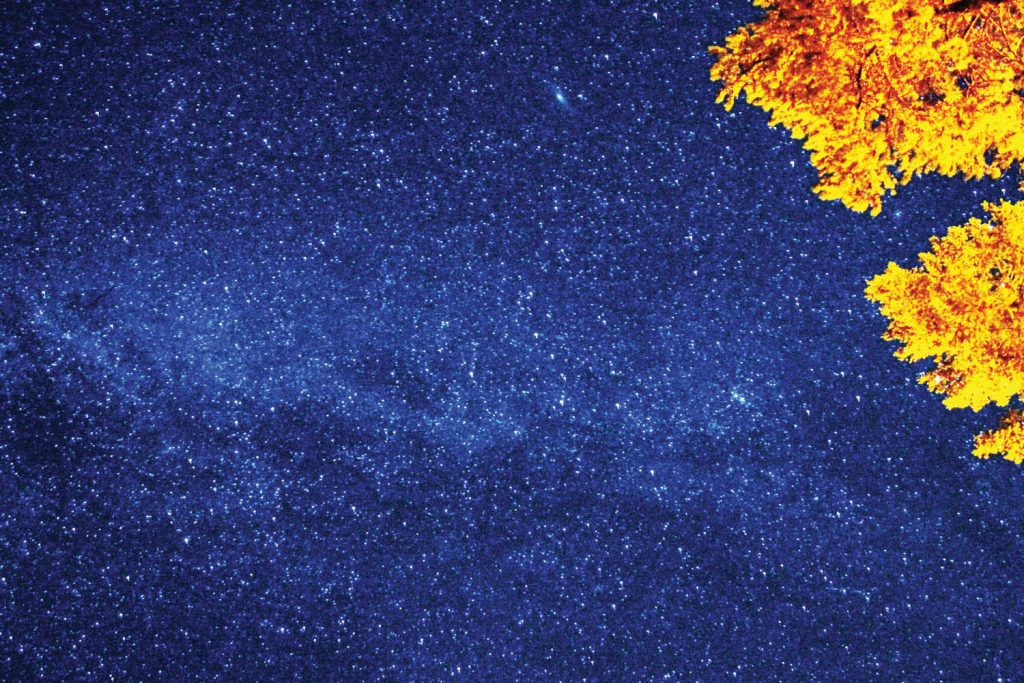
The clearest view of the night sky in the South Okanagan is often at the Dominion Radio Astrophysical Observatory. (Dan Walton photo)
The South Okanagan night sky will be graced by an annual light show next weekend – the Perseid meteor shower – and the public is invited to the watch it from the best seats in the house at the Dominion Radio Astrophysical Observatory.
For millennium to come, a comet named Swift-Tuttle will continue to be approached by the Earth every summer.
This year it is active between July 17 and August 24 with its peak period set between August 12 and 13. On the evening on August 13, the observatory will be open to offer a prime viewing location. Before the sky becomes dark enough to see the stars, the National Research Council of Canada (NRC) has arranged for a series of speakers to engage the audience with celestial discussions.
The moon on Aug. 13 will be in its waxing gibbous phase, reducing some of the contrast between the sky’s light and darkness, but Dr. Ken Tapping, one of the keynote speakers, said the event will be memorable.
“It will be well worth going out and having a look,” said Tapping. “Every year they have a star party. Anyone interested can come along, just drive up White Lake Road and come into the observatory.”
Although the observatory is staying open late to share its sanctioned darkness with the public, Tapping said the Perseid meteor shower can be viewed from just about anywhere away from direct light.
“Find a nice dark corner of the yard with good visibility to the northeast,” he said.
“There’s no need for a telescope or binoculars, just something comfy to lie on, because even in August, sitting outside at night still can get really cold, so it’s nice to bring a blanket.”
Telescopes, however, will be available to use at the observatory.
The Earth moves through space at a speed around 30 kilometres per second, and every summer as it passes through the stream of debris that melts off Comet Swift-Tuttle, the comet’s fragments collide with Earth at a speed around 60 kilometres per second, he said.
“On August 12th and 13th we go blowing right through it, and it collides with us at incredibly high speeds,” he said. “But the friction from our atmosphere burns it up, so when we see this short glowing streak across the sky – what people call shooting stars – not really shooting stars, we call them meteors.”
Asked why space exploration is important to the NRC, Dr. Tapping said there are two reasons.
The first is understanding outer space is deeply ingrained in man’s natural curiosity and secondly, while there is rarely any instant return on the work they do, their discoveries eventually lay the way for new technologies that lead to the benefit of everybody.
“Anybody with a smartphone in their pocket is looking at about two trillion dollars worth of research and a lot of this was trying to understand the fundamental workings of nature,” said Tapping. The spiritual, cultural and technical benefits to come from exploring human curiosity have been invaluable.
The NRC normally sets its sights much further out into space and even though it has a comfortable understanding of how meteor showers work, the Perseid meteor shower is means for a star party every year at the observatory.
“Anyone interested can come along, just drive up White Lake Road and come into the observatory. The gates open at 7:15 p.m., astronomy talks begin at 8:15, and we’ll start watching the shower at 9:30,” he said.
The turnoff to White Lake Road is about 15 kilometres south of Penticton and seven kilometres north of Okanagan Falls.
DAN WALTON
Regional Reporter