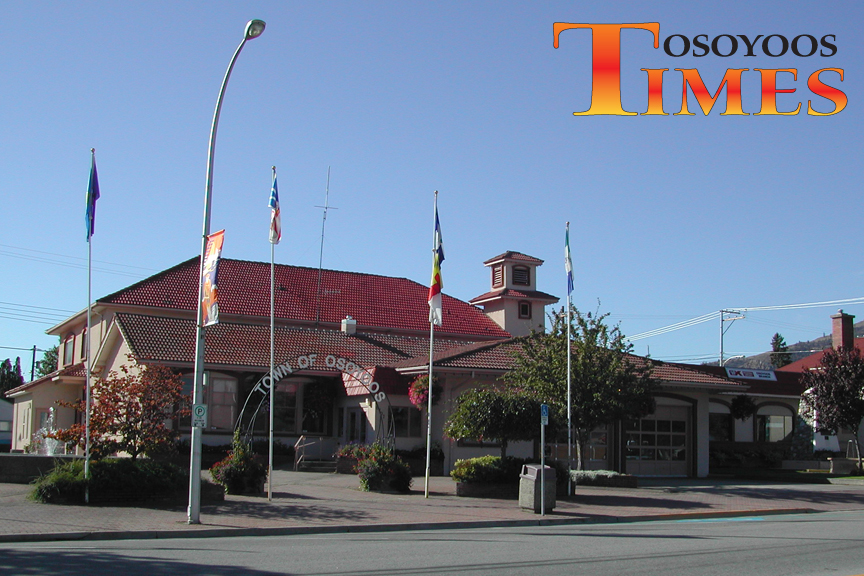
The Town of Osoyoos has been asked to become a full partner in a project designed to protect and promote heritage sites across the South Okanagan.
The Regional District of Okanagan-Similkameen (RDOS) Heritage Conservation Service has been functioning as a sub-regional service since 2007 with Electoral Areas A, C, D, G and H contributing to the service, said Mark Woods, the RDOS Community Services Manager during a presentation to town council Monday morning.
In 2014, the RDOS board of directors identified heritage planning as a strategic objective and embarked on a regional heritage strategic planning process to provide future direction, policies, standards and actions for the RDOS and its partners with respect to heritage planning for the region, said Woods.
The objectives of the strategic plan were to:
- Produce context study and conduct community engagement.
- Create community vision, mission and goal statements.
- Develop a marketing strategy.
- Develop a regulatory impact assessment.
- Recommend a model of governance.
- Generate a list of sites that are of regional interest.
- Development of an implementation strategy.
The RDOS board officially adopted its plan to move ahead with a Regional Heritage Strategic Plan at a meeting on Sept. 17, said Lindsay Bourque, RDOS Rural Projects Co-ordinator.
“One of the primary recommendations to come out of the strategic plan is the creation of regional services, with each member municipality and electoral area paying into the service,” said Bourque. “A co-ordinated program takes advantage of the strengths of each electoral area and member municipality and the heritage groups, organizations and agencies active within each.
“It will result in a great opportunity for dialogue with First Nations, and represents a democratic approach in which the whole region is represented and accrues the benefits that stem from heritage conservation.”
Three goals were laid out to guide the implementation process over the next five years, said Bourque.
The first goal is understanding, recognition and support of a wide range of heritage resources, she said.
Partners will be asked to select five resources to add to the heritage register that further represent the area’s historical themes. They will also be asked to identify heritage resources in each electoral area for inclusion on the heritage register and continue to add resources to the heritage register taking care to address all the historical themes, she said.
Partners will be asked to utilize in-house expertise for marketing and promotion, such as the preparation of informational interpretive and heritage tour brochures and to partner with the South Okanagan Heritage Alliance the local chambers of commerce.
Partners can also utilize other departments to support heritage integration into projects through staff time and budget allocation and develop online resources such as GIS layering, web-based information and heritage mapping, walking and cycling guides, a heritage calendar, trails and other heritage information, she said.
Partners will also be asked to support and take part in festivals and events with a heritage component and continue outreach to discuss First Nations’ engagement with the program.
Municipalities will also work with museums and archives to plan for publications and programs that emphasize the relevance and benefits of heritage to everyday life and promote citizen action and involvement in heritage recognition and conservation through events, project or initiatives identified by the RDOS and Regional Heritage Commission, said Bourque.
Partners will also be asked to prepare a calendar of cultural heritage events, identify sites that may be appropriate for new events as finding new uses supports conservation.
The plan for 2016 is to update the existing bylaw to establish a region-wide Regional Heritage Commission that includes all electoral areas and member municipalities within the RDOS, prepare a calendar of cultural heritage events and hold a one-day “statement of significance workshop” with the Regional Heritage Commission facilitated by Heritage BC.
It’s expected the regional heritage program will operate on an annual budget of $15,000 to $20,000 and continue its role of supporting existing heritage groups through shared knowledge, resources and promotion, said Bourque.
“The goal of the regional program would be to extend these benefits to all electoral areas and member municipalities to promote heritage in a co-ordinated way across the region,” she said.
Based on an annual budget of $20,000, Osoyoos taxpayers would be asked to pay 34 cents per household and contribute roughly $1,700 to the program, said Bourque.
This would cover nine per cent of the annual budget.
Woods said he and Bourque would be visiting all member municipalities within the RDOS coverage area over the next few weeks and asking all of them to join the heritage commission and contribute funding.
Town council will consider this request as part of upcoming budget deliberations for 2016.
KEITH LACEY
Osoyoos Times