By Don Urquhart, Times Chronicle
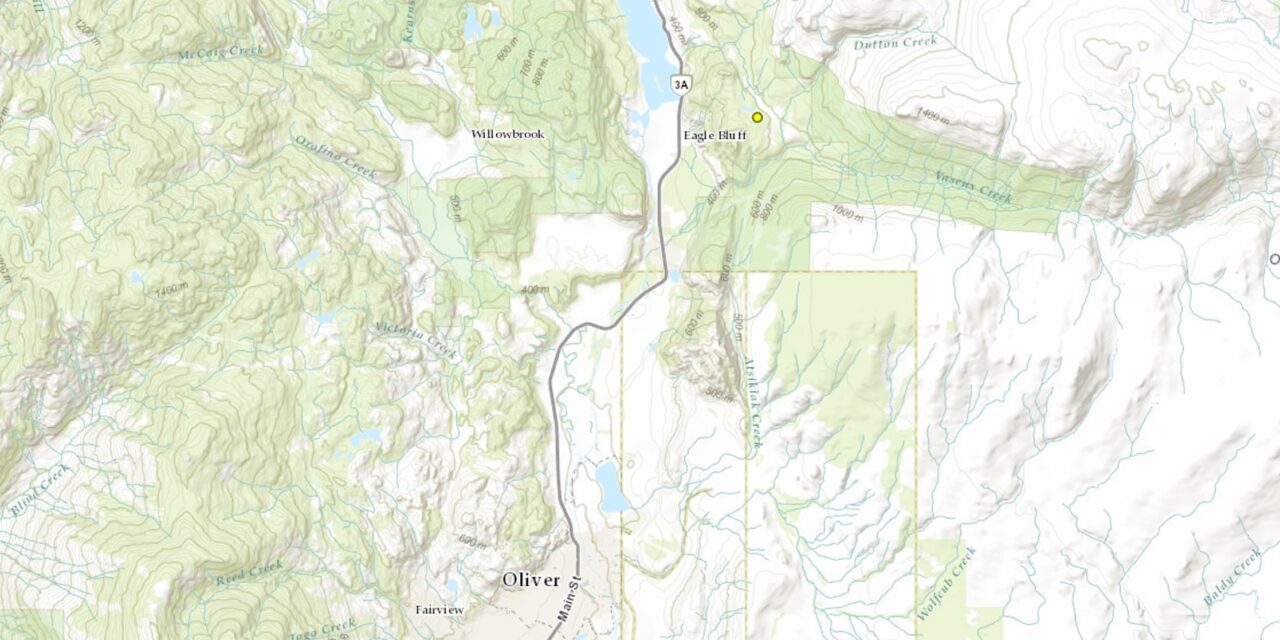
The first local wildfire of the season in the South Okanagan occurred over the weekend with a 4.37 hectare wildfire at Dutton Creek, about 1.5 km east of the southern end of Vaseux Lake. BC Wildfire Service has listed the fire as “Being Held,” meaning it’s not likely to spread beyond predetermined boundaries.
The wildfire is classified as being started by humans or human activity – one of seven human caused fires reported in the Interior on Saturday. The majority of human-caused wildfires in BC happen in the spring and fall with BC Wildfire saying that shoulder seasons require the most vigilance from the public in terms of open-fire safety.
Across the province there are currently 119 active wildfires none of which are considered “Wildfires of Note” although the Burgess Creek fire southeast of Quesnel has grown rapidly from 0.5 square kilometres to 16 square kilometres on Sunday and is classified as “Out of Control” with evacuation alerts on for Burgess Creek and Endako. The wildfire is also suspected to be human caused.
BC Wildfires’ current long range forecasts suggest a high potential for an active spring wildfire season in British Columbia.
“Once fuels and forests are snow-free, elevated fire activity is anticipated this spring,” it said, adding that a spring wildfire season is common in British Columbia.
There are still 90 active holdover fires from the 2023 season that have smouldered beneath the winter snow cover, according to BC Wildfire. All of these incidents are “Under Control”.
Under Control means suppression efforts have ensured they will not spread any further. Smoke and heat signatures observed on these wildfires are within the existing fire perimeter and do not represent new growth.
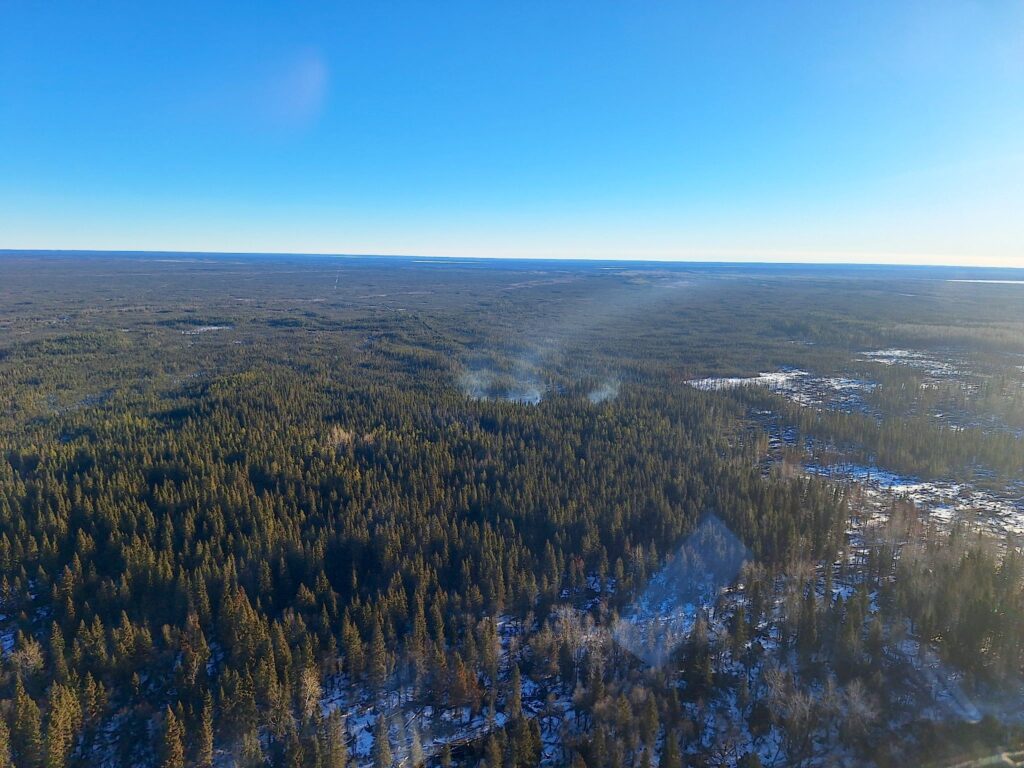
Visible smoke from holdover fire visible northwest of Fort Nelson in February 2024. BC Wildfire Service photo.
The number of holdovers in primarily the northeast region of the province which is not surprising given the widespread fire activity of this past season and ongoing drought conditions.
“As the snow melts and the air becomes drier with moderate winds, there is the potential for increased fire activity. Personnel continue to closely monitor holdover fires and establish response priorities as conditions allow.”
Several factors influence the likelihood and occurrence of holdover fires. A major one is the Drought Code (DC), which is the average moisture content of deep, compact fuels. When these fuels are exceptionally dry, wildfires smoulder in deep duff layers and within large logs, remaining active underground with the potential to resurface come spring.
As of April 1, the BC River Forecast Centre reported an extremely low provincial snowpack, averaging 63 per cent of normal across British Columbia. The low snowpack will limit surface runoff, stream flows, and fuel moisture recharge which could limit drought recovery into summer 2024.
In its long range forecast for summer 2024 BC Wildfire notes that May and June are typically the rainiest months in the Interior and the amount and duration of rain events during this period influences the length and intensity of the core wildfire season.
“Conditions have the potential to improve if widespread, continuous rain is received this spring,” it said adding that it is too early to tell; long-range weather forecasts, especially for precipitation, are unreliable.
It adds that meteorologists are skeptical that sufficient rainfall will occur. “Until we experience significant and prolonged rains, the elevated drought will continue to support the potential for easy ignition and rapid wildfire growth,” it said.