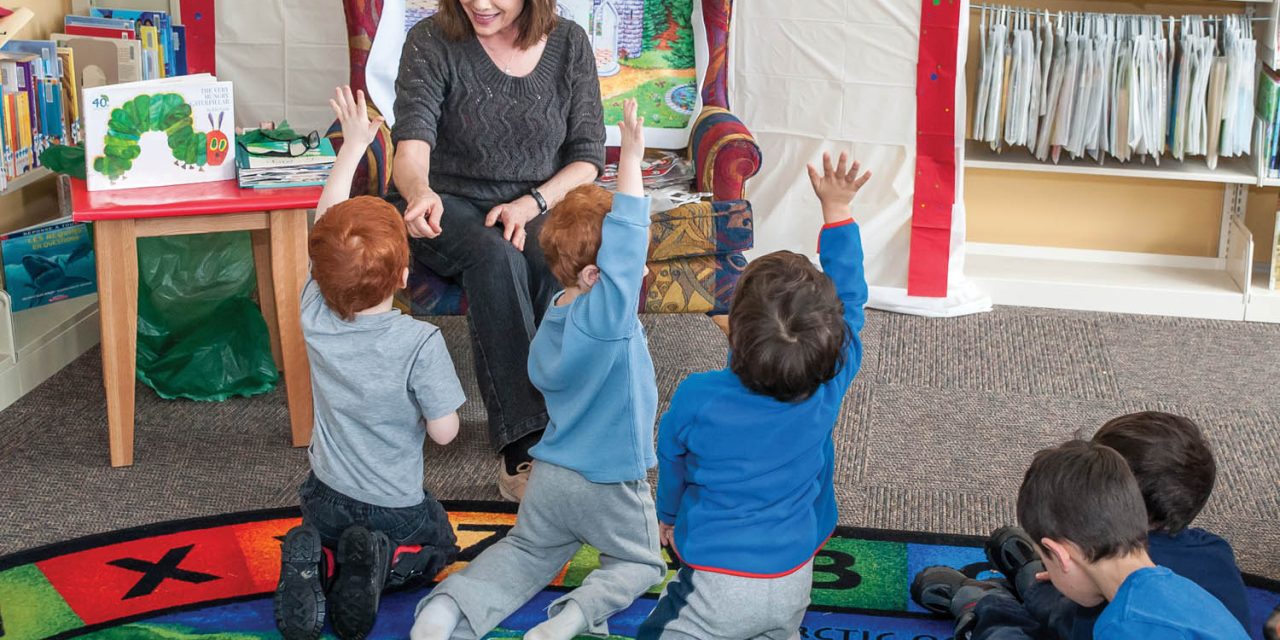

Librarian Diana Rawlings interacts with children at the Osoyoos Branch of Okanagan Regional Library in this storytime photo taken in February. The regional library is trying to balance resources between its library branches. (Richard McGuire file photo)
Cuts will take place at many branches of the Okanagan Regional Library (ORL), but Osoyoos could actually see an increase in its resources.
“Osoyoos is one of the branches that is actually underserved at this time,” said Michele Rule, communications manager with ORL. “There are a number of branches that are underserved of our 29 (branches).”
Stephanie Hall, ORL chief executive officer, recently drafted a staffing level plan for branches where spending needs to be reduced. The library is obtaining input from unions and branches about the plan before a final plan is released.
“Changes in staffing level under the plan would be implemented over multiple years as opportunities arise,” ORL said in a news release.
The ORL will look at efficiencies to begin with and then will consider reducing staffing by attrition, Rule said. Money recovered from over-served branches will then be passed along to branches that are underserved.
The cuts are based on a Value for Money Review by the auditing firm Grant Thornton completed in September 2013.
That audit found that Osoyoos paid the highest per capita levy rate of all branches at 27 per cent above the average per capita rate. The levy, based on both population and assessed value of real property, makes up from 85 to 90 per cent of the library system’s revenues.
The current exercise at ORL aims to restore a fiscal balance between member communities.
Rule said that the ORL would address the inequity in Osoyoos and other underserved branches by doing community consultations with librarian staff, patrons and interested community members to see what types of services they would like to see increased at the branch.
“It depends on how much money as to what we can actually do, but it might mean another hour of service somewhere or it could be any number of things that the community would like us to spend money on,” Rule said.
The population figure used in the calculation for Osoyoos is based on the 2011 census. The town’s population is 4,845, but the population served by the library is 6,735.
Rule acknowledged that the seasonal tourist population may put some extra demands on the library, but she said only people with a library card can use all the library’s services.
To have a library card, you must either be a resident or pay a fee for a non-resident card. Non-resident fees are $25 for three months, $50 for six months and $75 for a year. Some services are not available to non-residents.
The Grant Thornton study also considered the funding implications of moving to a funding model based strictly on population instead of population and assessment, which is used now. The library board, however, decided to stay with the present mixed funding model.
“We’re committed to providing equitable service throughout our communities,” said Rule. “We’re very proud of the service that we do provide. We have an incredible staff, so any changes that have to be made will be done as gently as possible.”
RICHARD McGUIRE
Osoyoos Times