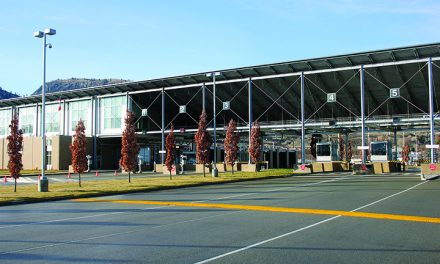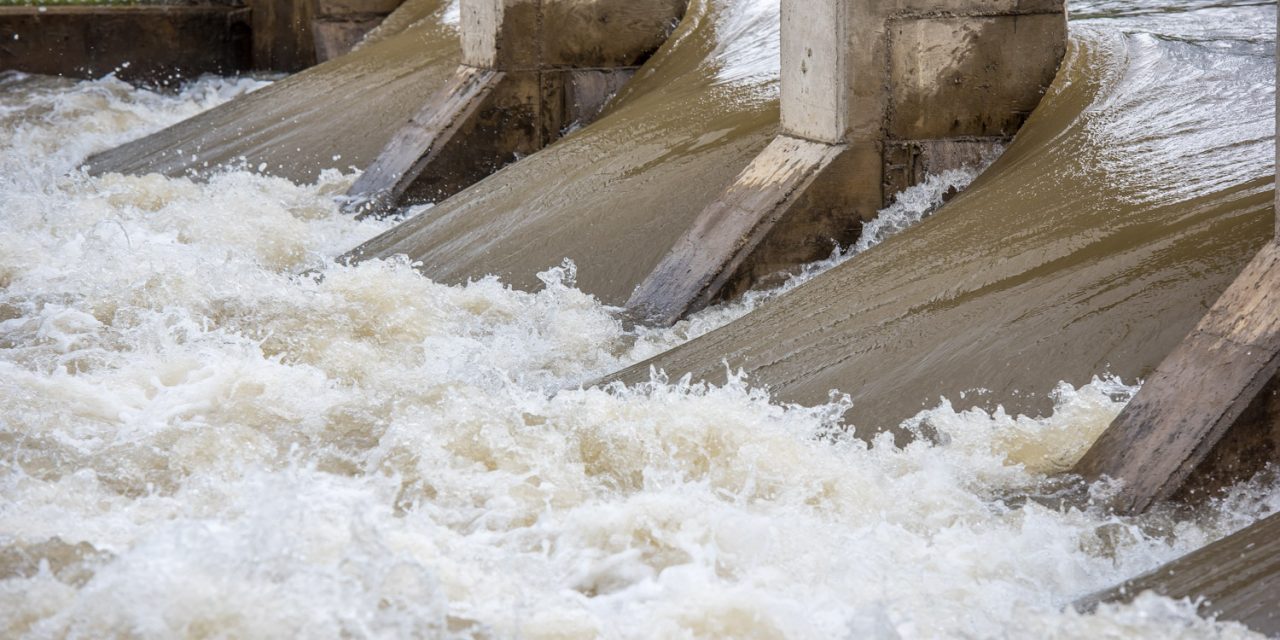
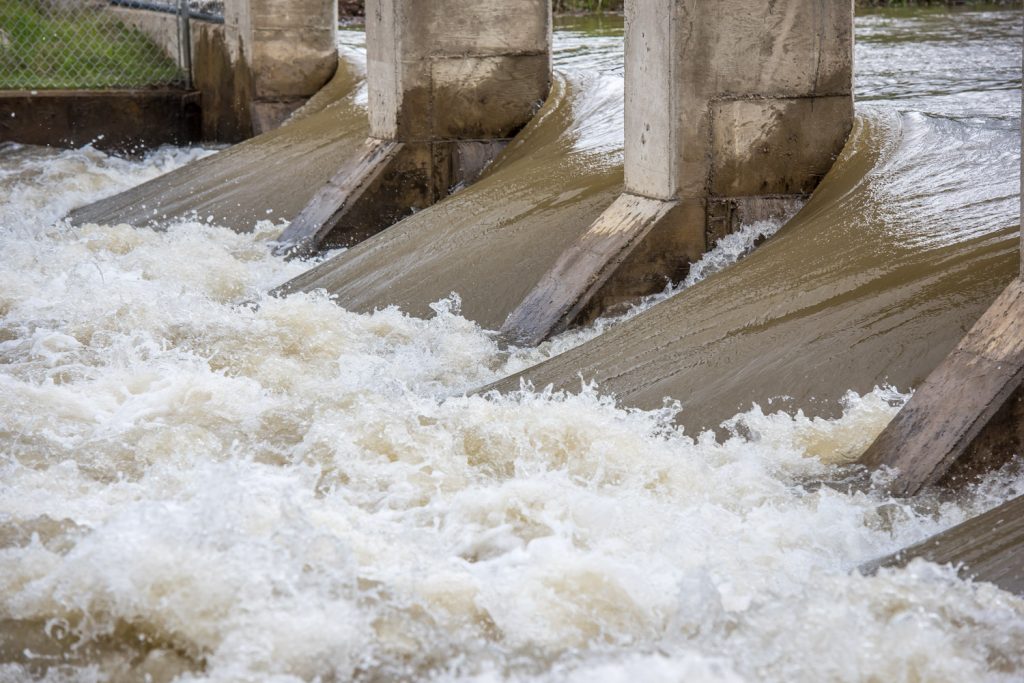
Much of Osoyoos Lake Park south of the town on Lakeshore Drive was under water last Thursday at the lake’s level rose to just below 915 feet on Friday. Officials warn that weather could cause levels to rise again and they advise caution. (Richard McGuire photo)
After surpassing two decades of flood records on Friday, the level of Osoyoos Lake is finally dropping.
The lake level reached a peak of 914.89 feet above sea level on Friday morning before starting to fall in the late afternoon. As of Wednesday afternoon, it was down about a foot to 913.87 feet.
Friday’s high level was a couple inches lower than the 915.09 feet reached in May of 1997, but otherwise was the highest level the lake has been since the great flood of 1972 when the water reached 917.06 feet.
The dropping lake level results from the alignment of several positive trends. The weather is cooler meaning less snow is melting.
The flow of the Similkameen River has declined considerably, meaning that more water can escape from Osoyoos Lake at Oroville, WA.
And, although the level of Okanagan Lake continues to rise, the rate has slowed, as there is now decreased snowpack at higher elevations.
On Saturday, the B.C. River Forecast Centre ended its high-stream advisories for the Okanagan and Similkameen basins.
Meanwhile, officials warn that changing weather could cause the lake’s level to rise again and residents should leave sandbags in place and be especially careful about boating on the swollen lakes.
“At this point, it is still dependent upon how much rain we get in the next couple weeks, coupled with how fast the snow runoff comes down through the Similkameen,” said Janette Van Vianen, Town of Osoyoos director of corporate services and emergency program co-ordinator.
“Weather is a big factor and if winds pick up, people will see the wave action, so it is wise to keep all sandbags in place and to ensure that sandbags are high enough to withstand the higher waves,” Van Vianen added.
The Town of Osoyoos last Thursday closed the Desert Sunrise Marina and all municipal boat launches due to the extraordinarily high lake level, hazards and debris in the lake, and the potential damage that watercraft wakes can cause to vulnerable properties and infrastructure.
On Monday, Van Vianen said the marina and town boat launches would still remain closed until further notice.
The Regional District of Okanagan-Similkameen (RDOS) has also warned the public about the hazards of boating and tubing when water levels are high.
The RDOS asked residents and visitors to limit use of boats that create wakes and also to watch speed to avoid floating or hidden debris.
Tubing is also not advised on the Penticton Channel, Okanagan River or Similkameen River, as rivers are faster and more dangerous than usual.
“Debris may be moving through the water that can hurt people,” the RDOS said in a statement issued Sunday. “The speed and power of these rivers can put people at risk.”
Local residents have complained about motorboats on the lake coming close to the shore to look at areas that have been sandbagged and creating large wakes.
One resident noted that even boats travelling farther from the shoreline create wakes that come onto low-lying properties.
The rapidly decreasing volume of the Similkameen River is allowing a much greater discharge of water from Osoyoos Lake at Oroville. When the Similkameen is high, water backs up into the Okanogan River at the confluence, slowing the flow of water out of Osoyoos Lake.
Last Wednesday night and Thursday morning, the Similkameen reached a peak discharge of 19,200 cubic feet per second (cfs) as measured at Nighthawk, WA, according to the U.S. Geological Survey.
As of 1:30 p.m. Wednesday, it was down to 9,710 cfs.
The level of Osoyoos Lake is also affected by water coming down the Okanagan River system from Okanagan Lake to the north of Penticton.
On Sunday, the Central Okanagan Emergency Operations Centre (COEOC) advised that residents should prepare for an Okanagan Lake level of 343.5 metres by mid June.
“With the ever decreasing snowpack at higher elevations, the rate of rise on Okanagan Lake is slowing down,” the B.C. Ministry of Forests, Lands and Natural Resource Operations (FLNRO) says.
“However, the lake level continues to exceed historic highs, and levels could increase more sharply with a significant rain event.”
Between Saturday and Sunday mornings, Okanagan Lake rose by one centimetre, which is less than the daily rise of three centimetres experienced recently.
COEOC says its new planning level takes into account that 50 per cent of the upper level snowpack has yet to melt.
Sandbags are available at the Public Works Yard in the industrial park at 11500 115th Street, Monday to Friday from 7 a.m. to 4 p.m. except noon to 12:30 p.m.
Sand is available across Highway 3 from the Dairy Queen.
RICHARD McGUIRE
Osoyoos Times