By Don Urquhart, Times Chronicle
The province has advised that Chronic Wasting Disease has been confirmed in the Kootenay Region prompting new regulations for the 2024 hunting season including mandatory testing.
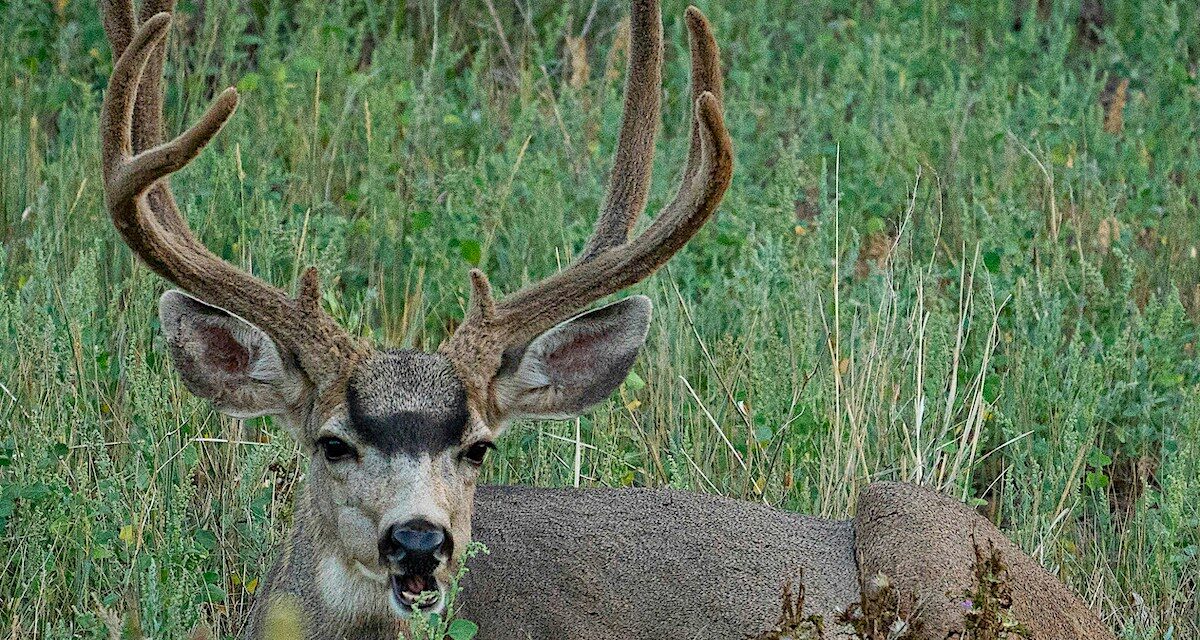
Chronic Wasting Disease (CWD) is a fatal infection that affects species in the deer family (cervids) such as mule deer, white-tailed deer, elk, moose and caribou.
CWD is a neurological disease caused by abnormal proteins (called prions) that accumulate in tissues, most significantly in the brain. There is no vaccine or treatment and the disease is always fatal.
The disease was first detected in Colorado in the 1960s and spread in both capitve and free-randing elk, white-tailed deer, mule deer and moose in 35 American states and four Canadian provinces. In Canada, CWD was first detected on a Saskatchewan elk farm in 1996.
The disease spreads through urine, feces and saliva and it can also be spread both by natural animal movement or human movement of infected animals, animal parts and/or contaminated materials. The animals can carry the infection for several years without showing any outward symptoms and typically until an infected deer is close to death, it is impossible to distinguish a healthy deer from an infected deer.
CWD was detected for the first time in BC in January 2024 in deer samples from the Kootenay Region, according to the Ministry of Water, Land and Resource Stewardship.
The province says surveillance and preventative measures have been ongoing in BC for over 20 years, with targeted efforts in the highest risk areas with “vital support” from partners and communities, it said it was able to detect this disease early.
“The priority now is expanded surveillance and risk mitigation that aims to reduce disease transmission, prevent spread to new areas and limit the negative impacts of CWD as much as possible.”
While there is no direct evidence that CWD can be transmitted to humans public health experts recommend that any animal suspected or confirmed to have CWD should not be eaten as a precaution.
More information on CWD and the human health risk can be found on BC Centre for Disease Control website.
Surveillance is also being ramped up in the higher risk areas of the province, specifically areas with confirmed cases and regions next to CWD-positive areas outside of BC including Alberta, Montana, Idaho and Washington.
The province also highlights that testing of deer, elk or moose is a condition of the general hunting license and it is urging hunters to voluntarily submit harvested deer, elk, and moose from all regions of BC for testing. There is no cost for submitting samples for CWD testing.
Testing can be done locally at:
Oliver
BNB Meats, 5867 Okanagan Street, Oliver.
Drop-off during business hours only: Open 9 a.m. – 5 p.m., seven days a week. Contact: Bob Byers, 250-498-6106.
Osoyoos: Brunner’s Butcher Block, 812 91 Street, Osoyoos.
Drop-off by appointment only. Call between hours of 8 a.m. – 6 p.m. Contact: Paul Brunner, 250-498-9543.
Keremeos: Keremeos-Cawston Sportman Association, 2486 Upper Bench Road, Keremeos.
Drop-off by appointment only. Contact: Bill Wieland or Jeff Oland, 250-502-7747 or 250-862-6322.
Anyone observing a deer, elk, moose, or caribou in BC exhibiting the symptoms of CWD – thin, drooling, poor coordination, stumbling, or generally sick with no obvious reason – are asked to report it to the 24/7 Report All Poachers and Polluters (RAPP) Line at 1-877-952-7277 or Provincial Wildlife Health Program at 250-751-3219.