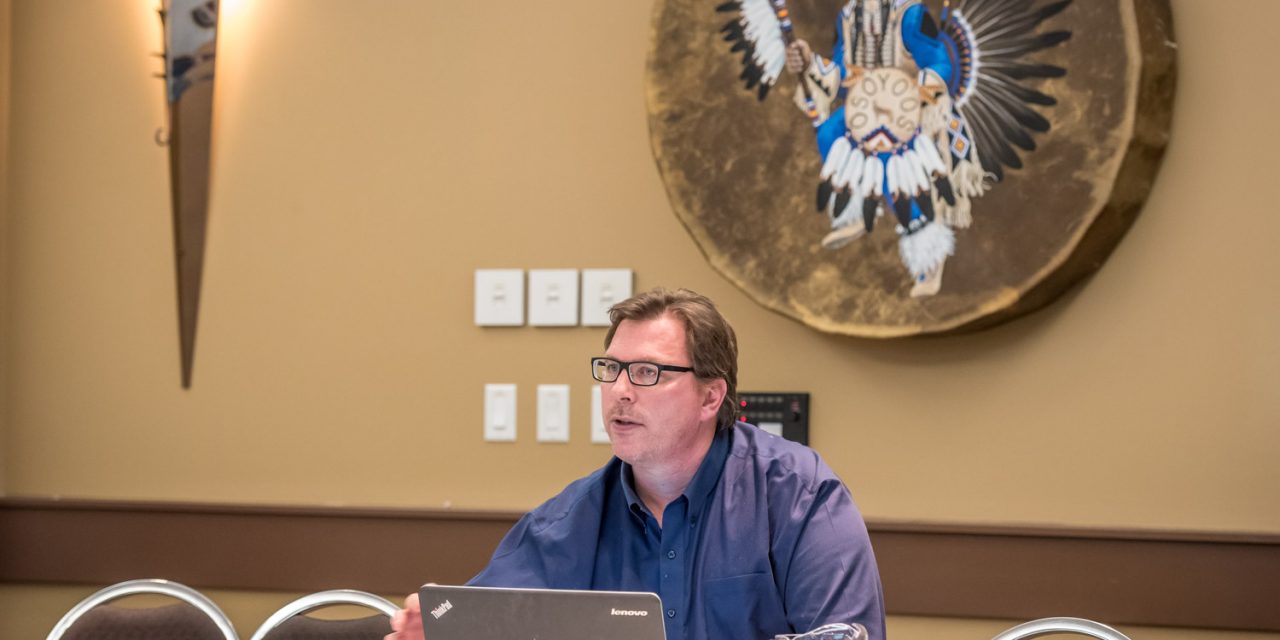
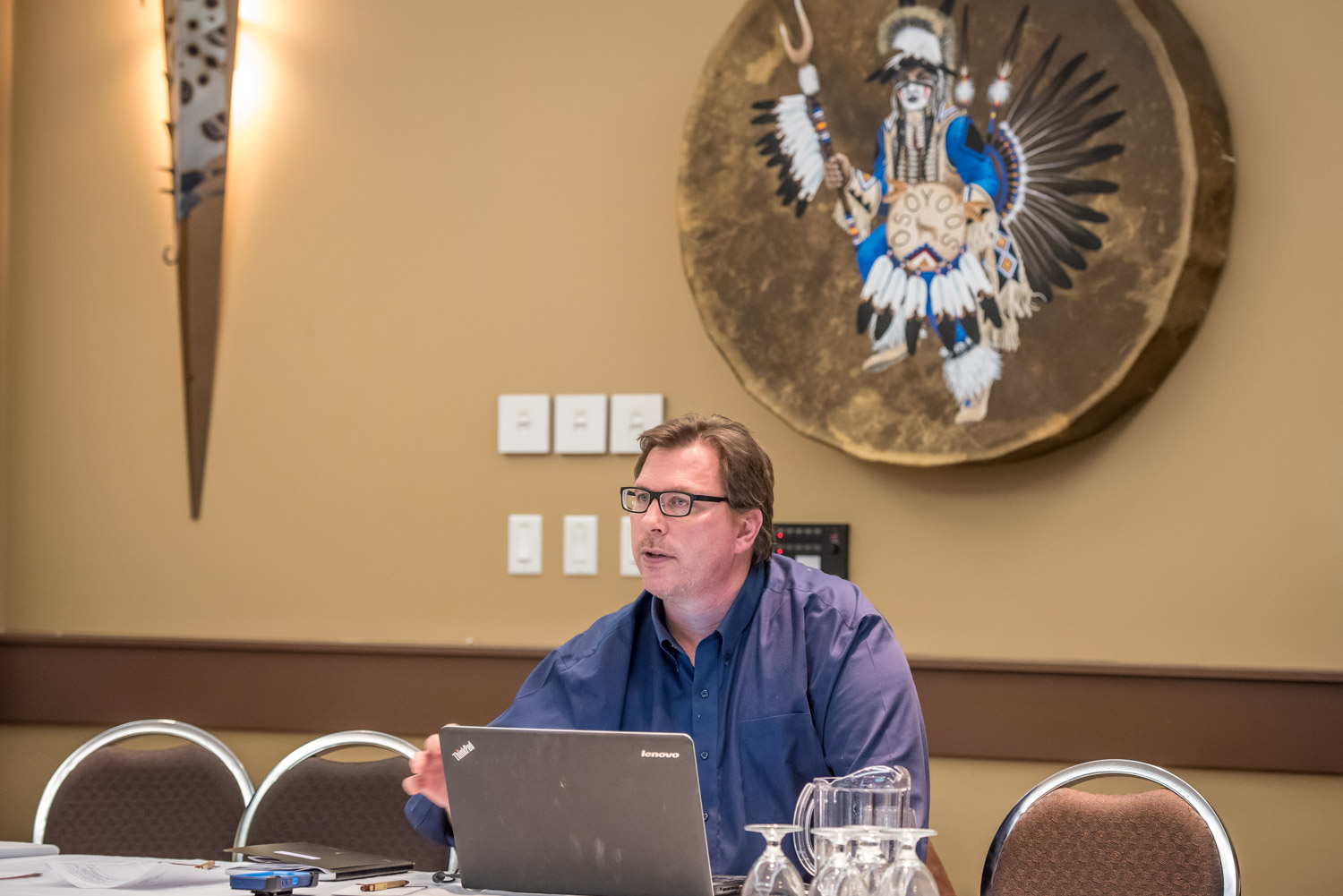
Okanagan Nation Alliance fisheries biologist Richard Bussanich discussed the success of the Okanagan Salmon Community Initiative at a meeting this spring at Spirit Ridge. The program is accepting applications from anglers who want to volunteer and support the fishery. (Richard McGuire photo)
If you’re an avid and experienced angler with the right gear, there may be a spot for you to catch sockeye this year as part of the Okanagan Salmon Community Initiative.
A pilot volunteer fishing program was successful last year, said Richard Bussanich, fisheries biologist with the Okanagan Nation Alliance (ONA).
This year the program will be expanded.
Volunteers catch fish for the ONA’s commercial fishery during the same period at the beginning of August that the recreational sockeye fishery operates on Osoyoos Lake.
Typically the fishery runs for two weeks in the North Basin.
The fish are sold by Nk’Mip Desert Cultural Centre at a stand next to the PetroCanada station.
This year there will also be sales at the Watermark Beach Resort. Some sockeye is also sold at Penticton Farmers Market and Codfathers in Kelowna.
Last year there were up to 10 vessels each day participating in the volunteer program. This year the goal is to recruit 30 vessels a day.
In total, there were 18 vessels in the fleet last year and about 58 participants, Bussanich said.
One of those avid participants is Rick Simpson, who is on the steering committee for the project.
Simpson said that for every 10 fish the anglers catch as volunteers, they get to keep one additional fish above their recreational limit
It’s not, however, this extra fish that motivates them.
“In many instances these are people who should be certified and in a home somewhere because they just absolutely love to fish,” he jokes in an interview. “They are like me. Given the opportunity to sit here and talk to you on the phone or be out fishing, I would rather be out fishing.”
A second motivation to becoming a volunteer, Simpson said, is that money from the sales of sockeye goes back into developing the fishery.
“The fish that we catch will perhaps make this into a self-sustaining program,” he said. “It would be nice to see this as an ongoing program based on the sweat of our brows.”
Simpson cites a list of people who participated last year, who are ordinary folks with a passion for fishing.
“They love to be out fishing and they have bought into the vision and the dream that we have to make this into a community-based fishery,” he said.
One participant, he said, caught 83 sockeye over five days last year.
Another motivation is that the anglers share information about salmon fishing techniques with each other, so it’s an excellent learning experience.
“You’re getting a lot of non-bullshit, how-to-catch information and it’s freely shared,” said Simpson. “I’ve never seen anglers who are so willing to share information. Usually you have to put a gun to their heads to figure out whether they’re going to tell you anything.”
There are certain requirements to apply to participate in the program. You need to be knowledgeable about angling, ideally with three years of trolling experience.
Applicants must make a time commitment of at least one day from 6 a.m. to 1 p.m. during available angling days and they must be willing to record data and share knowledge with the ONA and fellow volunteers.
They need a pleasure craft operator’s license, freshwater fishing license and non-tidal salmon tag.
Applicants must supply gear and a vessel of 12 to 24 feet with a minimum of two downriggers and sonar. There must be a minimum of one crew member in addition to the skipper.
To apply and for further information, contact Howie Wright, program manager, at [email protected] or Richard Bussanich, fisheries biologist, at [email protected].
Bussanich also has ideas about what motivates people to volunteer.
Some fishers, he said, are philanthropic.
They want to be part of a legacy project and contribute in a way that will see meaningful change.
Many of these are retired professional who also serve as volunteer directors and steering committee members.
About 20 per cent of current fishers fall into this category, he said.
Another group, the majority, just wants to get their hands on more fish.
“They just want the opportunity to take their kids or their grandkids out,” he said adding that they want to stay on the water after they’ve caught their personal quota.
Another group, about 15 per cent, wants to be part of developing best practices and transferring knowledge, he said.
Last year’s program provided considerable useful information, Bussanich said.
Lessons include better management of the fishery, a better understanding of fish mortality, including monitoring instances of fish that shook loose from the lines, known as “shakers.”
The program has also been an opportunity to learn more about the behaviour and needs of anglers, he said.
There’s a broad spectrum of people interested in the sockeye fishery including recreational fishers, First Nations people, politicians and foodies, he said.
Retail sales generated about $10,000 last year and fishers contributed more than $50,000 in goodwill, gear, travel and other costs, putting money into the local economy.
“So right across the board, we learned a lot about the economics,” said Bussanich. “We’re able to start developing a business model that we’re re-tweaking this year to make it a profitable exercise so that there is a net gain and money is left over to keep this program moving along.”
RICHARD McGUIRE
Osoyoos Times