Plans to develop the largest subdivision in Osoyoos in the past 20 years won’t proceed unless the province’s Agricultural Land Commission (ALC) gives its approval.
With seven members of the ALC appearing before Town of Osoyoos council on Monday for a presentation about administrative and policy changes within the ALC, the town took the opportunity to detail its plans to develop the Southeast Meadowlark subdivision.
If the ALC agrees to remove the 40 acres needed to develop the Southeast Meadowlark subdivision from the Agricultural Land Reserve (ALR), the town plans on developing 270 single-family homes, townhouses, condominiums, row housing and affordable housing within the next 10 to 15 years, said Alain Cunningham, the town’s director of development and planning services.
The town has committed to making 15 per cent, or close to 40 units, classified as “affordable housing” once completed, said Cunningham.
The town is moving ahead with plans to develop 28 units on the piece of land known as the Richter Property, which is a small part of the Southeast Meadowlark development.
The plan for the Richter Property call for 24 single-family homes to be developed and two duplexes, said Cunningham.
The entire project will be designed specifically to promote “affordable housing” within the town as the most expensive home to be constructed won’t exceed $350,000, said Cunningham.
The town reached an agreement late last month to sell the lots to develop the Richter Property to Ellcar Construction of Osoyoos.
Hart Buckendahl, the president of Ellcar Construction, said he hopes to begin construction on the 28 units as soon as surveys are completed and the ALC officially removes the land from the ALR.
The town first informed the ALC about its plans to develop the Southeast Meadowlark subdivision back in 2010, said Cunningham.
Kim Grout, chief executive officer of the ALC, told council that the commission’s primary goal is to preserve agricultural land across the province, noting that only five per cent of B.C.’s land mass is currently protected under ALC provisions.
Cunningham said the town recognizes that the ALC will only allow for exclusions to allow subdivisions like the Southeast Meadowlark subdivision to proceed, but this project meets the three main criteria designed by the commission, including:
- It has high density to make best use of the land;
- It includes an affordable housing component.
- The agricultural lands outside the boundaries are protected by a buffer zone that separates farmland from residential construction
The town attempted for several years to find a private developer to take on the Southeast Meadowlark subdivision project, but no one came forward.
Last year, town council voted to form its own development committee and one of its top priorities is to make the Southeast Meadowlark subdivision a reality, said Cunningham.
The town will only be able to proceed with the project by allowing the entire 40-acre property to be excluded from the ALR by the commission.
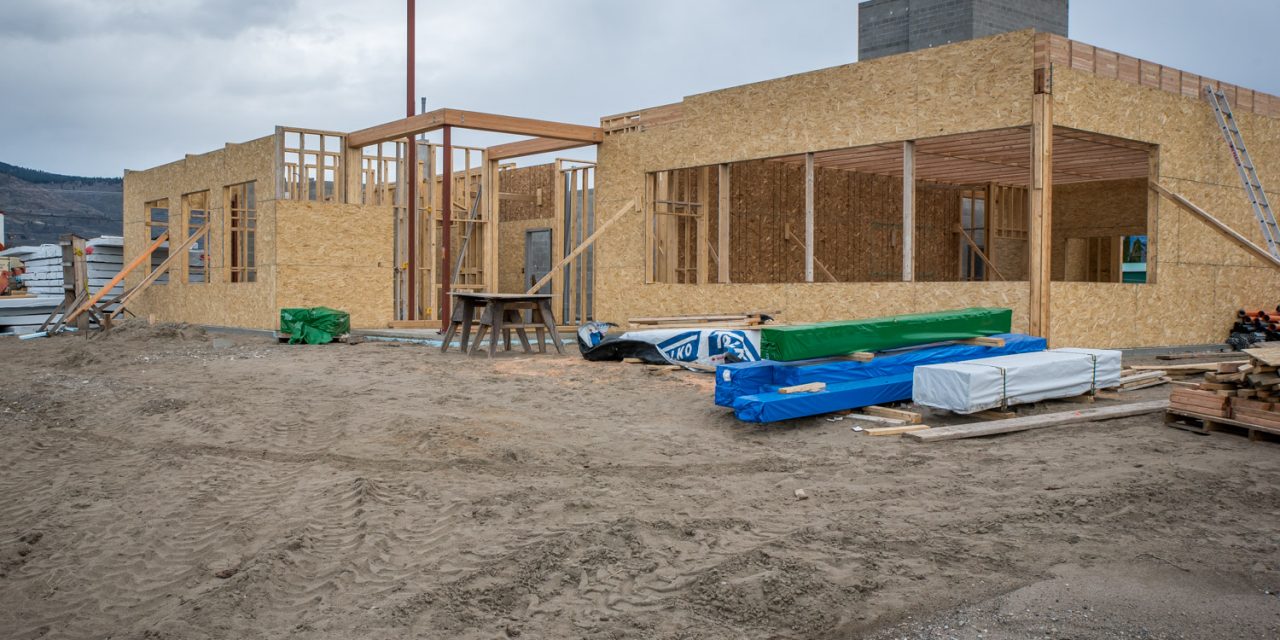
The subdivision would surround the chunk of land where the town’s new fire hall is being constructed, said Cunningham.
The water and sewer infrastructure being built to service the fire hall can easily be connected to the proposed infrastructure needed for the subdivision to be built, he said.
Mayor Sue McKortoff told the ALC representatives that Osoyoos needs more affordable housing and this project would provide it.
“It’s a good place to put affordable housing,” she said.
The subdivision would be within walking distance to downtown, the Sun Bowl Arena, Osoyoos Secondary School and the library, she said.
Coun. C.J. Rhodes said he has always wondered about how the commission makes its final decisions about excluding land from the ALR.
Gerald Zimmerman, an ALC Okanagan panel member, said every decision the commission makes is based on “is it the best use of that piece of property … we look 100 and 200 years down the road.”
Members of the commission “are not close minded” or anti-development, but they do have a mandate to preserve quality agricultural land across the province, said Zimmerman.
Commission members also don’t consider the economic impact of any development proposal and treat a single developer “the same as we would a multi-millionaire,” he said.
“It always comes back to is that the best use of that piece of property … we’re not going to be unreasonable,” he said.
Longtime commission member Greg Norton told members of council to “look outside the box” when it comes to development projects and asking for ALR exclusion from the commission.
The commission makes decisions based on protecting the very small chunk of valuable agricultural land left in the province and it won’t approve any exclusion unless it is convinced this is the best use of a piece of agricultural land, said Norton.
During her presentation to council, Grout discussed legislative and regulatory changes from the last two years, including:
• The division of the province in two zones. Zone 1 includes the Okanagan, the south coast and Vancouver Island; Zone 2 includes the Kootenays, Interior and northern B.C.
• In the 2015 provincial budget, the ALC received $1.1 million increase in the commission’s budget, an increase of over 30 per cent, which will allow better communication with local governments; and
• Application fee increases to $1,500 from $600 in Zone 1 and from $600 to $900 in Zone 2.
The ALC is made up of six regional panels and each panel has one vice-chair and two commissioners.
Frank Leonard, the board chair, has input on all decisions.
For more information about the ALC, you can go online and visit www.alc.gov.bc.ca.
KEITH LACEY
Osoyoos Times