By Sebastian Kanally, Times Chronicle
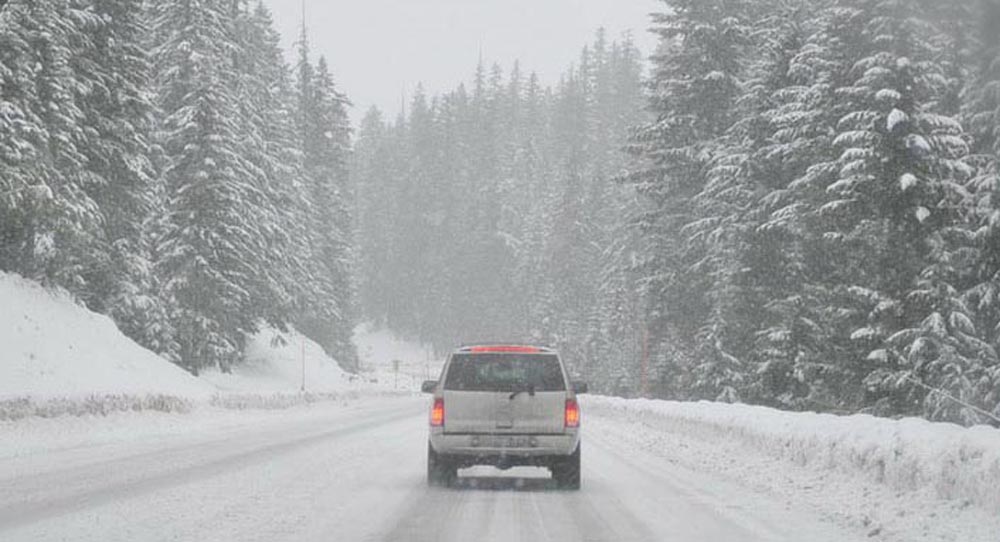
Driving in British Columbia has its own unique beauty, and just as noteworthy, its own unique problems. Drivers must take the proper precautions to keep themselves safe all of the time on the roads, but it is critical in the winter time.
Last year’s historic weather event, where roads were wiped out leaving many people stranded in their vehicles, made many more people aware of the type of events we need to prepare for when on the road.
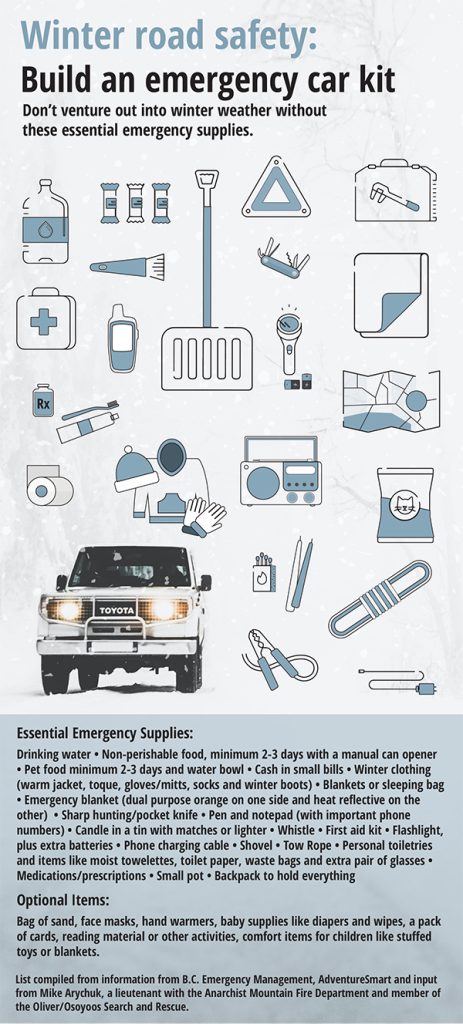
Leaving a warm winter jacket, a blanket, an extra set of hat and mittens in your vehicle could go a long way in the case of an unforeseen emergency. In the flooding and landslides that occurred last year, motorists were stranded, in some cases for days at a time on various remote stretches of highway.
But keeping warm is not the only thing you must prepare for. Many of the people last year were ill-prepared for the emergency, and the distress could have been mitigated by simple but thoughtful planning.
Preparation is a crucial part of winter driving. Mike Arychuck, a lieutenant with the Anarchist Mountain Fire Department and member of Oliver/Osoyoos Search and Rescue advised: “you have to treat the drive as if you’re going for a hike – you have to be prepared to be outside.”
A great resource to look at is the AdventureSmart.ca website which has lots of expert advice on properly preparing for outdoor adventure.
AdventureSmart advocates the ‘Three T’s’ – trip planning, training, and taking the essentials.
Trip planning focuses on the route, the weather, and informing someone of your departure and expected arrival; this is a crucial and often overlooked step.
Someone should also always know where you are going and when you expect to get there. If you are going through stretches without cell service, check in with someone once you get through, even something as simple as pulling over and sending a text message will do.
Another important part of trip planning is paying attention to the weather and taking it seriously. If the forecast looks bad you may want to postpone the trip or take additional precautions.
In the case that one does get stranded on mountain roads, it’s important to consider that what may have begun as a pleasant +5C day may turn into a -15C night, before accounting for windchill. This is where planning can really make a difference. The light jacket you wore during the day may be inadequate for surviving the night.
If stranded, you must have enough supplies in your vehicle to survive until first responders get there. “Can you stay the night in your vehicle if you go off the road into a snowbank because the vehicle becomes your shelter?” Arychuck asked. He even advised having an orange tarp – orange on one side and heat-reflective on the other. It can be used to keep warm or it can be put on top of the vehicle to attract attention in the case of going off the road.
The second ‘T’, for Training, is more pertinent to outdoor activities but for drivers, it also means knowing and staying within limits, such as experience driving in snow and icy conditions.
For taking the essentials, water and staying hydrated is a crucial consideration. It is misguided to think that you will be alright because snow is everywhere. Snow by itself will not hydrate you and can lead to hypothermia. It needs to be boiled down to water for hydration and sterilization. A good tip is to keep a small pan or pot in the vehicle to melt down snow on a still warm or running engine.
For individuals who do a lot of winter driving in remote areas where there are significant gaps in cellular coverage such as Hwy. 3, it might be worth considering getting an emergency satellite communication device. These include devices like inReach, Spot, and Zoleo that provide precise emergency location information anywhere there is open sky overhead.
The largest mistake people can make is not preparing for a vehicle breakdown and thus not taking the essentials with them, such as water, food, clothing, etc.