Tourism has a bad reputation of seeming surface-level. As if visitors can only look through a keyhole, and leave before any real image appears. But tourism can be radical. It can be a two-way path down which a culture and its visitors seek to form a genuine connection where understanding is at the core.
According to Brenda Baptiste, who has worked on building the Indigenous tourism sector in British Columbia for the last two decades, these experiences can transform us. Transforming the communities themselves as well the knowledge of these cultures for non-Indigenous folks.
“It really can set the foundation for a cultural revitalization within the community,” said Baptiste. “Because if you’re going to be an ambassador and you’re sharing your culture with visitors, you have to know who you are, you have to understand what your identity is before you could share it and that sense of pride is really part of that communication to the visitors.”
And so by being able to dictate what Indigenous people can share about their own culture, it gives them agency to tell their own stories and be in control of their individuality, she said.
“We also knew that this was going to be an area that was going to really support cultural sovereignty, which means that we decide as Indigenous people what we’re willing to share with visitors and what we’re willing to protect and keep within our own communities,” said Baptiste adding that this form of empowerment is vital.
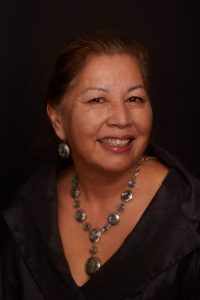
Brenda Baptiste of the Osoyoos Indian Band receives highest honour in the province. Government of B.C. photo.
This idea of transformation also includes a shift in relationship between Indigenous and non-Indigenous which speaks to the heart of reconciliation in order to truly understand the Indigenous population of that area, said Baptiste.
As the current chair of Indigenous Tourism BC (ITBC), Baptiste recalls that there was no such thing as “Indigenous tourism,” back when she started with the organization about two decades ago. Yet the idea of it made perfect sense both economically and culturally.
“We knew that tourism was a way that required very little infrastructure, or even a storefront. Their territories sit up on some of the most pristine, beautiful parts of this province; the culture is so vibrant; the language is there; there was much that they could share of it while welcoming visitors,” said Baptiste.
With this mindset of using what is available to showcase Indigenous culture to visitors both within and outside the country, Baptiste worked on many projects that helped this goal.
Back in 2003, she acted as the main driving force to coordinate the Nk’Mip Cultural Centre in Osoyoos. Baptiste planned the operations which were made to celebrate and share Indigenous sylix culture. The centre has been a huge success over the years, attracting hundreds every year, and winning awards.
“[Osoyoos Indian Band] is lucky in the sense that we do have opportunity in the South Okanagan, and certainly with the great leadership of Chief Louis, that has really driven our economic agenda,” said Baptiste. “We’ve been very successful, but there’s over 200 [Indigenous] communities within B.C., many of them don’t have the infrastructure to be able to do long term economic development ventures, or the partnership.”
Her work within ITBC is rooted in creating those opportunities for Indigenous people across B.C.
Earlier this month, Baptiste was awarded the Order of British Columbia for 2021, the province’s highest form of recognition, in which only 16 individuals are chosen.
This year, 257 British Columbians were nominated for the Order. Since its inception, 475 British Columbians have been appointed to the Order of B.C from all regions of the province.
Baptiste has been an unstoppable force for over two decades in her work to elevate and support Indigenous cultural tourism throughout the province.
“I think it’s an incredible recognition of the number of people that actually work on Indigenous initiatives, especially economic development and tourism and culture.” Baptiste said the award has been an honour but also humbling for her, who sees the achievements of Indigenous cultural tourism as a team effort.
“It certainly is a reflection of how far this province has come in terms of reconciliation and the commitment to UNDRIP. I’m really honoured to be a part of this group, and I want to share that honour with the people that I’ve worked with throughout my career that have worked so hard to make this awareness of the importance of the Indigenous voices.”
An important part of the work done for Indigenous tourism within B.C. for Baptiste is to work with the diversity of Indigenous cultures in the province. The various languages, traditions, and landscapes sweeping across this vast province creates a plethora of opportunities to work with.
“I’m syilx, an Okanagan woman, and our culture is very different from, say, the Haida nation. Our stories are very different, our creation stories, the songs, the language, everything is so different. You’ve got that cultural diversity that you can travel through this province and the experiences that you can get in terms of Indigenous culture are just vast.”
“We’re an oral culture,” said Baptiste, “and so you have your history books, whereas we have our knowledge keepers, and our elders, who continue to tell us those stories and we learn from them. That’s where we learn our values and traditions.”
In her vision for the future of Indigenous culture tourism, Baptiste hopes for a “unified identity of B.C. that everyone can be proud of.” She hopes that one would never think about B.C. without thinking of the Indigenous voice and that those identities are aligned, and one and the same.
Baptiste also said that we are living through a particularly interesting time in history in terms of national reckoning since the discovery of hundreds of mass burials of children in former residential schools. These conversations, she said, create a much-needed dialogue between Indigenous and non-Indigenous people in this country.