By Don Urquhart, Times Chronicle
The Okanagan Basin Water Board (OBWB) has vaguely welcomed the federal government’s funding announcement, arguing it offers virtually nothing for prevention efforts to keep zebra and quagga mussels out of BC.
“Although this may sound like a win, and it is a welcome announcement, it does not address recent calls to action made to the federal government, from the Water Board, Thompson-Okanagan chambers, B.C. Wildlife Federation, Westbank First Nation, local governments, and others,” said OBWB Executive Director Anna Warwick Sears.
“Most importantly, it does not directly support the prevention of invasive mussels in the west,” Sears emphasizes.
The most effective way forward is for the Government of Canada to become a funding partner of BC’s Invasive Mussel Defense Program (IMDP) through direct funding and resources to BC,” says Sears articulating OBWB’s position.
“Otherwise, federal officials (Canada Border Service Agents or DFO Enforcement Officers) need orders and resources to take over the prevention program on the federal border, leaving BC’s Conservation Officers to re-deploy along the Alberta-BC border. As such, all our calls to action remain.”
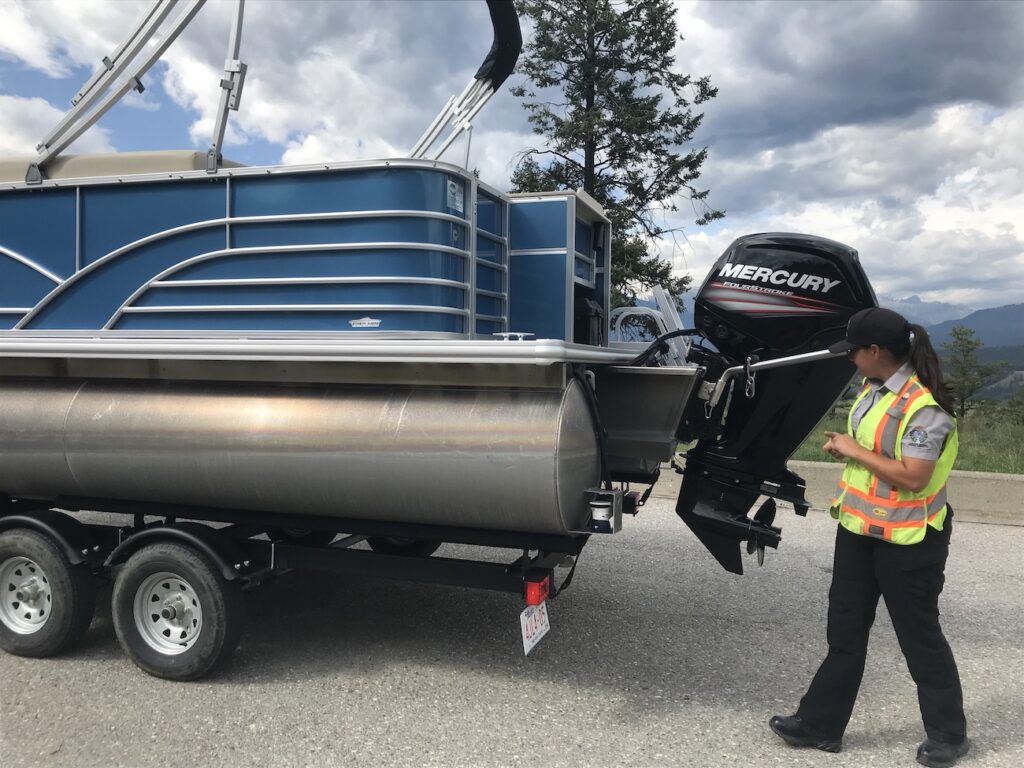
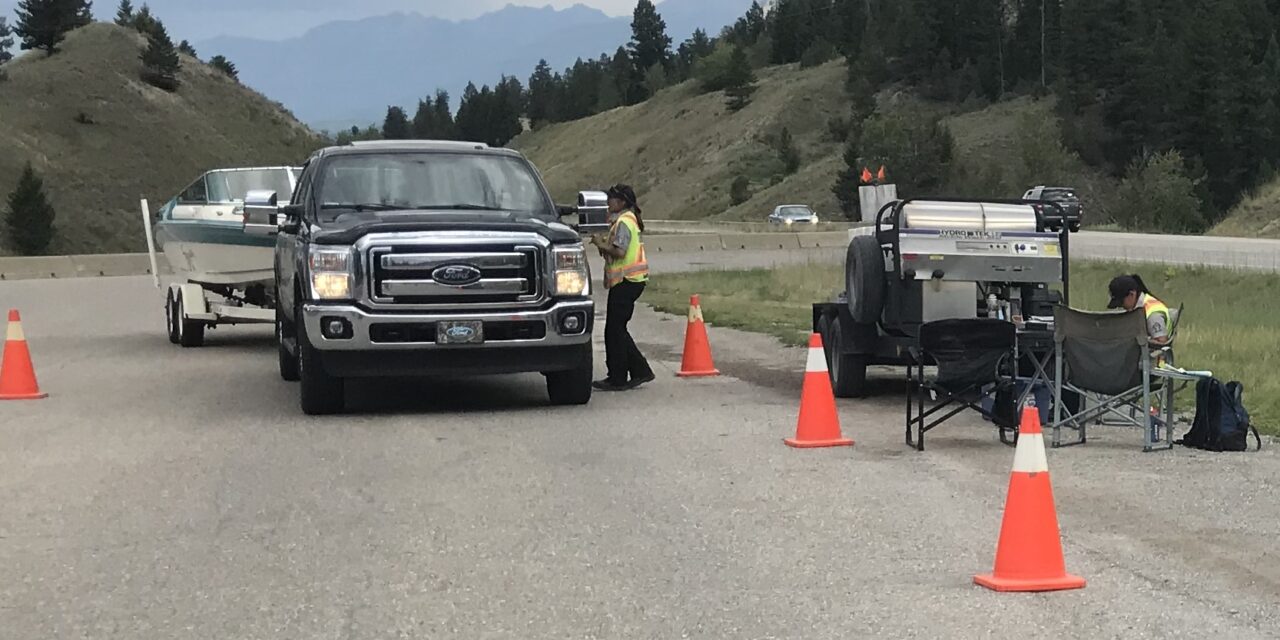
BC IMDP inspector checks watercraft near Radium. OBWB-OKWaterWise photo
Announcing last week funding of up to $540,000 from 2023 to 2025 for the non-profit Habitat Conservation Trust Foundation (HCTF), Diane Lebouthillier, Minister of Fisheries, Oceans and the Canadian Coast Guard said the funding will support BC’s existing IMDP, including ongoing efforts to prevent the introduction of zebra and quagga mussels in BC.
This will support the ongoing work of the Province of British Columbia’s existing IMDP, including ongoing efforts to prevent the introduction of zebra and quagga mussels in BC the minister said.
But the OBWB notes that the HCTF – which was provided funding previously to administer to BC invasive species groups to do mussel lake-monitoring – had to apply for this grant rather than it being directly funded for the program.
Further it says the funding only supports water sampling in about 65 lakes throughout the province to detect if mussels are already present. This is “important and necessary work,” but it is not a prevention tool, the OBWB underscores.
Also part of the announcement was a reference to $8.75 million over five years as part of the Aquatic Invasive Species Prevention Fund.
The OBWB notes this is a re-announcement of funding from last year. And, this is a nation-wide fund which requires BC to compete for these grants with other aquatic invasive projects across Canada.
Additionally, the DFO is also investing $90,000 to acquire two new decontamination trailers in BC to support the IMDP. These will help educate the public on the importance of cleaning, draining and drying their watercraft before moving between bodies of water, the DFO said.
It added that the trailers “will allow DFO to support the province by conducting watercraft decontaminations when provincial staff are unavailable.”
But even these additional resources didn’t win over the OBWB which said: “This will provide a few more resources to respond if a high-risk boat is stopped. Again, this is a welcome addition, but does not help detect or prevent invasive mussels.”
“After reviewing the news release, it has been determined that our calls to action still stand since the announcement does not address federal funding gaps and solutions that would prevent invasive mussels,” added James Littley, OBWB’s invasive mussel policy lead.
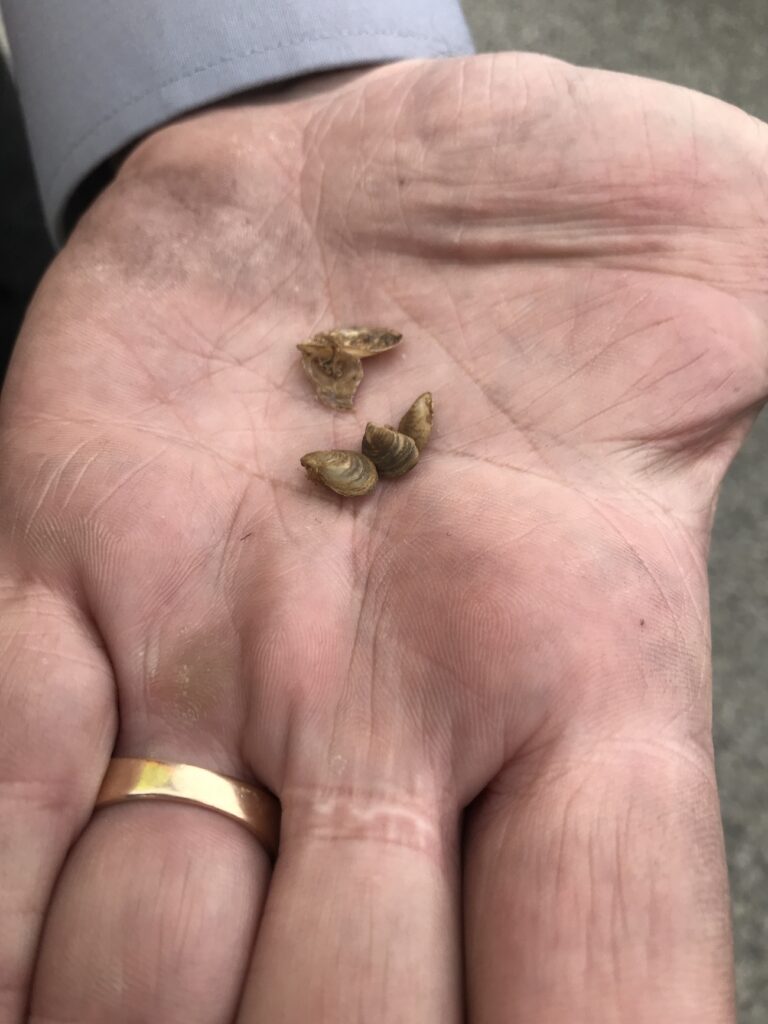
A BC IMDP inspector with mussel sample in the palm of their hand. OBWB-OKWaterWise photo
A crucial missing piece for the OBWB is the fact there is no funding to expand or support BC’s inspection stations – “a critical program that has been proven to stop infested watercraft from entering BC, but which needs to be expanded.”
The OBWB has been stepping up its calls for action after last September’s announcement of quagga mussels in the Idaho’s Snake River, a tributary to the Columbia River which connects to the Okanagan, and only an 11-hour drive to the BC and Alberta border. The closest infestation prior to this finding was in Manitoba.
To learn more about invasive zebra and quagga mussels, the risks to BC waterways, how to prevent their spread, and more, visit DontMoveAMussel.ca.