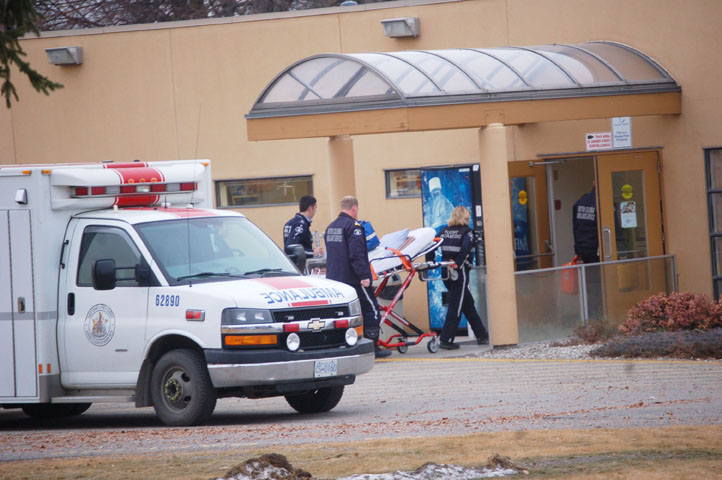

Through UBC’s family practice residency program, a handful of medical students will get to experience life in smaller communities by training at the hospitals in Oliver and Penticton as part of their education. (Lyonel Doherty file photo)
A program that has proven successful in recruiting physicians to rural communities across Canada is soon coming our way in the South Okanagan – and the hope is the program will go a long way to resolving the doctor shortage problems in small towns like Oliver and Osoyoos.
Because the resources needed for aspiring to earn their medical degrees are most often available in large cities, it can be difficult to show aspiring doctors the allure of smaller communities.
But through UBC’s family practice residency program, medical students will get to experience life by training in smaller communities and a handful of them will soon be using the hospitals in Oliver and Penticton to help complete their education.
The 2016-2017 school year, which began last month, was the inaugural launch for the program’s South Okanagan cell, UBC’s 18th cell in the province.
The local cell will be headquartered out of the Penticton Regional Hospital, where medical students will be taken under the wings of local doctors.
During their second year of the program, the medical students will be coming to South Okanagan General Hospital in Oliver for at least a month, and perhaps some time at health centres in Keremeos and Osoyoos.
The program is part of a “process of decentralizing medical education,” said site co-director Dr. Margie Krabbe. “The residency program is two years of practical education, sort of like an internship.”
Through each cell, the program will offer two years of practical training to four students.
There is space for eight students in total, but because the upcoming school year is the South Okanagan’s first, there will be just four first-year students.
Next year, those four students will continue their studies locally in their second year, making room for four new first-year students. The residency program is highly competitive with hundreds of students applying each year.
“UBC is probably one of the more desirable programs in the country,” Krabbe said. “They start out with thousands of applications, narrow it down to 300 people for an interview process, and after they go through this interview process, around 300 will be ranked, and just four get chosen.
Crab said students aren’t paid during their training and there’s no financial incentive for students to stay in the community they train, but one goal of the program is to expose medical students to small communities in hopes that they’ll get comfortable and might choose to stay in those small towns.
Of the four students who were chosen for this year to live and train in Penticton, three are from Calgary, and the other – Travis Thompson – grew up in Oliver.
Krabbe said he hopes to practice in the South Okanagan upon graduation.
Krabbe said the doctors have a habit of staying in the community where they train and nearly 50 per cent will end up sticking around despite being under no contract.
Another major factor that contributes into attracting doctors is the desirability for their spouse and children, she said.
“We feel like the Okanagan is a very desirable place to stay,” she said. “Our hope is that their experience here is going to encourage them to stay.”
With a new tower being added onto the Penticton Hospital and the recently built medical school at UBC-Okanagan, “we’ve seen a rise in what we would call medical learners,” Krabbe said.
The residency program is expanding fast. The Okanagan cell is the third addition in as many years, with new cells also in Kamloops and the Kootenays.
“If every year residents only train in Victoria, that’s where they’re going to get established – how are they going to want to work in Cranbrook or 100 Mile House?”
DAN WALTON
Oliver Chronicle