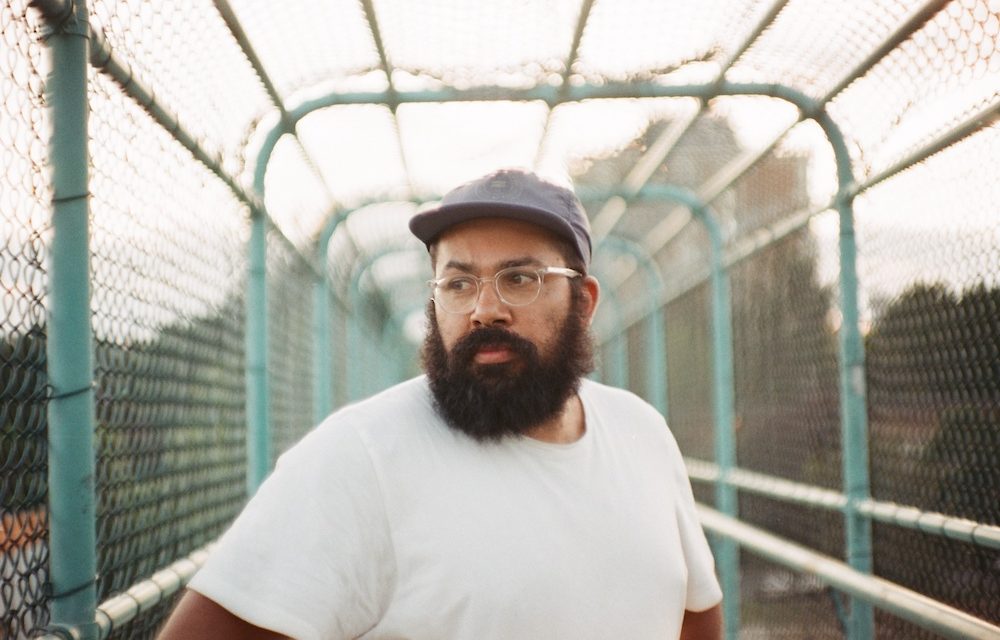
South Okanagan creator and filmmaker, Daniel Code, is among 30 selected Black creators from across B.C. and Alberta to receive $20,000 in production funding, personalized training and mentorship.
As part of Black History Month TELUS STORYHIVE and The Black Screen Office (BSO) selected the grant recipients as part of the first-ever Black Creators Edition. Code’s new project, ‘Defining Human’, is a drama exploring Afrofuturism and what it means to fight for a society rooted inequality.
Speaking to the Times-Chronicle about his passion, Code says his work in film was not wholly intended. Studying broadcasting at BCIT Code was on track to work in the news business, “but I didn’t really enjoy news,” he laughs.
After touring broadcast centres around Southwestern B.C as part of his course, his decision was clear. “I realised there was really no room for people who wanted to work in news broadcasting centres because most of them had amalgamated into robots essentially and that was a big turnoff,” Code adds.
After completing his diploma in 2009 he says he wasn’t doing that much with broadcasting but fell into Reality TV. “It was huge just after the Olympics,” he says explaining that from about 2011-15 there was a lot of independent films and TV being made in Vancouver, but Reality TV was the hot ticket.
Code says the good thing about it was that it was easy to get into because it was similar to what he was doing at BCIT, “with a paired down team it was kind of like a docu-style.” It also worked well for him because the days weren’t long and sometimes it would only shoot three days a week.
“So I had all this time that I got to spend on doing a lot of free projects or projects that were a little bit lower-paying but had a higher production value or higher credit,” he says. It also enabled him to take time off to work on one feature film and another feature documentary.
“I kind of started to cut my teeth on all that stuff and working at production so I did that for four or five years kind of going back-and-forth and eventually sort of building connections throughout that to where I am today.”
As he built up his portfolio he was also a producer for other people’s larger projects and working in production, “getting a good idea of what the field was like and where I wanted to position myself for later,” he adds.
TELUS STORYHIVE’s Black Creators Edition was specifically created to address the underrepresentation of Black voices in Canadian screen and television, in addition to helping jumpstart the careers of emerging creators in the television and film industry.
I ask Code about racial bias in the industry. “It’s a pretty lonely place at the top for a person of colour and I do find that once you get closer and closer to producing roles or production managing roles in certain parts of the industry like commercials for example, there are very few people that are at the top who are BIPOC (Black, Indigenous and people of colour).
“It is challenging because I think there’s a sense of not really having a say a lot of the time when you get closer to that area. It’s changing a lot now but it’s still a thing.”
He notes that while substantial effort is being made to diversify the industry, particularly after the Black Lives Matter movement, there’s still a lot of work to be done.
One problem is that a lot of the money going into programming is going to white producers, even if it is creating more programming for the BIPOC communities. Things are changing though, just not overnight he adds.
Code recently worked on a production in Osoyoos and around Oliver produced by Oddfellows a film production company out of Vancouver which he says is pushing hard for diversity “and at the top, they have very diverse producers and they’ve been really great for being able to incorporate myself and people of colour into their projects.”
When asked if he has any role models he considers the question a bit. “Jordan Peele is probably one of the biggest right now. I think the film ‘Get Out’ for a lot of people I know was a big stepping stone for directors. He also points to Bootsy Collins for her film ‘Sorry to Bother You’.
“I think those people have lately certainly influenced me a lot,” he says, adding that these producers are “putting out something that’s talking about the black experience more than anybody else.”
As for his own short film he’s grateful for the grant highlighting it’s not easy to get grants he adds it’s also a tough balancing act between earning a living and building his own portfolio. This means a day job doing production in order to save up money to take time off to do his own projects.
“I have to do 100 of these films to feel like up to par on where I want to go,” he says. “The more funding I can get, the more opportunities I have to do what is really important so I’m never gonna say no to money,” he laughs.
“It is an expensive business, it’s $20,000 from TELUS STORYHIVE but it’s still not enough to be able to bring up actors or to be able to get the equipment that I need, it’s science fiction so it’s very expensive.” This means pruning back the scale of his production, one that will likely come in at around 10 minutes long. And it means injecting some of his savings as well.
He notes that a lot of people often have to take their own money and put it into their projects. “That’s super challenging and it’s not the easiest way to do it when you save up all your money and spend it on films.”
Speaking about his project, Code defines ‘Afrofuturism’ as “a world where you’re never segregated, you’re living in a place where segregation never existed at all. So the idea of if racism existed, it doesn’t exist its equal opportunity for everybody and you never look back at it being an issue.”
In Defining Human Code tells the story of a father, and son and the struggles they face in the future of 2025. In this future, the Black communities have never been so segregated as the air quality on earth has diminished to dangerous levels.
The father must make sacrifices for his genius son, who is competing in an advanced space program with the dream of belonging to a community of racial equality in the new planetary frontier. The son must then make the decision whether to leave behind his father and community to realize a racially equal society on the new planet.
This project explores the sacrifices and decisions people in the Black community continue to make in hopes that society will one day be racially equal, Code says. Shooting will likely start in June or July and Code hopes to source talent locally, which could include up to 10 cast members.
For a look at Code’s previous work, he points to Colour Study which has been making a lot of festival tours lately and was accepted into another festival in Seattle recently at the ByDesign 2022 Festival and also won a top prize at the ZEBRA Poetry Film Festival in Berlin.