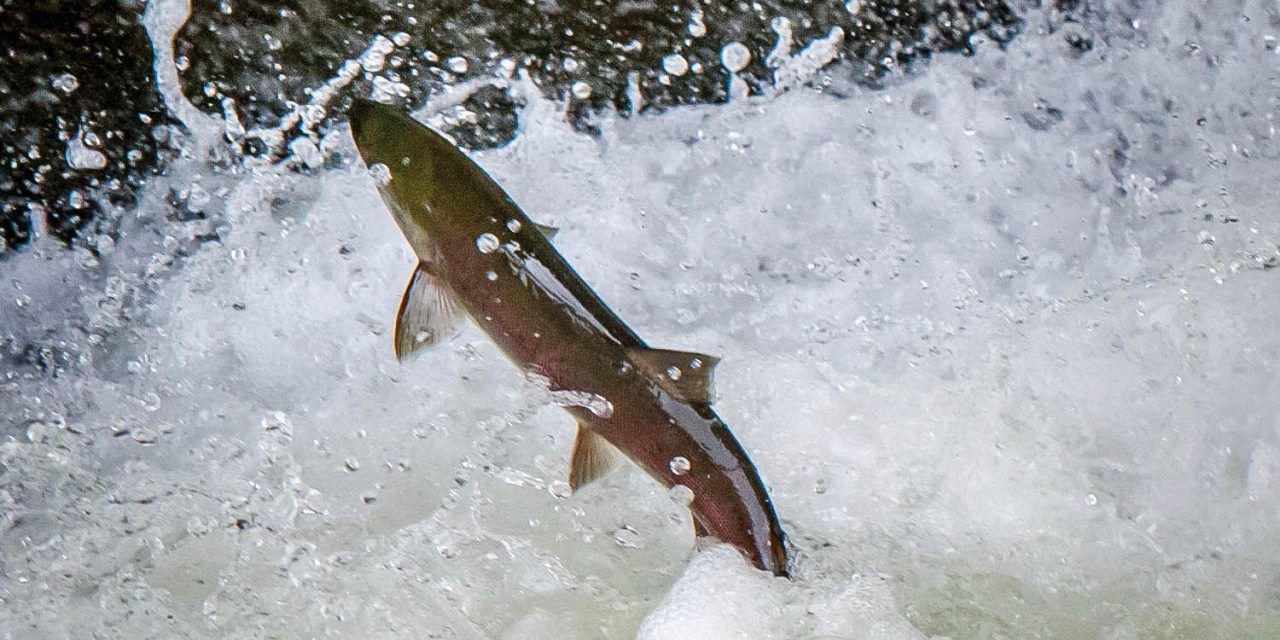
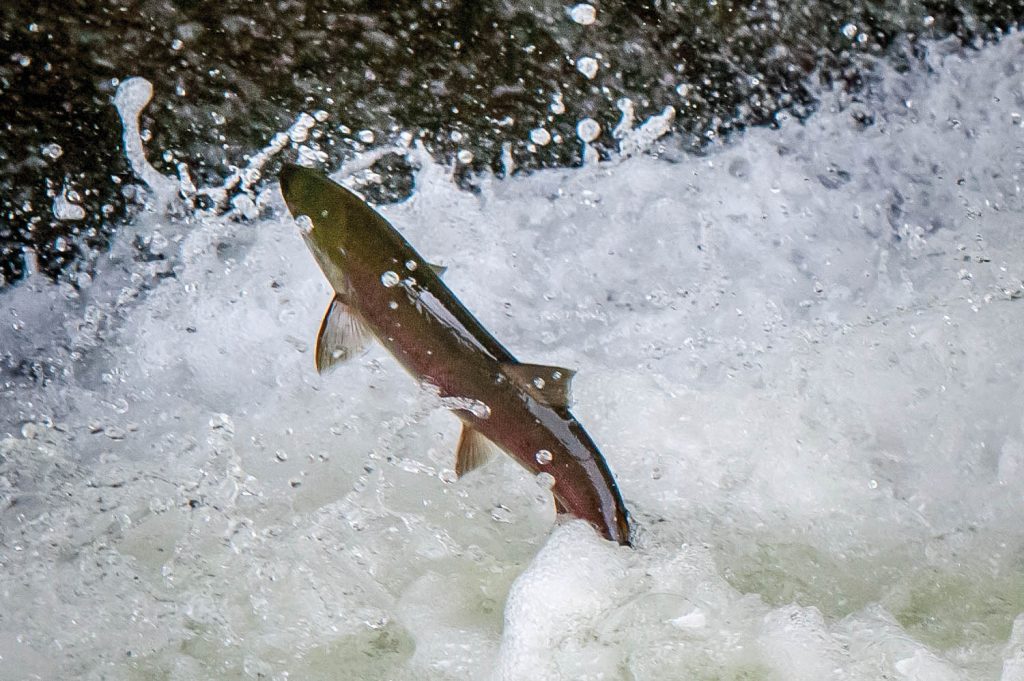
After last year’s recreational sockeye salmon fishery was cancelled on Osoyoos Lake – and all rivers, streams and lakes in the South Okanagan – it looks very much like there will be a recreational fishery some time in August, says Okanagan Nation Alliance fisheries manager Howie Wright. (Richard McGuire file photo)
After the recreational sockeye salmon fishery in Osoyoos Lake – and all rivers and lakes in the South Okanagan – was cancelled last year due to an extended drought and warm water that killed hundreds of thousands of fish, things are looking much brighter for 2016.
“It appears highly likely there will be an opportunity for economic recreational fishery this year,” said Okanagan Nation Alliance (ONA) Fisheries Manager Howie Wright, adding that sockeye salmon are three-to-four times more abundant than forecasted earlier this year.
The date for the recreational fishery to begin hasn’t been set yet, but should be some time in early August, said Wright.
The ONA is continuing its efforts to reopen the floodgates that impede the migration of salmon to Osoyoos Lake and lakes and rivers across the South Okanagan, which will allow more of the species to follow in the footsteps of their forefathers.
And as the salmon appear to be filling the local waterways, it looks like the ONA will need help enjoying the fruits of their labour.
With a few downstream indicators signalling a strong salmon run this summer, additional anglers may be needed for monitoring efforts, in order to better estimate fish densities.
As of last Wednesday, July 13, more than 164,000 sockeye salmon had been counted through the Wells Passage in Washington State, said Wright.
Once it became feasible to harvest industrial levels of energy at the turn of the 20th century, the health of aquatic ecologies was largely disregarded to make way for massive dams, which triggered a forceful disruption in the annual salmon run, he said.
Because the waterways that lead into the Okanagan run through another country on their way to the ocean, the need to implement fishing regulations on both sides of the border is laden with logistical challenges, said Wright.
To counteract the dams’ environmental drawbacks without undoing any of the engineering accomplishments, the ONA spent the past several years trying various methods of reintroducing sockeye to the Okanagan and it looks as though their work is going to pay off.
“The ecosystem benefits from having sockeye and the cultural significance to the Okanagan people is important – within that is the nutritional benefits, traditional diet,” Wright said. “We look at it from a restoration perspective, sharing and harvest salmon as an overall contributor to economy. Salmon is very important in the Okanagan.”
At the beginning of this year’s run, 3,000 sockeye salmon were tagged and anglers who find tagged fish will be eligible for a small prize, though only a small handful of those tagged end up getting recovered, he said.
“Sockeye enter the Columbia River at the end of May/beginning of June. At the end of June they show up in the Okanagan. The temperatures have been pretty good so far and they’re in the river right now.”
Because salmon reproduce at the end of a four-year life cycle, the health of this year’s stock is partially due to favourable conditions involving the sockeye that hatched 2012.
The ONA’s goal is to see 100,000 sockeye spawn in Oliver, and another 20,000 in the Penticton area.
Wright believes that number will be easier to achieve if a conservation agreement can be signed with his American counterparts.
“With proper water and management, the opportunity is there.”
He said the agreement will ratify how much salmon can be harvested in each country. Talks have been ongoing for the past decade.
Just over a year ago during the second week in July of 2015, it was announced the entire commercial and recreational salmon fishery operated by the ONA on Osoyoos Lake would not be taking place.
That decision has been made by ONA senior management after the provincial government announced a couple of weeks earlier that all river and stream angling across large swaths of British Columbia, including most of the South Okanagan, would be shut down due to unprecedented drought conditions.
Only days later, the Department of Fisheries and Oceans (DFO) announced there would not be a recreational salmon fishery on Osoyoos Lake for the remainder of the summer of 2015.
Richard Bussanich, fisheries biologist for the ONA, confirmed the entire recreational and commercial fishery that traditionally takes place each summer on Osoyoos Lake was being cancelled due to serious drought conditions, which had already killed tens of thousands of sockeye salmon that traditionally travel from the United States towards Osoyoos Lake and South Okanagan tributaries.
“The situation is dire,” said Bussanich last July.
The extreme drought conditions led to near-record high water temperatures and limited oxygen supply for the hundreds of thousands of sockeye salmon that were expected to make their way to Osoyoos Lake, said Bussanich.
Estimates of as many as 500,000 sockeye salmon making their way to Osoyoos Lake for the summer of 2015 were expected, but hundreds of thousands perished because of the extreme warm water conditions, he said.
“We were expecting as many as half a million at the mouth (Washington State tributaries) … and between 200,000 to 300,000 haven’t been accounted for.”
The relatively cool spring and summer so far in 2016 has proven to be very beneficial to the annual sockeye salmon run to Osoyoos Lake and the South Okanagan, said Wright.
To apply to be one of the anglers to survey sockeye salmon in Osoyoos Lake, contact Wright at [email protected].