
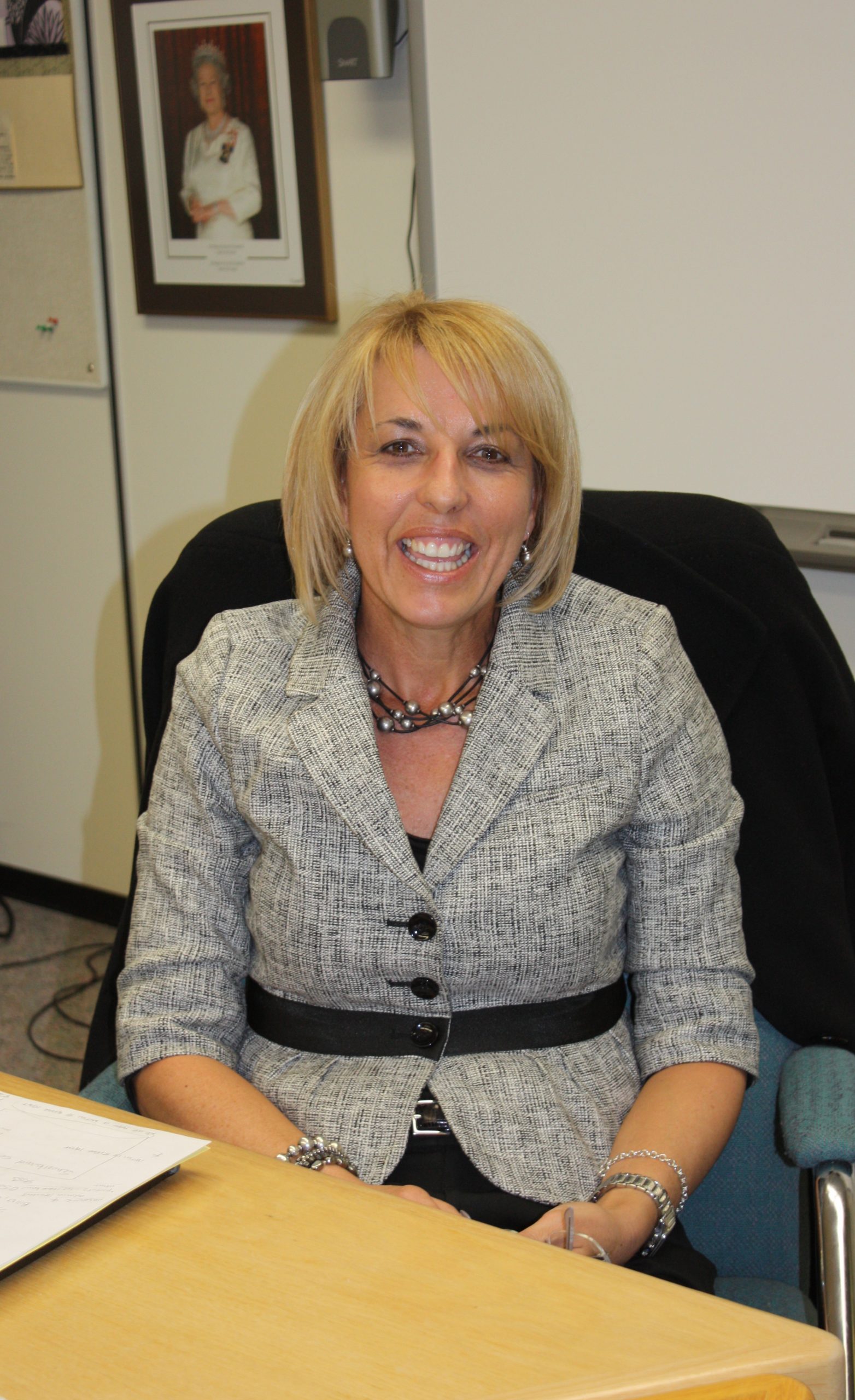
Marieze Tarr
School District 53 board chair Marieze Tarr is sounding the alarm about a provincial government bill that she worries could undermine the authority of elected school trustees.
Tarr wrote recently to Education Minister Peter Fassbender to express a number of concerns about Bill 11, which was introduced into the B.C. Legislature in March.
The bill was given second reading, pushed through committee and then passed into law in the space of one week earlier this month. It received Royal Assent on May 15.
The B.C. School Trustees Association, other school districts and the B.C. Teachers’ Federation have also expressed strong concerns about Bill 11.
“As a board, we have concerns about Bill 11 because we feel it is definitely giving the minister a lot more power to come into the district, to give advice and basically direct us how to run our school district,” Tarr said in an interview last week.
“There was hardly any consultation with boards around Bill 11 and it came out of the blue. There was absolutely no consultation with boards at all as to how this will impact us, not even asking our thoughts,” she said. “So that was a big disappointment. Because we weren’t consulted, we’re not entirely sure what exactly the intent of the ministry is.”
The bill makes numerous amendments to the School Act, the Teachers Act and the Independent School Act.
Among its provisions, it allows the minister to issue administrative directives to boards or to appoint special advisors or a special advisory committee, broadening the circumstances when the minister can exercise these authorities.
It also changes legislation regarding teachers’ professional development and the privacy of student records.
“We are concerned that the proposed changes in Bill 11 will erode the autonomy of locally elected school boards,” Tarr said in her May 11 letter to Fassbender.
“We feel that school boards are enacted by local people and we are there to stand up for the people who elected us,” Tarr said last week. “We know the unique needs of every community in our school district. When we set directions, we do our planning based on those needs. The ministry is not familiar with every community’s needs and we feel that it’s not appropriate.”
In her letter, Tarr also takes aim at cuts to education spending, noting that School District 53 has been proactive in achieving budget savings and demonstrating leadership in shared services. Since 2009, expenses have been reduced by more than $1 million, she said.
“We have tried our best to be proactive and to keep cuts out of the classroom so that we do not impact student learning,” she said. “The Board of Education of School District No. 53, teachers, support staff, parents and students hope that there will be no further cuts to our education budget as there are no more ‘extra dollars’ that we can cut without impacting the quality of education for our students.”
In an emailed statement, Minister Fassbender defends the government’s education spending, insists there have been two years of consultations and points out that some of the amendments in Bill 11 simply add consistency to measures already in place.
“Bill 11 will help our K-12 system put a much stronger focus on what matters most – student outcomes,” Fassbender said. “It provides a stronger, more flexible and nimble legislative foundation for the work ahead.”
He also responds to concerns about the ability of the minister to issue administrative directives to boards of education.
“To be clear, this provision isn’t new,” Fassbender said. “It’s been in place for many years and is carried over from the existing legislation, with some changes for consistency with the other ‘accountability’ amendments in the bill.”
The B.C. School Trustees Association has called on the government to withdraw sections of the bill that broaden the minister’s authority to issue these directives.
Fassbender also said the government is investing a new, record level of funding in public education and over the next three years, school districts will receive an additional $421 million in operating and Learning Improvement Fund funding.
“Total funding to districts will top $5 billion next year,” the minister said. “That’s $1.2 billion more per year, or a 31-per-cent increase since 2001. Over the same period, public school enrolment has declined by more than 75,000 students.”
Bill 11 makes clear that school boards have the authority to enter into shared service or alternative service delivery arrangements with other boards or public service entities in order to achieve savings, the minister said.
“However, to maximize the benefits for the entire sector, we also want to make it clear that all school districts need to participate in finding efficiencies and – if and where a clear business case indicates that it makes sense – the minister has the ultimate authority to require a board to participate,” Fassbender said.
Tarr, however, suggests the school district already looks at shared services.
“In our view, it is unfortunate the government representatives leave the public with the impression that school districts are not open to shared services,” she wrote to the minister. “In districts such as ours, this statement could not be further from the truth. Our board continually reviews how to direct resources to students in the classroom and the ministry’s ongoing focus on school district administration, a small portion of our total budget, is not conducive to positive relationships with our parents and communities.”
RICHARD McGUIRE
Osoyoos Times