Lyonel Doherty
Times-Chronicle
If government officials can call the coronavirus a pandemic, they should call crime in Oliver an “epidemic,” says one frustrated resident.
For fear of repercussions, Patrick didn’t want to use his full name, but said he has been a victim several times during the past year or two.
The latest was the Feb. 14 break-in of his 1997 BMW on Kootenay Street behind the liquor store. He reported that someone destroyed the car handle and tore up the ignition while trying to start it. They even brought their own battery.
“I mean, who brings their own battery?” he asked.
Patrick said the would-be thieves knew exactly what they were doing. He suspects it will cost about $1,500 to repair the damage that was left.
The resident said he went to the Oliver RCMP detachment, but it was closed, so he reported the crime by phone later on.
Patrick thought police would want to fingerprint the battery that was left behind as it was considered evidence. But that didn’t happen. The man said he was informed that police would not send a forensic officer to gather fingerprints in this case.
Before the break-in, Patrick had his mountain bike stolen off the back of his vehicle. Once the chain was cut, the thief left the cutting tool at the scene, Patrick recalled. And before that incident, he had his Volkswagen van broken into while he lived on Fairview Road.
“They (thieves) broke into almost every car in the parking lot.”
Patrick said part of the problem is that Oliver doesn’t have enough police officers to deal with the amount of crime plaguing the community.
“The amount of crime here is ridiculous. I’ve lived in big cities all over the world and I’ve never faced this (much crime) before.”
Patrick said there needs to be a renewed focus on shutting down crime in Oliver.
“Nobody (in authority) is here after midnight. You can come in here and just steal the place blind.”
The resident suggested that if the Oliver RCMP doesn’t have the resources to deal with crime effectively, perhaps the town should be discussing its own police force.
Oliver RCMP Sgt. Don Wrigglesworth said the attempted theft of the BMW did not justify the forensic team travelling to Oliver for this one incident.
He noted the Penticton South Okanagan Similkameen Regional Detachment has a two-person Forensic Identification Section (FIS) based out of the Penticton detachment.
“It is a very busy section with a heavy case burden, requiring them to prioritize the calls they attend, based on their call volume and the seriousness of those calls. In this particular situation, the Penticton FIS unit were unable to attend,” Wrigglesworth said.
This team covers the region from Summerland to Princeton to Osoyoos.
Recognizing how busy the region is, Sgt. Wrigglesworth is having a local member trained in forensic property crime examination, which will result in having a local RCMP expert available to examine property crime scenes. By the middle of March, this constable will be fully trained, he pointed out.
The commander acknowledged they have one of the highest case load burdens of all policing areas in the province. As a result, the detachment received an increase of one police officer last year. A business case has been submitted for a further increase this year.
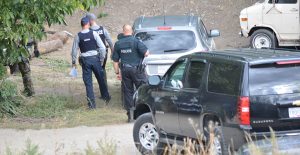
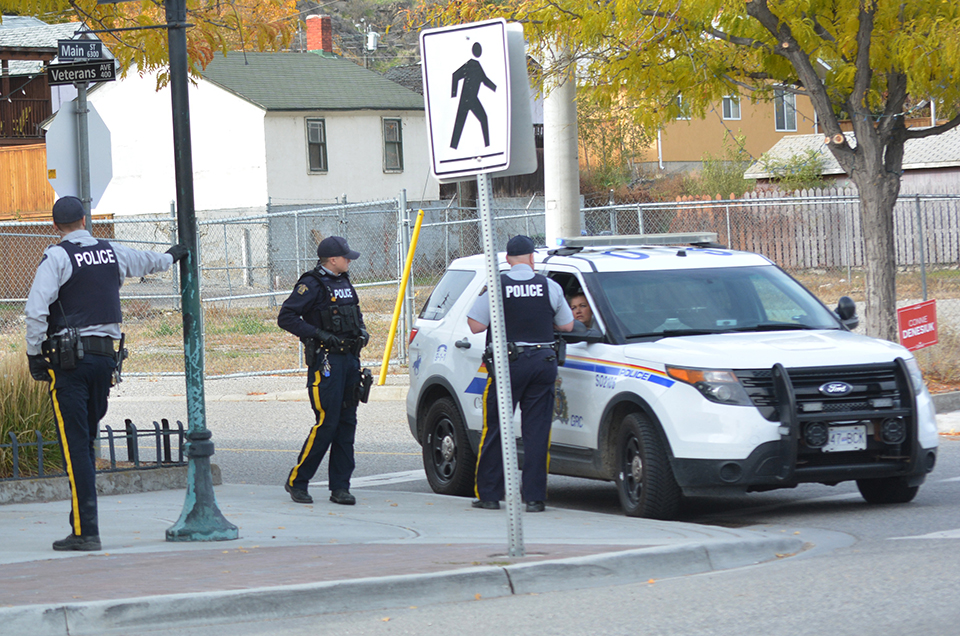
Like many communities in B.C., a lack of resources plagues the Oliver RCMP which experiences one of the highest case load burdens of all policing areas in the province.
(File photo)
The Times-Chronicle spoke to another victim of theft, this time in rural Oliver. The Island Road resident said he was previously working on a job site on Lakeside Drive when a thief stole his tools, which cost $5,000 to replace.
He also noted that a local nursery had an excavator and trailer stolen.
“You don’t have to go far (to find a victim of theft in Oliver).”
He has noticed that the correctional centre has put a lot of pressure on the local RCMP detachment.
The resident said he can’t figure out why these criminals go to all of the trouble skulking around in the middle of the night risking getting caught.
“You don’t have to be breaking into cars to make a living.”
Oliver Mayor Martin Johansen said he too shares the frustration of local residents who have been victims of crime.
“Add to that, we will soon be facing a substantial increase for policing costs once the town exceeds the 5,000 population mark.”
Johansen said he was encouraged to hear RCMP Supt. Brian Hunter identify Oliver as a municipality in need of additional resources and has put forward a business case for that. The mayor noted the town has implemented a number of measures to better focus RCMP resources on core responsibilities related to crime. Some of these include the Safe Premises Bylaw, increased funding for Victim Services, and an increase in proactive bylaw enforcement services.
Another measure the Town is working on is the implementation of a “situation table” in the South Okanagan.
Johansen said this group will serve to help front-line staff from public safety, health and social services sectors to identify vulnerable people and collaboratively connect them to services before they experience a negative or traumatic event.
The mayor noted the benefits of the table include reduced long-term demand on emergency and police resources.
Rick Knodel, Area C director and member of this committee, also expressed his frustration with petty crime in rural Oliver.
“If I had my way, I would have a camera on every (street) corner. They are an extremely valuable tool.”
Knodel, a victim of crime himself, said the problem is the court system’s lack of deterrence, particularly when it comes to shutting down prolific offenders. He noted some of the sentences handed down today make no sense to him.
That’s why he proposes a new sentencing scheme for frequent offenders. For example, every time they come back to court for an offence, he believes the judge should add another two months to the criminal’s sentence.
Knodel said there is very little consequence for people committing crimes today, crimes that appear to be more confrontational and violent.
“It scares me,” he admitted.
Unfortunately, the RCMP are handcuffed in a lot of cases in terms of what they can do, he pointed out.
Knodel said another unfortunate fact is more people, farmers included, are not reporting crimes these days.
“It’s almost more of a problem to report . . . so a lot have stopped reporting.”
The director acknowledged the crime prevention committee is making some progress on addressing the mental health and addictions angle. But will that solve the crime problem? The jury is still out.
“It’s too easy to blame it on mental health and addictions. You take those out of the mix and you’re still going to have violent offenders,” said Knodel, reiterating that you need an effective deterrence model.
The director is not convinced that most crimes are perpetrated by people suffering drug addiction and mental health problems.