By Lyonel Doherty, Times Chronicle
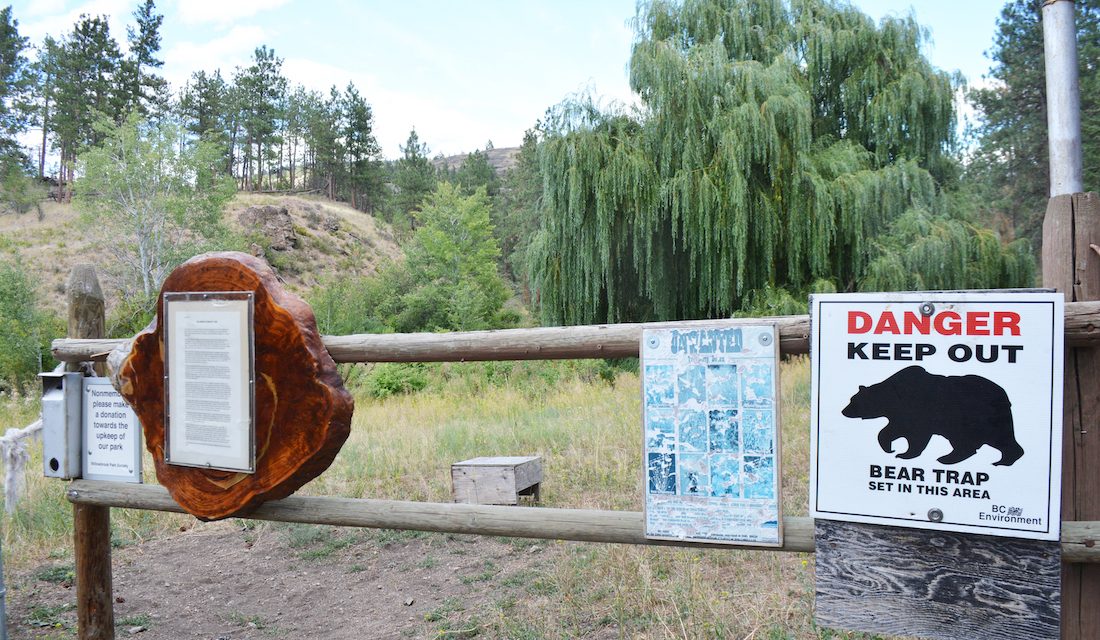
A high level of black bear conflicts last year is prompting regional district staff to continue focusing on residential garbage audits.
WildsafeBC community coordinator Shelley Fiorito told the Times Chronicle that bear confrontations come down to a perfect combination of weather conditions and poor attractant management.
She said a lot of early moisture in 2022 sparked a lot of forage in the spring, bringing the bears down to the valley bottom where it’s easy for them to sniff out attractants.
“Berries were in abundance this year too which kept many bears from denning until a bit later than usual.”
Fiorito said there were issues with a variety of sources, such as garbage, fruit trees, beehives, outdoor freezers, and small livestock.
It is important to note that many of our communities have been built around wildlife corridors (creeks and ravines), she said.
“The abundance of wildlife is one of the many reasons the Okanagan is so spectacular.”
In her recent presentation to regional board directors, Fiorito offered highlights of 2022.
She said WildsafeBC was formerly known as the Bear Aware program that focuses on human/wildlife conflict reduction. The program offers youth education, garbage audits, bear spray training and bear smart certification.
Youth are taught how to identify signs of wildlife, how to avoid conflict, and what to do if they see wildlife. In total, more than 200 children were engaged in 2022.
One community awareness event was hosted in the Anarchist Mountain neighbourhood.
Fiorito said garbage audits (seven occurred last year) are a great way to remind residents about managing attractants to avoid conflicts.
She pointed out that everyone is responsible for helping to maintain safety in the community. For example, residents are urged not to put out their garbage too early prior to pick-up. The bylaw prohibits no earlier than 5 a.m.
“We had great success with the audits; there were very few non-compliant properties,” Fiorito said.
She explained that garbage cans that are placed out too early (the night before pick-up) are problematic. She noted that a lot of residents are unaware of the bylaw regulating this.
Fiorito said WildlifeBC is an educational program that does not have the capacity to issue fines for non-compliance. Staff do put stickers on offending garbage containers and send a letter to the homeowner with a copy of the bylaw.
If the non-compliance continues, it may escalate to involve the local conservation office, she noted.
Fiorito said unsecured household garbage is the number one culprit. She also pointed to bird feeders that are a strong attractant for bears. WildsafeBC recommends not having them out over the summer months.
Even pet food and livestock feed can attract bears, she pointed out. “Their noses are unbelievably sensitive.”
Fiorito said bear spray training is available for community groups, organizations, and regional staff who learn how to safely use the defensive method. A total of 85 people took part in the training in 2022.
Bear smart certification is an extensive process for communities to develop a plan to reduce bear conflicts. Fiorito said that Naramata is one of only 10 communities in BC to achieve this certification.
She expressed her hope for people to work together to minimize the number of bears that are shot and killed each year. She also cited conflicts with bobcats, moose, and even badgers.
One of the priorities in 2023 is to find a source for bear-resistant garbage cans, she pointed out.