By Don Urquhart, Times Chronicle
The 2024 salmon run is the largest sockeye since records have been kept, with an estimated 850,000 sockeye salmon detected leaving the ocean and entering the start of the Columbia River basin at Astoria, Oregon.
It’s estimated that about two-thirds of these will migrate up the Okanagan water basin making it the largest sockeye runoff of the Okanagan says Ella Braden, the Eco-studies Coordinator for the Okanagan Similkameen Conservation Alliance (OSCA).
The Okanagan Nation Alliance (ONA) fishery department is anticipating that 670,000 sockeye will return to the Columbia River with 80 per cent of those heading to the Okanagan waters north of Osoyoos, according to Richard Bussanich, ONA’s head fish biologist.
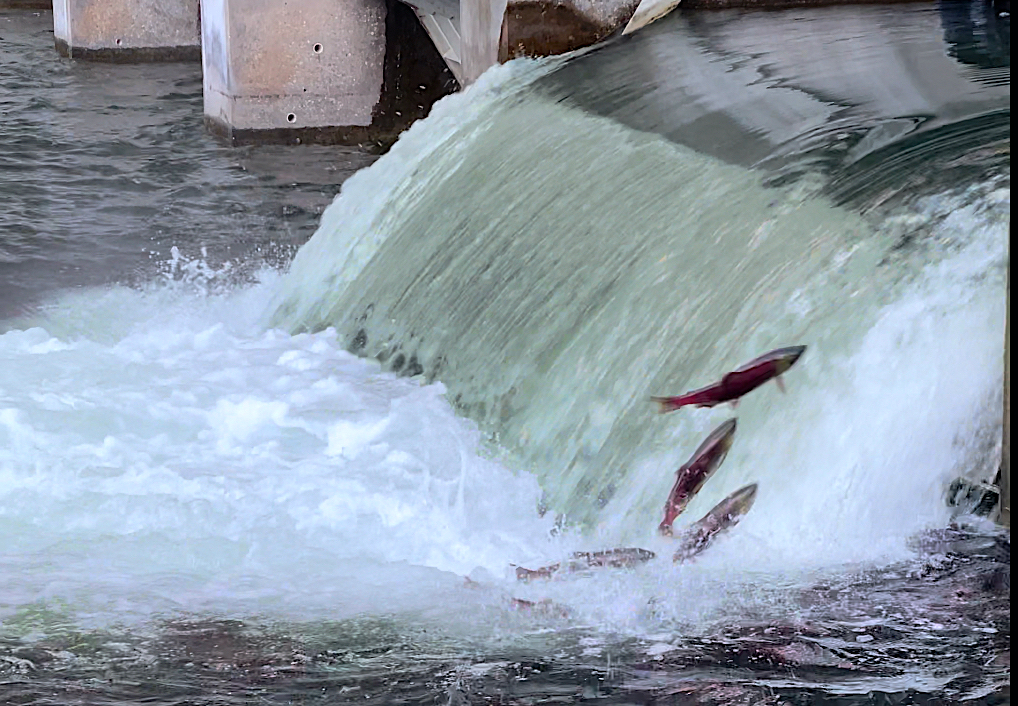
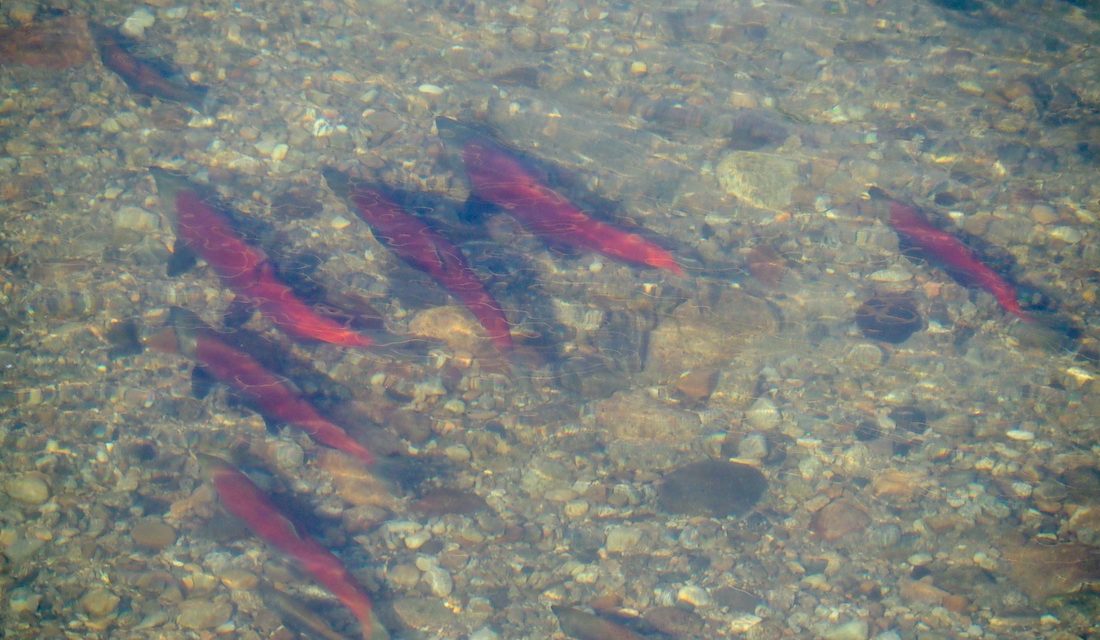
Spawning sockeye salmon at the MacIntyre Dam south of Vaseux Lake.
Sandy Hiebert photo
Braden says she “tears up” when she’s explaining the return of the salmon along their 6,000 km journey to their home in the Okanagan to spawn.
“There’s so many dark spots in conservation and ecology news, and this is a success story,” she says adding “This is what can happen when First Nations, nonprofit conservation groups and government all work together in a concerted conservation effort.”
This year’s success comes down to a number of factors Brade notes. She says for example, that because of the restoration that’s been done to the Okanagan River, such as the returning of portions of the channelized river to more natural conditions north of Oliver, the salmon have safe places to spawn.
She also noted that non-profits – like the Osoyoos Lake Water Quality Society – government agencies and and First Nations monitor the lake levels and the river temperatures very carefully, water releases from the various dams help with river levels. This also helped to the temperature of the rivers down at crucial points to spawn during the still-warm weather in August and September.
“The drought is definitely affecting lake levels, but because the salmon have been placed at high priority, the water releases have been such that they’re not only meeting treaty obligations for hydro, but they’re also helping the salmon,” she says.
Water temperature in particular plays a key role. “If the water temperature gets just a bit too warm, that has a very immediate, serious impact.”
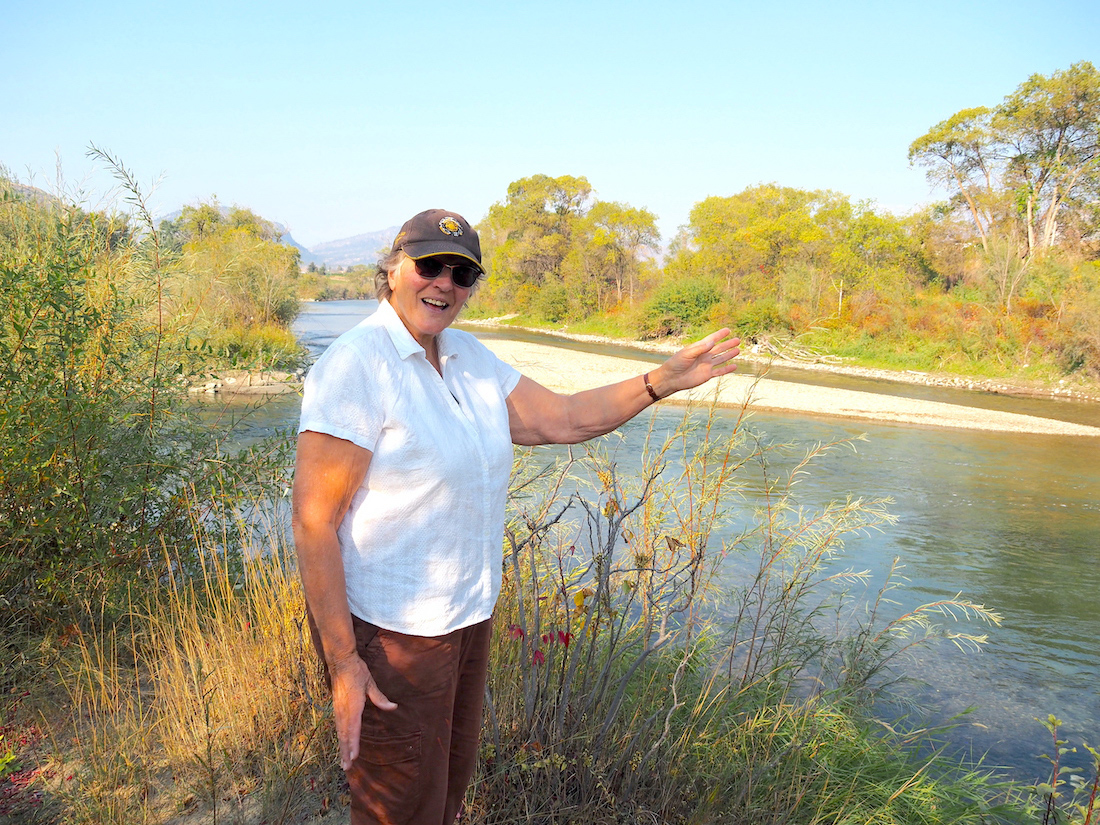
Lee McFadyen of the Okanagan Similkameen Conservation Alliance (OSCA) points towards the salmon spawning beds that were constructed in 2009. Don Urquhart photo
Brade, who along with Lee McFadyen and Victoria Ritchie hosted river two open houses earlier in the month on behalf of the OSCA and the ONA, says she visited two of the teaching sites in late September and there were very few salmon.
“But scientists and the fisheries biologists had been keeping an eye on midterm forecasts, the lake level and the water temperature. They knew the fish were massing at the north end of Osoyoos Lake, ready to come upstream to spawn.”
She says that when the temperatures started to drop in the first week of October, they coordinated that temperature drop with a water release through the dam at Penticton to further bring the water temperature down because the lake water is cooler than the river water. The result was a huge flow upstream in the first few weeks and “we’re seeing numbers of fish that I have never seen in my now seven years of teaching this program at the Oliver site,” she said.
And while it might be tempting to think the salmon are easy come, easy go about spawning, that is not the case. Brade says they prefer very specific gravel about the size of a chickpea, and they need enough water flow to keep oxygen levels high. “And so the beds that have been restored work well for them and they are the beds they tend to return to.”
Next year will be the first year that there will be a returning population from releases in the tributary streams of Okanagan Lake,” Brade added. “So next year looks to be another very strong year too and this is a beautiful success because of the partnership between the Okanagan River Restoration Initiative, local governments and local First Nations.”
Noting that the fish that are returning this year would have been eggs that were laid four years ago. “In 2021 those fish would have either been naturally spawned or released into Shingle Creek, which is a tributary to the channel near Penticton, or in areas downstream of Okanagan Lake.
She adds that 2022 was the first year that hatchery fish were released into tributaries that flow into Lake Okanagan, which is why they will return only next year. Brade is guarded when asked which tributaries these are, saying “That is one of the topics fishery biologists are actually not super conversational about!”
For those who haven’t seen the salmon spawning there is still a short window available but Brade notes by the end of the month the spawning will be largely done. The pedestrian bridges over the river north of Oliver, the restored river area further north, and just south of Okanagan Falls are all prime areas to see the salmon.
Because the dead and rotting salmon is an easy, high calorie source of food for bears fattening up for winter, Brade advises making enough noise to alert bears to your presence near the river.