By Sebastian Kanally, Times Chronicle
Single family home construction is down, medium home prices dropped 9.4 per cent, and overall transit bus ridership increased, highlighting some of the findings of the 2023 Regional Snapshot.
The Regional District of the Okanagan-Similkameen (RDOS) is required to monitor the implementation of the South Okanagan Sub-Regional Growth Strategy (RGS) bylaw, by publishing various “Snapshots” which track how the area is doing over time.
The recently published findings are from 2023, meaning the data is over a year old. The report explains that the information is better understood as tracking indicators that could point towards longer term trends.
Planning manager, Chris Garrish explained before the presentation to the RDOS that it takes many months and lots of work before the previous years are available to us.
When it comes to the population of the RGS area, between 2022 and 2023, there was a population increase of 0.7 per cent. The total population increased from 93,871 to 94,533. This is near the long-term average of 0.63 per cent between 1996 and 2021.
The population estimates from BC Stats shows that the majority of growth occurred within the City of Penticton, Oliver and Osoyoos with 0.5 per cent increase. These figures do not include population numbers for on-reserve Indigenous Nations in the RGS area (Penticton Indian Band, Osoyoos Indian Band and the Upper and Lower Similkameen Indian Bands).
The RDOS tracks the RGS progress according to 16 indicators in seven policy areas.
These seven policy areas are:
- Housing and Development
- Ecosystems, Natural Areas and Parks
- Infrastructure and Transportation
- Health and Safety
- Regional Economic Development
- Engagement and Collaboration
- Energy Emissions and Climate Change
When it comes to housing and development, there was a seven per cent decrease in the number of new housing units built since the 2022 snapshot.
Single family housing construction in the entirety of the RDOS based on building permit data, decreased from 256 to 138 units, which accounted for 36.41 per cent of total new dwelling units. The historic average is 67 per cent of new builds were single family homes.
The construction of apartment units declined from 449 to 186, but still represented the largest proportion of new residential units at 49 per cent.
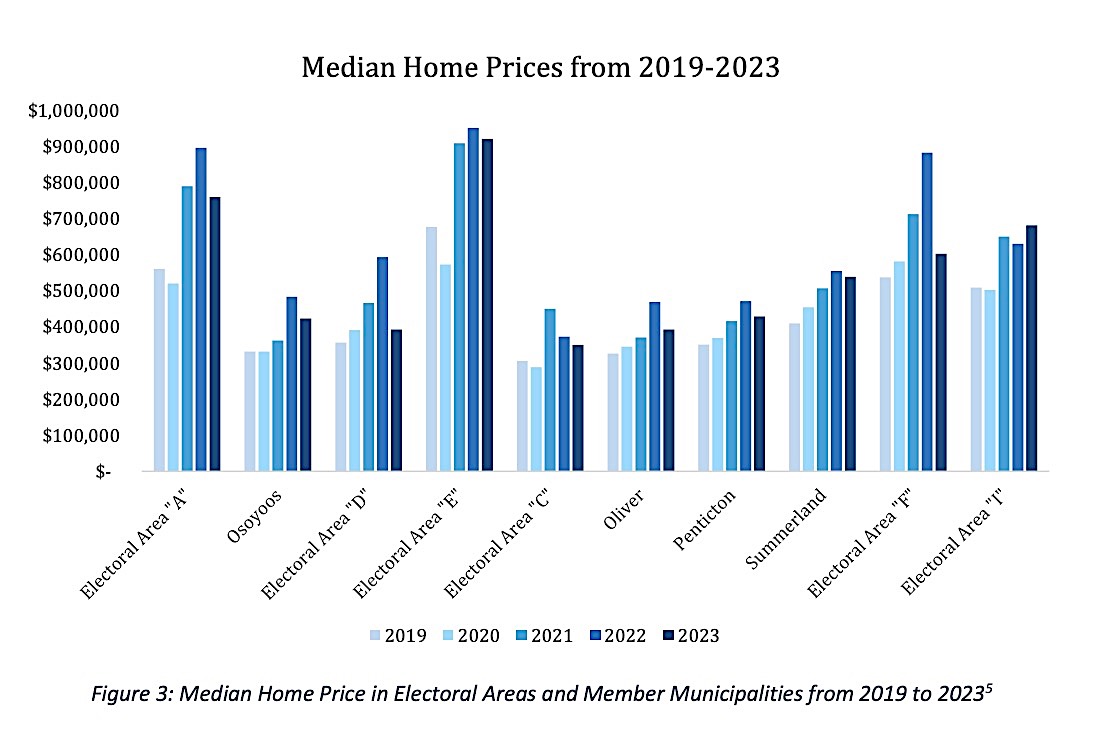
One of the positive outcomes from the housing and development area was that median home prices decreased 9.4 per cent between 2022 and 2023. Although, this is where longer term trends reveal more than just a snapshot because despite the drop, the median home price in the RGS area has not returned to pre-2021 levels.
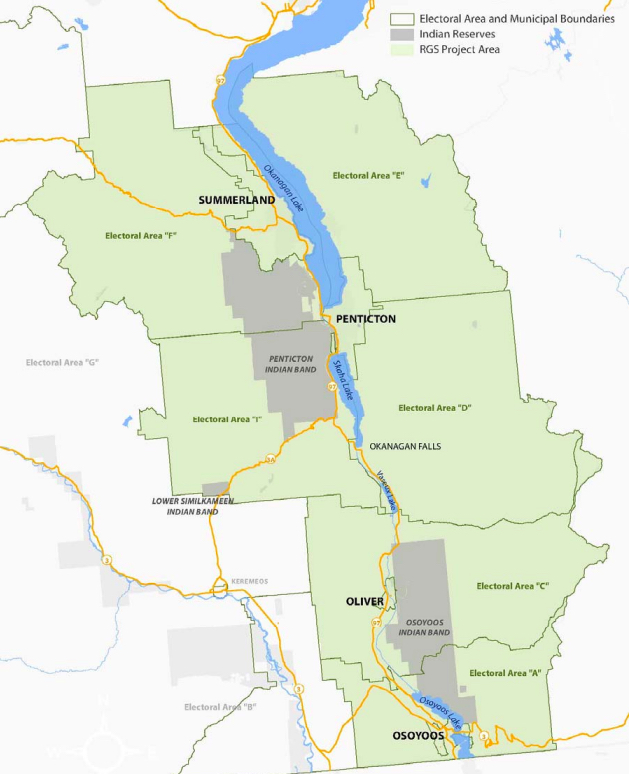
Map shows South Okanagan Sub-Regional Growth Strategy area.
RDOS map
Each electoral area in the RDOS experiences different levels of this decrease with Oliver, Osoyoos, and Electoral Areas “A” and “C” all experiencing decreases in median home prices with Electoral Area “A” experiencing the largest from around $900,000 to under $800,000.
The Snapshot notes that when it comes to the area’s affordability ratio which measures median home price to median household income, the affordability ratio decreased from 6.3 per cent to 5.5 per cent, but “remains well above standard benchmarks for affordability.”
RDOS graphic
When it comes to infrastructure and transportation, overall ridership in the region has increased since 2022.
The most significant increase was in Summerland which had ridership increase by 45.6 per cent. The second largest increase was ridership in Osoyoos which saw a 38.4 per cent jump.
This ridership increase saw 9,415 riders in Osoyoos in 2022 to 13,035 riders in 2023.
Mayor of Osoyoos Sue McKortoff was pleased with hearing the increase in transit numbers, reasoning that “we have a larger bus, and we have several stops within the town of Osoyoos, which makes it easier to take the bus.”
Some other numbers provided in the Snapshot were the average daily water consumption by using combined residential and irrigation averages decreased by 87.5 litres per person.
Annual crime rates increased 2.9 per cent, these include the number of Criminal Code Offences excluding traffic offences. This is contrasted with the fact that crime rates for all of BC overall decreased by 1.6 per cent from 2021-2022.
When it comes to the Energy Emissions and Climate Change policy area, average residential energy consumption was given a poor rating as energy use continues to show an overall increase.
During the brief discussion among the RDOS board of directors, Mayor of Summerland Doug Holmes queried whether the RDOS should fine tune its indicators, as not all of them actually show meaningful progress.
He gave the example of Summerland losing eight acres of parkland, simply because of correcting previous errors in zoning. He also referred to the fact that Penticton increased their parkland by seven acres, but it was also due simply to rezoning and the “lines just went further into the water”.
Garish did note that, “we share some of the concerns just expressed”. But he went on to say that changing the indicators would have potential implications for the past 15 years of snapshots and could impact getting that historical picture.
The 2023 Snapshot can be found on the RDOS website.