OSOYOOS TIMES-May 5, 2010
By Laurena Weninger – Osoyoos Times
B.C. is one step closer to implementing the harmonized sales tax (HST).
Last week, the Consumption Tax Rebate and Transition Act eliminating the provincial sales tax (PST) passed in the provincial Legislature.
The legislation fulfils the province’s agreement with the federal government to wind down PST by July 1, states a media release from the B.C. Ministry of Finance.
The act eliminates the seven-per-cent PST and instead incorporates it with the five-per-cent federal GST, resulting in a 12-per-cent HST.
But that news isn’t going to derail the group working to have the tax changes undone.
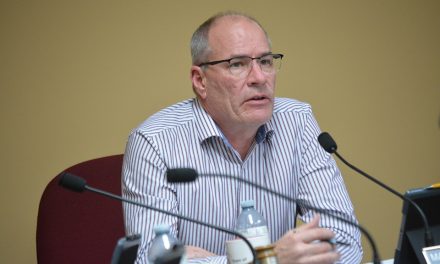
Bill Vander Zalm, leader of the Initiative Petition underway to have the HST repealed, said it’s not a “done deal” at all.
“They said the HST was a done deal when they signed the agreement with Ottawa nine months ago,” Vander Zalm said in a media release. “Then they said it was a done deal in December when Ottawa passed the federal legislation in Parliament. Now, they’re saying it is a done deal with the legislation removing the PST this past week.
“But what they aren’t telling people is that what can be enacted by government, can be repealed.”
According to the Initiative Petition process, run by Elections BC, if Vander Zalm’s group collects signatures from 10 per cent of registered voters in all 85 British Columbia ridings before the July 5 deadline, the provincial government will have to address Vander Zalm’s Initiative Bill to repeal the tax.
Last week, a local group spearheading anti-HST efforts in this area reported that the 10-per-cent threshold has been passed in Boundary-Similkameen.
But that doesn’t mean the government has to actually take action on any request put forward through the petition effort to quash the tax.
“By successfully completing the Initiative Petition, we will be forcing the government to either vote to cancel the HST agreement, thereby repealing the HST, or put the question to a province-wide (vote).”
Vander Zalm points out that the HST was implemented in Saskatchewan in 1989.
Two years after it was brought in, the HST was repealed by a new government and the provincial sales tax reinstated.
Vander Zalm said if the legislature votes against people’s wishes as expressed in the Initiative Petition they will move on to attempt to have various MLA’s recalled.
That requires signatures from 40 per cent of registered voters within the riding attempting the recall.
B.C.’s Minister of Finance, Colin Hansen, said that by eliminating the PST and shifting to HST, British Columbians will see a net increase of 113,000 jobs by the end of the coming decade and an $11.5-billion increase in capital investment.
The provincial government has also stated that money brought in through the HST will be invested in the province’s health care system.
British Columbians will not pay the provincial portion of HST on items such as motor fuels, books, children-sized clothing and footwear, children’s car seats and booster seats, children’s diapers and feminine hygiene products.
The act passed on April 29 also provides a provincially administered rebate and credit for the provincial portion of HST payable on energy purchased for residential use.
In addition, the act provides for a B.C. HST credit to help low- and modest-income families.
The act also eliminates the provincial portion of the hotel room tax, but continues the two-per cent additional hotel room tax levied on behalf of local governments, regional districts and destination marketing organizations to raise revenue for local tourism marketing.
As of May 1, the HST is now applied to payments for goods and services delivered on or after July 1.
[email protected]