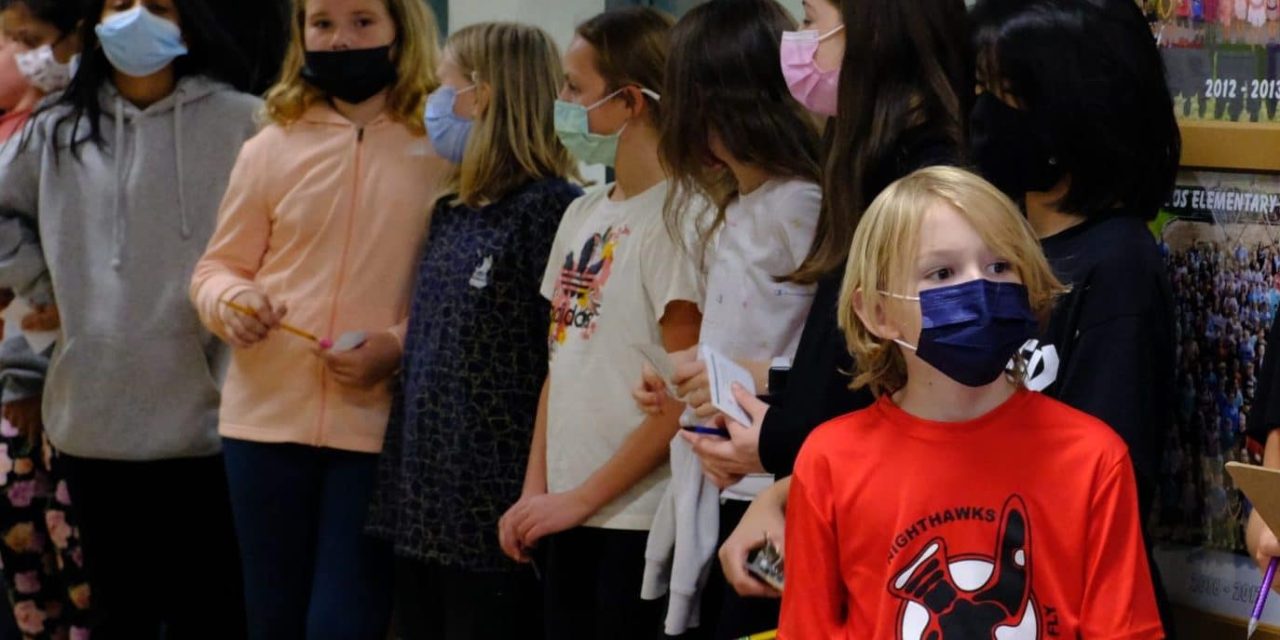
Updated school safety measures by the provincial government will now require kindergarten to Grade 3 students to wear masks.
Starting on Monday, Oct. 4, students in schools across B.C. had to wear a mask when they entered their school building, at their desks, and on buses. The pre-existing guidelines only applied to students in Grade 4 to 12.
“In-person learning is crucial for the social and educational well-being of students. The health and safety guidelines in our schools were developed under the guidance and direction of the Public Health Office (PHO) and BC Centre for Disease Control to allow children to safely attend school on a full-time, in-person basis,” said Jennifer Whiteside, Minister of Education.
Masks can still be removed temporarily while students are eating or drinking, to play a wind instrument, need to identify themselves, or engage in physical activity.
The current rise of COVID-19 cases across B.C. in the fourth wave of the pandemic shows many young people to be infected by the virus as well. This included school aged children aged 5 to 11 (who are too young to be eligible for the vaccine).
“We know there is a high level of concern among some parents, students, teachers and boards of education, especially in regions of B.C. where transmission rates are higher. We are listening to the concerns of people and, on the advice of the provincial health officer, taking further action so that families, students and staff feel secure.”
These measures build on the existing K-12 health and safety guidelines, which were developed in consultation with all education partners. The guidelines include daily health checks, hand washing, staying home when sick and improved ventilation systems.
“Our schools are engaging in a lot more outdoor learning to give kids a break, but masks are only one measure,” said Bev Young, superintendent for School District No. 53, citing other protocols such as students staying home when sick, frequent hand washing and respiratory etiquette to be just as important.
Young also mentioned that she does think it will take some time for people to get used to this new change, with a variety of opinions from parents; some who support it and some that aren’t so happy about it.
“Our schools have been safe places up to now. And I think they’ll continue to be so; of course, they do reflect things that are happening in the community. So if we see rising cases, we probably will see some in schools and we tend to work with that, but we don’t see a lot of transmission,” said Young.
“This pandemic continues to evolve and so do we,” said Dr. Bonnie Henry, provincial health officer. “We need to make changes to fit the situation as it’s arising. We know the COVID-19 virus is being transmitted more rapidly, particularly to those who don’t have the protection that vaccination offers. This extra measure adds another layer of protection as we navigate this phase of the pandemic.”
These guidelines also contain strategies for schools to help create space between people, including staggered recess, lunch breaks and class transition times, managing the flow of people in common areas, and using available space to spread people out.
Henry will be releasing a new monthly report to inform residents about the virus and how it affects school-aged children.
The provincial government is currently working to be responsive to changes in the pandemic and continuing to collaborate with parents, teachers, school districts, First Nations rights-holders and all education partners to make sure schools are safe for students, teachers, and staff.