By Sebastian Kanally, Times Chronicle
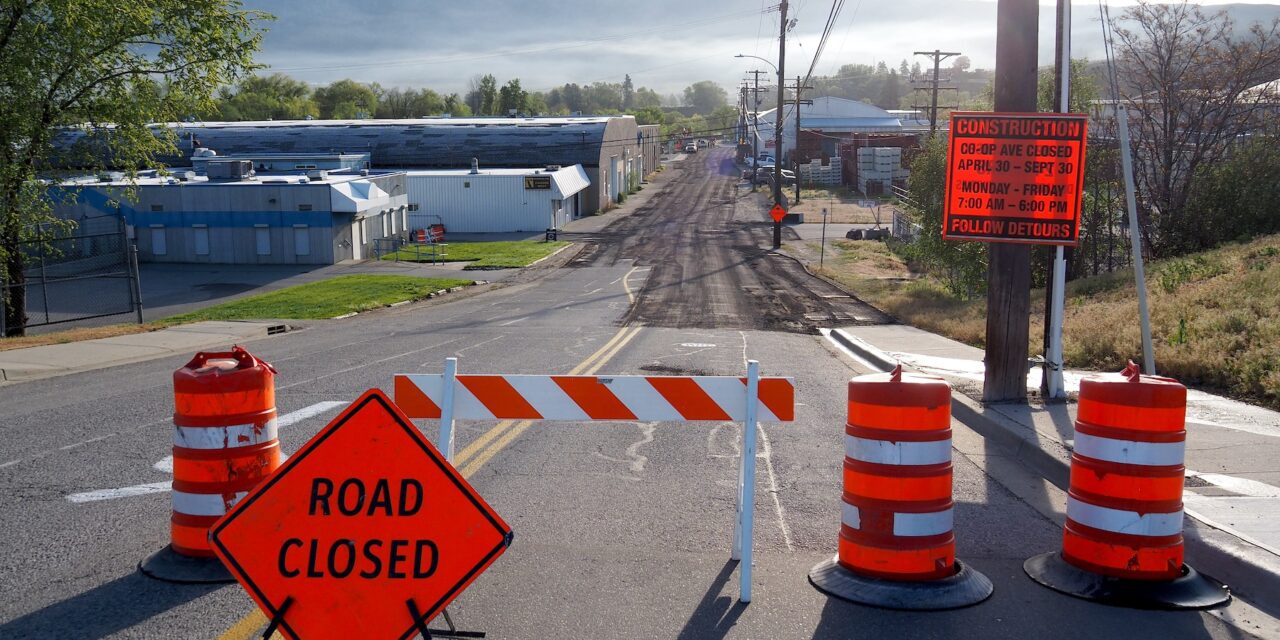
A proposed road closure bylaw for Oliver was labelled as overkill by council and did not receive their support, yet.
Oliver is seeking a more structured process for informing the town and residents of any road closure, or any disruption to the flow of traffic in the town.
Kelly Mercer, director of operations for the town brought forward a motion to implement a more structured process requiring permits to disrupt the flow of traffic, but it was ultimately sent back by town council to get worked on more.
Town council thought the motion, if passed the way it stood, would result in the town being inundated with paperwork, and placing too much burden on people working in the town.
Councillor David Mattes commented “There has got to be some change to this policy, I understand the blanket you are trying to cover but in this case, the blanket is about three feet thick. It’s overkill.”
While the policy was not written to the council’s liking, Mercer explained the reasoning behind the policy with which most were in agreement.
“The primary objective of the new policy is to provide a structured framework to process road closure requests effectively while minimizing disruptions and ensuring public safety,” the report to council reads.
Any time a road would be closed, or a lane blocked, a road closure permit would be required.
The proposed bylaw indicated that any activity that affects the town’s road right-of-way would be subject to the policy. This includes any impact to mobility including interruptions to pedestrians, cyclists, vehicular traffic, businesses or residents.
The permit process would require special events, construction projects, works by the town, third party utilities, or on-street containers to contact the town with the following to acquire a permit:
- project details and schedule;
- mobility and community impact;
- traffic management plan;
- public information/communication plan;
- insurance of $2,000,000.
According to this version of the policy, the permit would cost $158.
“If someone shows up to work on the pole outside my house, there is a $158 fee, weeks’ notice in the paper, forms to be filled out, etc.” Mattes explained.
He then further commented that if that worker had 10 stops that day, the way the bylaw is written a permit would have to be obtained for every stop.
Councillor Aimee Grice noted, “I think the most important thing to focus on here is public safety, so I am overall in agreement with doing this”.
But she then went on to present multiple questions about private residences and whether this plan was scalable.
What about an individual building a house? A truck delivering roof trusses and blocking the road for a couple hours, would they need to go through this whole process she asked as an example.
“If they are blocking a lane, or they are closing a sidewalk we want to be aware of it,” Mercer responded, noting that the town wants people to keep them informed.
“This is to capture more of . . . third party utilities, not getting notified, not getting traffic management plans, not actually getting it advertised in the paper, not getting liability insurance if something happens in our right of way, it’s more of those major events,” Mercer explained.
Mercer explained that many other towns have this in place, and they took this idea from the City of Penticton.
He said that whenever the town conducts work, they already follow this process of putting notice in the paper, getting insurance and so on, and “we think everyone else should as well.”
Mercer will return to a later council meeting with a modified version of the policy.