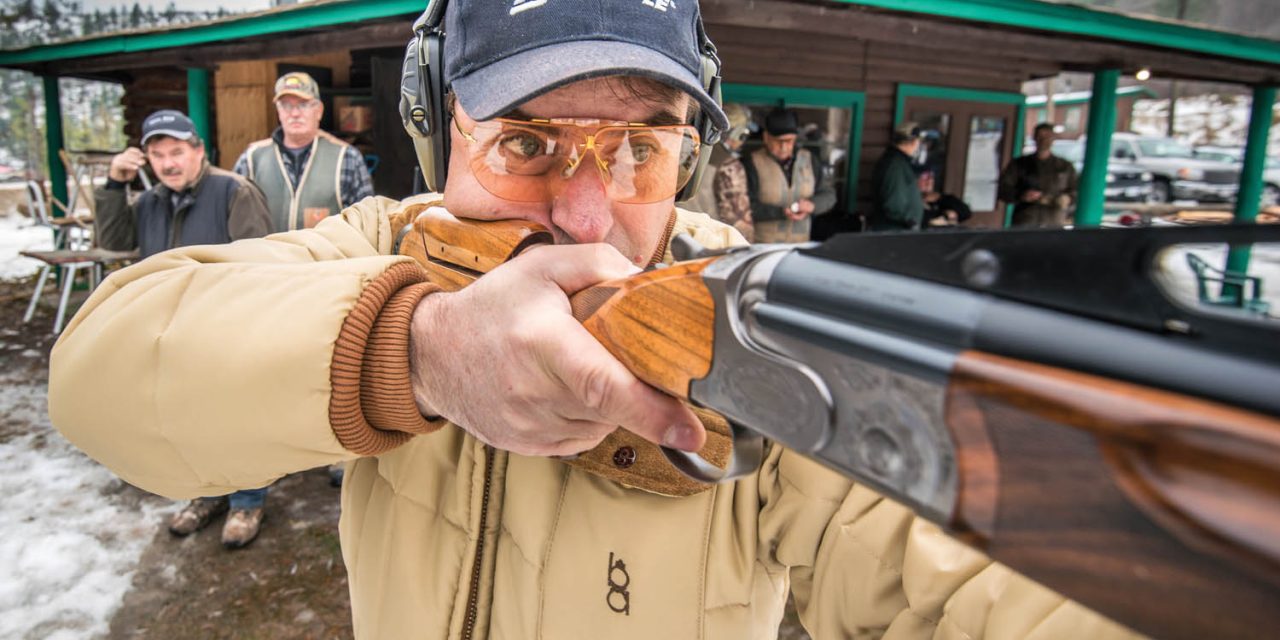
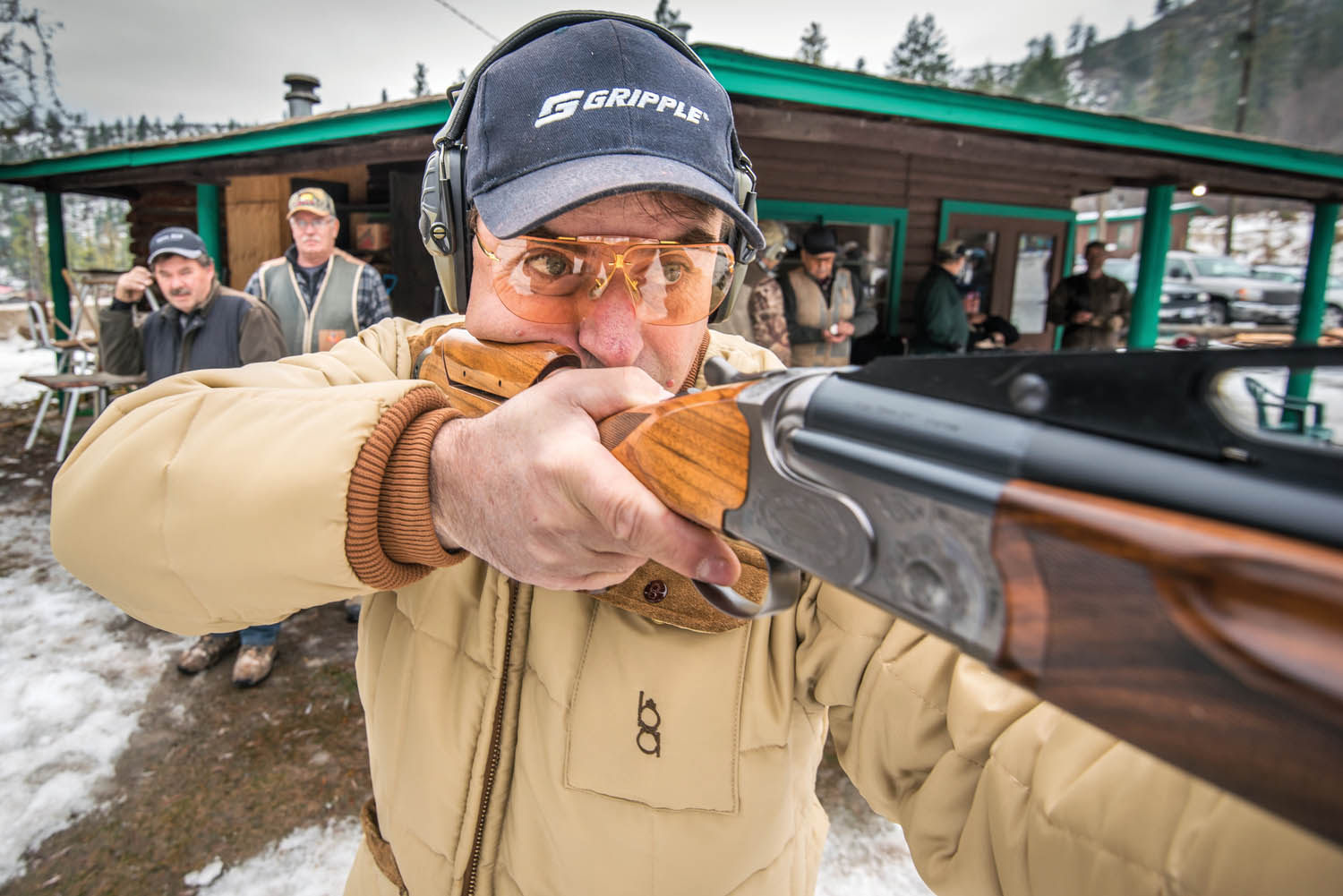
Proposed changes to the wildlife allocation policy are inconsistent with standard practices in other jurisdictions across Canada and the United States, said George Wilson, president of the BC Wildlife Federation. There is no justification for these changes and they are not supported by B.C.’s resident hunters, Wilson said. The South Okanagan Sportsmen’s Association (SOSA) agrees. This photo shows John Tavares of Oliver at a recent turkey shoot organized by SOSA. (Richard McGuire file photo)
The B.C. government’s new Wildlife Harvest Allocation is missing the target, according to local hunters and the BC Wildlife Federation.
The federation argues that the policy in favour of the Guide-Outfitters Association of BC (GOABC) would dramatically reduce residents’ access to wild game and increases the number of permits sold to foreign big game trophy hunters.
“Proposed changes to the wildlife allocation policy are inconsistent with standard practices in other jurisdictions across Canada and the United States,” said George Wilson, president of the BC Wildlife Federation. “There is no justification for these changes and they are not supported by B.C.’s resident hunters,” Wilson said.
The Southern Okanagan Sportsmen’s Association (SOSA) agrees.
“We support the federation in its position (bringing more fairness to resident hunters),” said Joan Lindsay, a director with the federation and member of SOSA.
Lindsay said it is concerning how resident hunters are impacted by the Limited Entry Hunt (LEH).
For example, moose is the most sought after species by BC hunters. In many areas, demand exceeds supply and hunters are placed on a (LEH) lottery.
Approximately 70,000 BC hunters apply for 13,000 LEH permits each year, meaning only one in five hunters get to hunt moose annually, according to the federation.
Foreign hunters do not need to apply for a LEH permit and can hunt annually, taking moose from approximately 3,000 B.C. hunters each year, the federation says.
The government’s wildlife allocation chart for this region (Region 8) shows the percentage split between resident hunters and guide outfitters. The following resident/outfitter splits are indicated: Bull moose 80/20, big horn sheep 70/30, mountain goat 65/35, and Grizzly bear 60/40.
The Ministry of Forest Lands and Natural Resource Operations says some guides have been significantly impacted by the existing policy to the point their businesses are in jeopardy. The new policy that increases their allocation adds some relief to this situation.
According to the ministry, resident hunters will continue to receive priority shares of the wildlife allocation (as outlined in the allocation chart).
The new policy represents a transfer of approximately 186 animals from residents to guides, the ministry says.
In a recent press release, the GOABC says the new allocation shares are welcomed.
“We support a healthy resident hunting community and support the principle of resident priority (that residents should receive the majority of harvest opportunities) after First Nations needs.”
The GOABC says resident hunters enjoy some of the longest and most liberal hunting opportunities of any jurisdictions in the world. It claims that hunters are able to pursue 18 of North America’s 29 big game species (most on general open season).
In fact, 17 per cent of the tourists to B.C. are guided by B.C. resident hunters, according to GOABC.
The association says there are 245 guide outfitters in B.C. who provide valuable jobs in small, rural communities.
“Guide outfitters are the founders of the tourism industry in B.C., and today approximately 5,000 clients travel to B.C. every year to hunt big game,” the association points out.
According to the GOABC, the allocation decision will have no significant impact to the average resident hunter.
But the wildlife federation says the new allocation would give foreign hunters up to 40 percent of specific game species such as mountain sheep, goat and bear, and up to 25 percent of moose and elk.
Jesse Zeman, a federation director who hunts with his family, said “any changes to the allocation policy should meet the needs of the majority of British Columbians who enjoy the outdoors, spend time with friends and family, and hunt for food.”
The federation states that B.C. resident hunters spend over $230 million a year in local communities on hunting related activities, and they contribute $9 million a year towards conservation work through license fees. The federation does not support giving away more than 10 percent for moose and elk, and 25 percent of mountain goat, sheep, and bears to foreign trophy hunters. Ironically, this gives non-resident hunters the best deal in North America, it points out.
Natural Resource Operations Minister Steve Thomson said all stakeholders want the same thing – healthy wildlife populations that can be sustainably used by all groups.
Thomson said while resident hunters are a higher priority than non-residents, this does not imply that resident demand must be fully satisfied before non-residents can be granted harvest opportunities.
“Instead, it means that the share that goes to residents is considerably greater than the share that goes to non-residents.”
LYONEL DOHERTY
Special to the Times