By Lyonel Doherty
An Oliver couple is doing exactly what provincial health officials deem absolutely necessary after returning from travel.
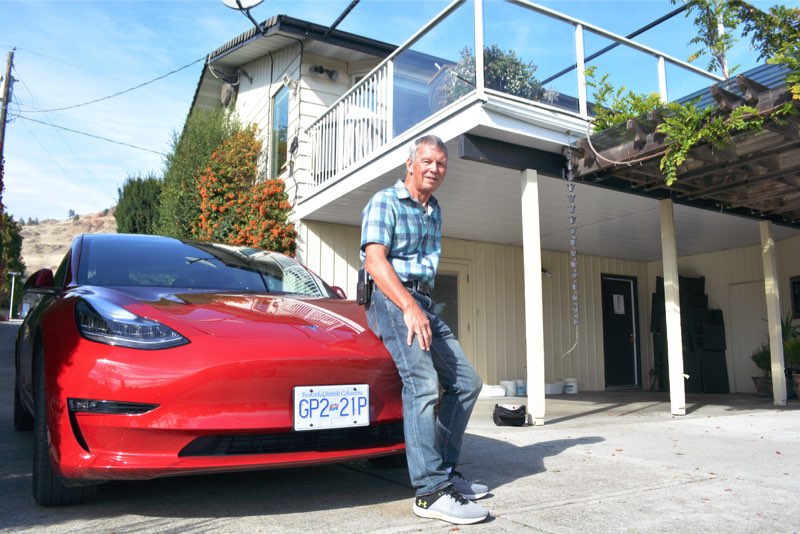
Russell and Christine Work are self-isolating after their trip to New Zealand.
Russell said the country was quick to respond to the COVID-19 outbreak. He noted the government moved to a Level 2 alert on March 16, mandating no more gatherings of 100 people or more.
Two days later a Level 4 alert was instituted, in which all businesses, except essential services, were closed. There were no take-outs, no coffee shops, and basically no movement within the country, Russell said.
“There were clear instructions: where you slept and with whom was going to be your bubble.”
The initial panic on toilet paper was allayed when a TV station went into supermarket warehouses and showed the “gazillion” pallets awaiting delivery.
“We found no shortages of supplies on the supermarket shelves when we were last in there on Thursday, March 26.”
Under Level 4, Russell and Christine were still able to go outside and walk the streets. But all boating, hiking along tracks, hunting and swimming were banned due to the risk of an accident that would put emergency response teams at risk.
“You could only walk with those in your bubble, and were not to ‘pop’ anyone else’s bubble,” Russell said.
There was no driving, except by the one person in the family doing the shopping. Police were routinely checking to see if there were social travellers.
“There was a very high compliance rate,” he recalled.
The Works were initially scheduled to fly home April 1, but Air New Zealand announced the last scheduled flight was March 29. By the time they contacted the airline on March 16, all bookings (up to that date) were full. But they managed to secure the last seats on a flight to Vancouver.
The next challenge was getting from Tauranga to Auckland on the internal flight. That’s because only designated essential workers, with government documentation, were being allowed on flights.
No rental cars were available, so they resorted to a private shuttle, deemed essential, to get them to the airport.
Russell said Canadians in the South Island who had not made it to Auckland by the deadline were stranded. He noted they have since been deemed essential travellers and can now board the few inter-island flights to connect to mercy flights home.
Russell said they were asked to restrict movement through the plane during the 12-hour flight to Vancouver.
With Penticton shut down, they were rebooked on the flight into Kelowna, where his brother-in-law’s truck awaited them for the drive home.
Having seen the actions and results of the rapid, coherent and well-developed plans by the New Zealand government, the Works concur with the strategies of the B.C. government.
“Better to be six feet apart than six feet under,” Russell said.
He noted that New Zealand, with a population of four million, had a total of 1,106 COVID-19 cases as of April 6. Thirteen were in hospital, including three in intensive care. At that time, no deaths were linked to the coronavirus, Russell said.