By Don Urquhart, Times Chronicle
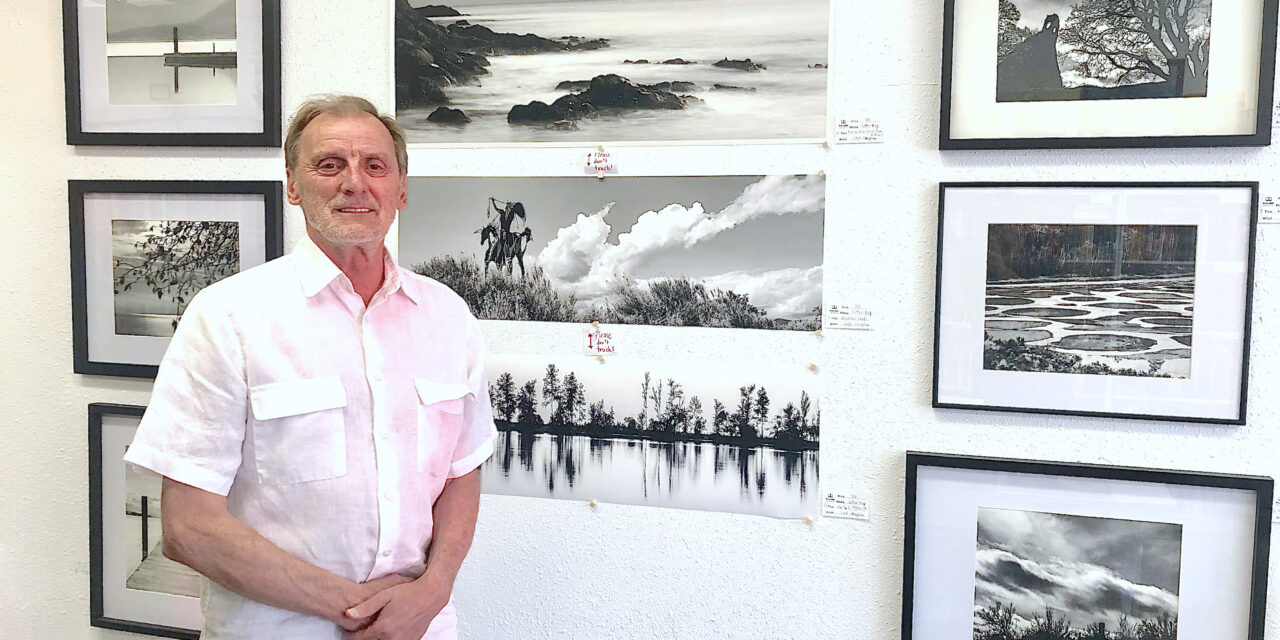
The last time photographer Loyd Chapplow exhibited his works at the Wayside Select Books & Art it was a much different looking gallery wall than his current show.
While last time was about colour, extreme close-ups, and digital processing like solarization, this time it is binary, zeroes ones ones, black and white. Sharp and crisp images hang in wait for your gaze to pass near whereupon they lock on to your consciousness.
And likewise for now it’s black and white that has transfixed his attention. “So much commercial work is done with colour. Photography’s essence is black and white. A black and white photograph is like a good novel where there’s not a lot of words and you have to fill in the blanks.”
He adds that “black and white evokes emotion and allows the viewer to fill in the blanks with their own unique perspective.”
He notes that in the digital realm “everything starts off colour” as compared to the film days where a very specific choice between the two types of film took a photographer down a certain path.
“You can’t go into a scene and think about colour you have have to think black and white,” he says of a process that will involve digitally converting colour to monochrome. It is of course possible to shot in black and white on a digital camera to start with, but that is personal preference.
When asked if he had a favourite on the wall he paused before pointing to the Ancestral Land photo.The photo is of an old church in Scotland’s Robbie Burns country which has graves dating back to the 16th Century. With only a skeleton of the church remaining it’s complemented by a giant tree in winter devoid of its leaves leaving only a skeleton.
He points to Smoker Marchand’s steel sculpture at Spirit Ridge saying he was looking to photograph it and decided to walk around behind it “and there it was, this cloud formation, it was bang on”.
He talks about another photograph, this one in long narrow horizontal format is a photograph of the ocean at Point No Point north of Sooke on Vancouver Island. “I’ve been using what’s called a neutral density filter which knocks the light down by a factor of 10. In the image are what looks like gentle undulations in the ocean, but in reality they are crashing waves that have been rendered passive by the filter.
It enables a shutter speed of six seconds in this shot which renders the waves passive and a glazed look to the rocks that is actually just the water from the crashing wave pouring off of them.
Chapplow prints his images at Opus in Kelowna on either bamboo or cotton rag. With archival ink on cotton rag, they’ll be around for a long time.
Most of his photography is outdoors, and what he looks for is “contrast and diversity”. By way of example he points to the Spotted Lake photo as “a natural” for these requirements.
“Technically speaking in this photograph, the trees that were shot in winter, and pulling the brightness out in the editor,” he says adding that where Lightroom editing software really shines. “To do this in the wet, dark room would have taken all day”. This was just about an hour and a half on the computer.
“And it depends on how much of a perfectionist you are,” he adds with a laugh.
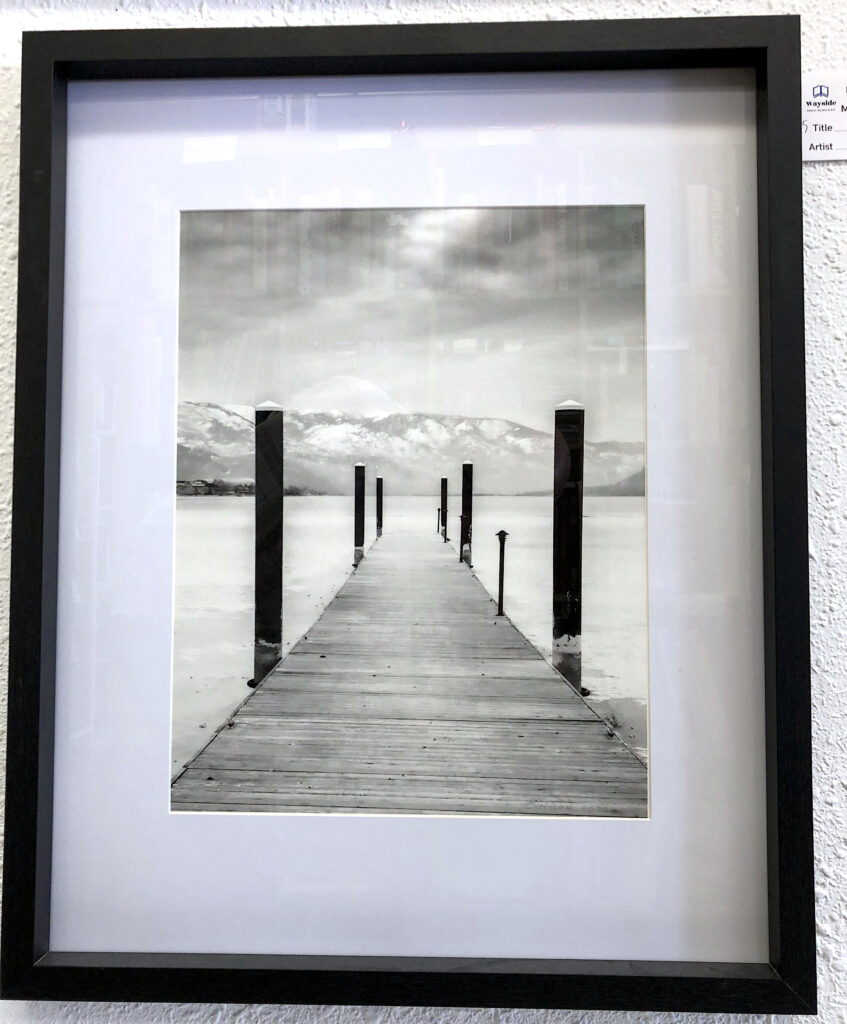
Some photographs require virtually nothing, he says pointing to the Osoyoos Lake dock image, but he adds: “Every digital photograph needs sharpening and noise reduction,” he adds.
Loyd Chapplow’s show ‘On the Edge’ is on at Wayside Select Books & Art, 8317 Main St., Osoyoos from June 28 to Sept. 4.