By Richard McGuire
The outgoing B.C. Liberal government should have addressed social issues earlier, and the failure to do so may have cost it in the May provincial election.
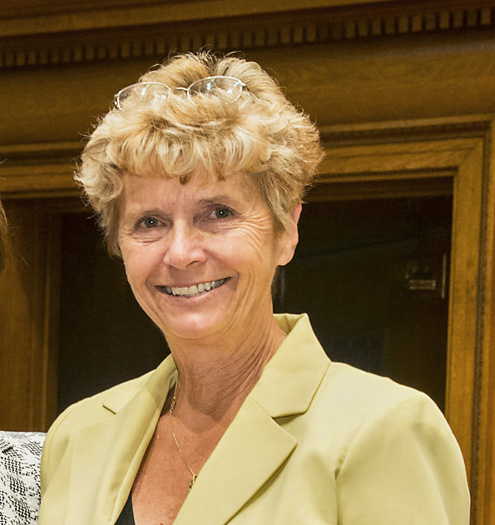
That’s the view of Boundary-Similkameen MLA Linda Larson, who sat down last week with the Osoyoos Times in a wide-ranging interview about the current political landscape.
“We missed the boat certainly as a government when it comes to social programs and the social end of things,” said Larson. “I don’t think there’s any doubt about that. We’ve been very open about the fact that we should have addressed the social issues sooner.” Larson said her government was trying to keep spending balanced, but it could have let go sooner. “It was more stable than even we thought,” she said. “So it turned out we did have more money to spend than we thought we did and we could have addressed the social issues six months ago.”
The B.C. Liberal government, led by outgoing Premier Christy Clark, was defeated on a non-confidence vote by the NDP and Greens on June 29. A new NDP government led by John Horgan will be sworn in on July 18. But shortly before the Clark government was defeated, it introduced a progressive throne speech announcing policies at odds with those it campaigned on this spring.
The throne speech didn’t cause any defections of NDP or Green MLAs and didn’t prevent the vote of non-confidence, but it may have alienated some core B.C. Liberal supporters.
“It was one of those damned if you do, damned if you don’t,” said Larson, denying the throne speech was a response to the NDP. Rather, it was a response to what Liberal campaigners heard going door to door in the recent election about the need to address social issues, she said.
Larson said the throne speech included social measures that were fiscally responsible, though she rejects the NDP’s $10-a-day daycare proposal, which she calls “horrifically expensive.”
When the legislature resumes, Larson will, for the first time in her political career, find herself in opposition in an adversarial system. But don’t expect her to play the role of attack dog, hammering the new government in question period.
“I’ve not been on that front line by choice the whole time we were in government,” said Larson. “I will continue by choice not to be on that front line, so I will most likely not be one of those people that’s asking questions.” Instead, she says, she’ll continue to serve as her party’s deputy whip, organizing and scheduling statements and speeches by other Liberal MLAs. And she’ll continue to work in committees, which scrutinize proposed policies and legislation and are less adversarial than the rough and tumble of question period.
“I’m not adversarial,” said Larson. “I’m not like that. Inside my head I’m saying lots of stuff, but I’m never comfortable saying it out loud.”
In the May election, the B.C. Liberals lost numerous seats in the urban areas of the Lower Mainland, but they held much of their support in the rural interior. Larson said she is concerned about a rural-urban divide and she thinks more could have been done to educate urban people about the importance of resource industries.
“Everything comes out of the ground in some form and then it’s transformed into whatever else it might be,” she said. “For some reason there’s a disconnect about that… people in the Lower Mainland sit in front of a computer all day and protest an oil pipeline and yet the computer is made of oil byproducts and mining byproducts. And they drive to work in their cars that use gas.”
Urban people, she said, have a different set of problems to deal with, whether it’s transit costs or housing. “They end up focused on those things because the rest of it is comfortable,” she said. “The wages are coming in. They’ve got a good job. So they tend to focus on things that are not comfortable… for us, we have always thought that a job was the most important thing, but they have other priorities, I guess.”
One of Larson’s recent tasks was to look into the challenges of rural education and rural schools. With the collapse of the Liberal government, it’s unclear whether her findings will see the light of day.
“It was an incredible experience,” she said, pointing to the high rate of participation in consultations by parents, teachers, school boards and superintendents. There needs to be a different funding model for rural schools, she said, adding that “rural” doesn’t necessarily mean larger communities like Oliver or Osoyoos.
Larson noted that the costs that need to be considered aren’t just the costs of keeping the building open, but also the cost to the community of losing schools. And, there are challenges of recruiting and retaining teachers in rural areas.
Asked if she has any regrets about the way the situation with Osoyoos Secondary School (OSS) was handled when it was threatened with closure, Larson is unequivocal. “None,” she said. “It’s not my job to carry a picket sign and march up and down. It’s my job to do the work behind the scene to fix it… public perception is one thing, but the end result is more important.”
Larson, 68, still finds considerable energy to cover the corners of her large constituency, popping up at a Canada Day parade in Midway, which was celebrating its 50th anniversary, or helping Hedley to restore its cenotaph.
“I’ve always liked what I do,” Larson said. “I’ve always been energized by what I do and the people I’ve worked with – the challenge of trying to fix something. I’m very frustrated when I can’t fix it.”