By Madeline Baker, Times Chronicle
Osoyoos may join eight other BC communities in the province’s Electric Kick Scooter Pilot Program to allow legal use of electric kick scooters on the town’s streets, after council voted in favour of applying to join the provincial experiment.
As town planning technician Leah Curtis told members of council, the scooters are already a presence in many communities that haven’t yet joined the project including Osoyoos, but they exist in a legislative grey area for civic and municipal governments because they are disallowed at the provincial level.
“Right now we are seeing scooters being ridden in town despite the fact that they’re not permitted for use in the province unless you’re within the program,” said Curtis. “If we enter into the program, we could come back with proposed amendments to our street use bylaws so council could make decisions on where you might allow scooters, for example.”
Within these pilot communities, local governments can consult with RCMP and stakeholders to tailor the rules of scooter use to their town, city, or municipality’s specific needs and set their own consequences for individuals who break the rules and bylaws set out for them.
After two years, the provincial government plans to review the feedback from pilot communities and use their experiences to determine whether they will legalize the use of electric kick scooters across the province or retain the current ban.
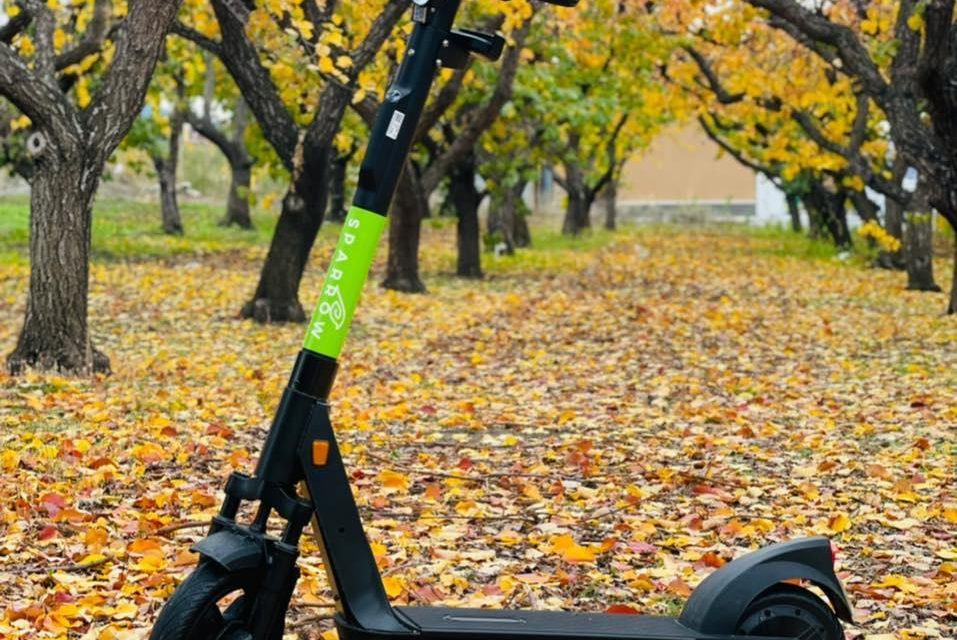
Sparrow Scooters, a Canadian company that, in their own words, “provide zero-emission, safe, affordable and enjoyable rides in partnership with local hospitality businesses,” previously presented to council in June about bringing electric kick scooter rentals to Osoyoos.
Regional General Manager Josh Boileau spoke on the benefits of offering the scooters for public use, which include reduced parking congestion in the town core and reduced traffic congestion on local roads, along with the substantial reduction of vehicle emissions if use of the scooters should take off in popularity.
Boileau also spoke about the geofencing technology used by Sparrow Scooters to control the speeds and distances their scooters can travel and track down any that are not parked in designated areas, which was likely implemented after several urban centers around the world got a less-than-pleasant introduction to “e-scooters”.
Montreal, Edmonton, and Calgary are among the cities that have already allowed the scooters onto their roadways, and they were soon plagued by issues with improper scooter disposal and rider injuries just like the European and American cities that had led the charge.
Alex Bigazzi, assistant professor of civil engineering and planning at UBC, told the National Post at that time that he still believed in in the potential of e-scooters and hoped that proper legislation could save them.
“Just because there are some issues doesn’t mean we have to completely abandon the idea of these e-scooters because it’s a much much lighter form of transportation,” Bigazzi says. “There’s a lot of potential here, so we don’t want to abandon it for these clutter issues.”
“The truth is that [scooters] are here, and they’re probably not going away any time soon,” Curtis told Osoyoos town council. At this time, only by completing the Ministry of Transportation and Infrastructure’s approval process can Osoyoos take steps toward controlling scooter use at the local level before the provincewide decision is made.
Councillor Myers Bennett agreed, saying: “They’re here, they’re already on the streets, we might as well have bylaws.” Now that council have approved the motion, Osoyoos will be entered into a provincial consideration period for new pilot communities in September of this year.
The communities that have already been approved for the pilot project are Kelowna, Nanaimo, North Vancouver, Richmond, Vancouver, Vernon, and West Vancouver. Oliver town council also discussed the issue in June, as previously reported by the Times Chronicle.