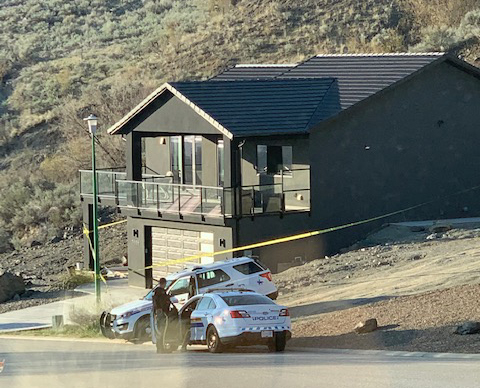
Osoyoos resident Rod Flavell who was accused of causing the death of his wife following an altercation at their Osoyoos home on April 8, 2020 has been found not guilty.
Flavell, 64 was standing trial in B.C. Supreme Court in Penticton on a single count of manslaughter around the death of his 61-year old wife Tina Seminara who succumbed to her injuries about a week later.
Her cause of death was attributed to hypoxic ischemic encephalopathy (HIE) which is a type of brain dysfunction that occurs when the brain doesn’t receive enough oxygen or blood flow for a period of time.
As to what caused this brain injury is unclear and indeed a part of the lack of evidence cited by Supreme Court of B.C. Justice E. David Crossin in reaching his decision today at the Penticton courthouse.
Judge Crossin said that in his view “possibility layered upon likelihood, layered over suspicion do not translate into a solid evidentiary foundation upon which a finding of guilt can rest.”
“The probability that something occurred between the accused and Ms Seminara for which the accused feels responsible and perhaps is responsible, cannot form the bedrock of proof,” he emphasized.
The absence of evidence in this case “fatally undermines” an outcome of guilt from the evidence available he said.
“In my view the evidence is simply too vague and uncertain upon which to rest a finding of guilt in support of the charge of manslaughter.”
Judge Crossin felt it would be “unsafe” to hand down a conviction based on the entirety of evidence which produced “less than a reasonable doubt of guilt of the accused”. “As such, I find the accused is not guilty.”
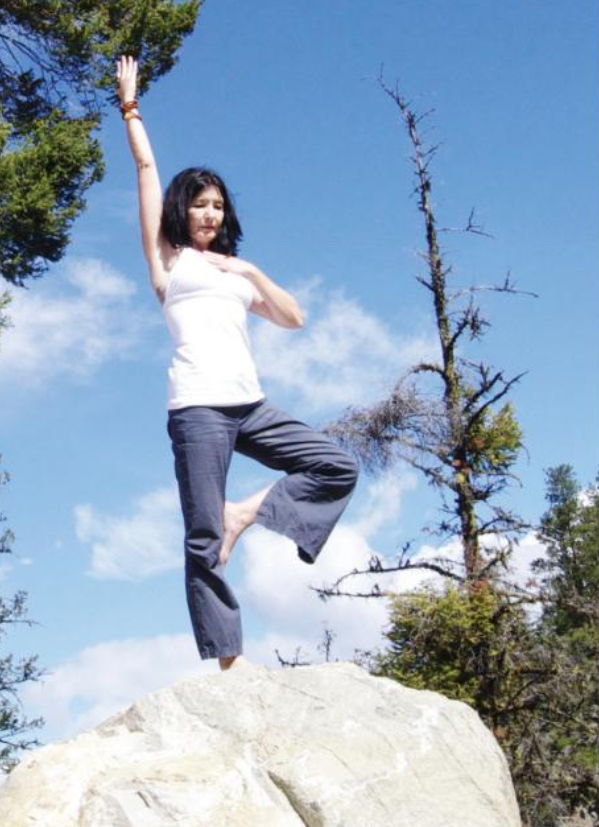
Tina Seminara (file photo)
The trial was nearly tossed out at the end of June after a defence application to have the case dismissed based on lack of evidence was heard by the court but ultimately rejected.
One of the key problems identified by Judge Crossin was the possible role of blunt force trauma in causing the HIE and the lack of evidence to support that theory.
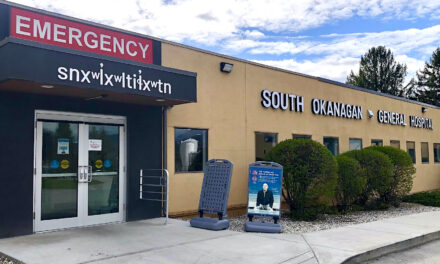
While first responders observed “obvious trauma”, the physical manifestations of these were either not present or dissipating when Seminara was first examined at the Oliver hospital later that same night. These were even less detectable when later examined by a second doctor.
“The almost complete dissipation of the initial descriptors of apparent trauma creates a good deal of hesitation in coming to any conclusion on the evidence concerning both the nature of any possible blunt force trauma or its impact if any upon Ms Seminara,” the judge said.
“The evidence as a whole demonstrates the state of uncertainty concerning the fact of injury, the nature of any injury and the potential impact in causing HIE. This in turn creates uncertainty concerning the activity in the home that evening and the conduct of the accused and the relationship of that conduct with the cause of death,” Judge Crossin said.
“This is notwithstanding the suspicion raised by the statement of the accused, his conduct and the observations of the first responders.”
The judge also noted that other forensic evidence was of little help.
He noted for instance that there was no forensic evidence provided on the stains on Flavell’s shirt on the night of his arrest which could have been red wine, blood or both.
“There was no evidence that it was blood and if it was blood who’s blood? There’s no analysis or opinion offered as to how, if it was blood how it might’ve been transferred to his shirt.”
There was also no forensic analysis of what was described by the investigating RCMP officers at the time as blood in the living room area and on the walls and whether it was in fact blood.
“Indeed the evidence is clear,” Judge Crossin said. “There is no evidence of any bleeding at the scene at all at least from the body of Ms Seminara other than from the cut on Ms Seminara’s leg that was covered by her jeans.”