By Madeline Baker, Times-Chronicle
Water metering was a hot topic of discussion at the most recent Osoyoos town council meeting and ensuring that residents are given ample education on the state of water conservation and the need for meters was at the forefront of everyone’s minds.
No words were minced when it came to the cost of the Universal Water Metering Program being presented to council – nearly $5 million in capital funds that the town will have to borrow – nor the topic of how the public was likely to feel about the new additions to their homes.
Councillor CJ Rhodes neatly summed up the bind that council are in: “it’s a highly controversial matter we’re trying to deal with. There will be lots of pushback.”
Steve Underwood of TRUE Consulting spoke alongside Jared Brounstein, Osoyoos’s Director of Operational Services, about the details of their water metering program and, perhaps more importantly, about the current state of water conservation in Osoyoos.
According to Underwood, Osoyoos’s demand for water has “crossed the safety margin” when compared to its available supply. He explained that the town will soon have to call on an additional well to meet residents’ demand if water usage is not curtailed, and the cost of bringing that well online would be comparable to the cost of their metering program.
What’s more, the seventh well would take up to two years to reach full functionality, leaving Osoyoos very literally high and dry.
Currently, Osoyoos consumes water at an average rate of 980 litres per day. “There are African countries that use less water than us per day,” said Rhodes.
Mayor Sue McKortoff pointed out that water restriction bylaws have already become more stringent, reducing the days per week on which a household can water their lawn from four to two over a span of two years, and asked if those changes had made any impact on the town’s water usage.
“It has not reduced our water demand by any stretch of the imagination,” Underwood said in response. “The problem is that if you don’t police it, nobody is going to abide by it.”
Brounstein added that water restriction bylaws likely will need to be policed and punished more severely as part of the town’s effort to avoid catastrophic drought in the future.
As to why the town has made water metering a part of their water conservation toolbox, Underwood and TRUE Consulting turned to a 2017 report by Canada’s Ecofiscal Commission, ‘Only the Pipes Should be Hidden,’ to provide more information on its benefits.
The report states that “metering allows water utilities to measure water demand over time and across different users . . . it allows water utilities to quickly and more accurately identify leaks and improve efficiency, and it also helps with long-term planning.”
Along with these benefits to information gathering and infrastructure, the report notes that a fully metered town or city can use volume-based or “volumetric” fees to charge users based on their specific levels of water usage.
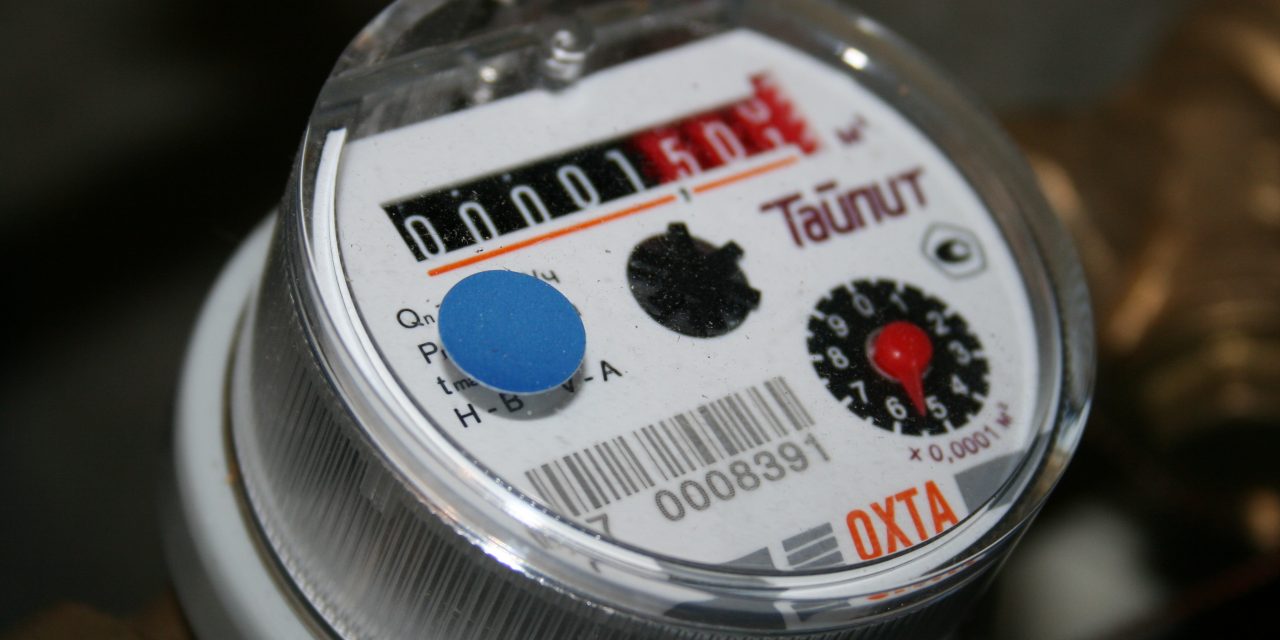
Town-wide installation of inside meters on residential homes and bulk meters on multifamily developments makes up the bulk of the program’s $4.7 million price tag, along with the hiring of new staff to operate and maintain the metering system.
Most homes and buildings that have recently had meters installed will not need to have them replaced, according to Brounstein, as most of those meters can be converted to the new system.
Unfortunately, while the 2010s saw a proliferation of provincial grants for projects like this one, Brounstein said that the government has largely moved on to new forms of conservation and Osoyoos is behind the times in that regard.
Underwood did have some good news to offer on the financial front: as the community is able to progress in reducing water consumption per capita, both by meeting current targets and setting new ones, Osoyoos will raise its eligibility for future grants geared toward water conservation projects.
Council unanimously voted to endorse the metering implementation program and secure the necessary capital funds, with McKortoff and Councillor Myers Bennett both stressing the importance of a public education campaign as a future step in the plan.
“We’re probably the last town in the Okanagan that doesn’t have [water metering],” said Bennett. “Now we have the chance to let the electorate understand better what we’re trying to do.”