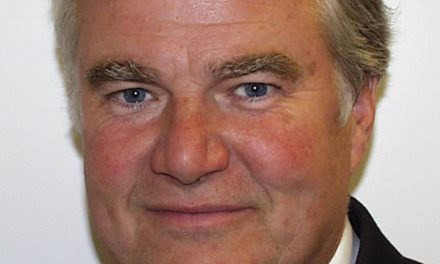
Richard McGuire, editor, the Osoyoos Times.
Back what seems like millennia ago, when I was in Grade 8, our teacher had us do debates in class.
Several of us were put on one team and several more were put on the opposing team and we either picked or were assigned a topic.
The side that you argued was chosen by luck of the draw, and at first it was difficult to come up with arguments in favour of a position you didn’t believe in. But I learned that virtually any position can be argued.
I recall one time being picked to argue between communism and capitalism and my team was the communists. A friend read some Karl Marx and we made our best efforts.
Fast forward a few years, and in my later teens I hitchhiked around North America. In those years everyone did it, and few worried about the danger.
When you hitchhike, you never know who will pick you up. And more to the point, what kind of interesting and sometimes wacky opinions they might have about the state of the world.
Some of my drivers would spout off about people of other races and nationalities, about French Canadians and First Nations (though in those years they weren’t called that even when people were being polite).
It was the time of the Vietnam war and on one ride through Kansas, two guys who had just returned to the States talked about the pleasure they got from torturing “gooks.”
Usually I didn’t argue even when I strongly disagreed. I didn’t really want to be put back out on the highway. Instead, I listened and asked probing questions from time to time, sometimes helping them to see the contradictions in their positions.
The skills I learned then no doubt helped me in later years as a journalist.
Years later, when I worked for several federal Members of Parliament, I often had to write communications arguing positions I didn’t fully believe.
Sometimes I felt a little hypocritical, but it was a job and I did set limits.
When U.S. President George W. Bush invaded Iraq in 2003 on fabricated claims of “weapons of mass destruction,” I decided I would resign if my party followed the U.S. Fortunately, that wasn’t necessary.
But I did once argue diametrically opposite positions on the same issue for two bosses in succession. The issue was proposed criminal law changes on cruelty to animals.
One boss, a chicken farmer, worried that the laws might be misused by animal rights activists to curtail normal farming practices.
The second was an urban vegetarian who believed that cruelty was cruelty and it could never be justified.
All this is to say that both sides in an argument usually have legitimate points to make, though no side has a monopoly on the truth.
We can learn when we listen to those we disagree with, even if we don’t accept the bulk of their arguments.
These days, however, I’m dismayed by the disappearance of respectful debate.
Nowhere is this more pronounced than in the toxic political environment of today’s United States, but here in Canada we’ve seen it on a less dramatic scale.
It’s prevalent on social media where “angry” emoticons have replaced logical arguments and where posting a link to someone else’s opinion is easier than thinking for yourself.
People are no longer critiquing the ideas they don’t agree with. Rather, they attack their opponents personally.
And, with a proliferation of online and conventional media, people are seeking out “information” sources that confirm their biases and tuning out those that don’t.
I’m guilty too. I will tend to choose CBC, the Globe and Mail, MSNBC and the Washington Post over Fox News, Breitbart, Rebel Media and other voices of the extreme right.
I don’t know the answer. But I miss the days when we could have a respectful debate without it degenerating into a fight to the death.
RICHARD McGUIRE
Osoyoos Times