Lyonel Doherty
Times-Chronicle
A Grade 7 student in Oliver is taking action against racism and seeking justice for missing, murdered Indigenous women and girls.
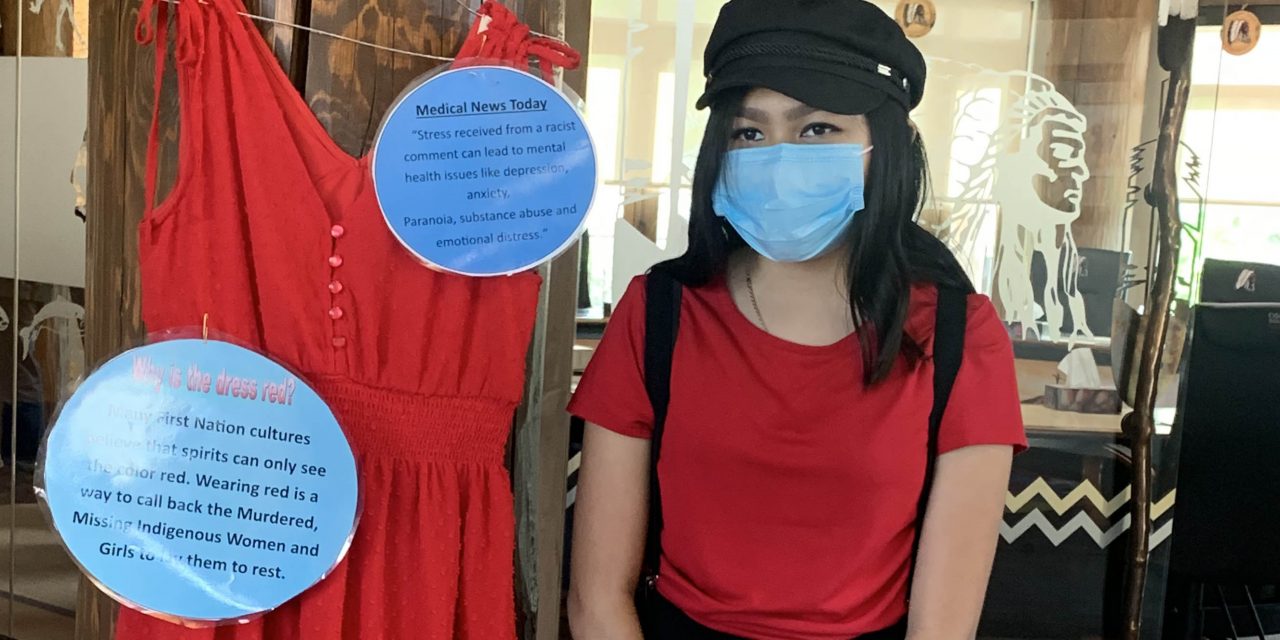
Tai Flett from Senpaq’cin School chose these challenging topics as her “Exhibition” project in her final year of primary education.
“I picked this topic because it needs more awareness and needs to be talked about a lot more so that we stop losing our Indigenous women and girls to violence,” Flett told the Times-Chronicle.
In a report by the National Inquiry Into Missing and Murdered Indigenous Women and Girls, it states that Indigenous people have grown up normalized to violence while Canadian society shows an appalling apathy to addressing the issue. It says this “amounts to genocide.”
Flett wears red because many First Nation cultures believe that spirits can only see the colour red. Wearing it is a way to call back these murdered and missing women and girls to lay them to rest. This is often symbolized by a red dress that is seen hanging in communities.
While Flett does not have a personal connection to any of these missing or murdered females, she said the topic needs more awareness globally.
According to the RCMP, there have been nearly 1,200 missing or murdered Indigenous women and girls across Canada since 1980.
Rinelle Harper was almost one of them several years ago when she was sexually assaulted and left for dead on a riverbank in Winnipeg. Not long after the attack, the 16-year-old called for the national inquiry.
Coinciding with this issue, Flett believes racism is a serious problem that requires more discussion as well.
“I want people to think before they say racist comments because racism is wrong and messed up in so many different ways.”
Flett noted she has heard racialized comments about First Nations people, which makes her feel disappointed that people have assumptions about each other.
“I’ve seen examples of racism against not only First Nations but also other cultures in Oliver.”
She knows that racist comments can lead to mental health issues such as depression, anxiety and substance abuse.
“People need to learn more about other people’s cultures so they can become more tolerant and patient towards others,” Flett said.