By Don Urquhart, Times Chronicle
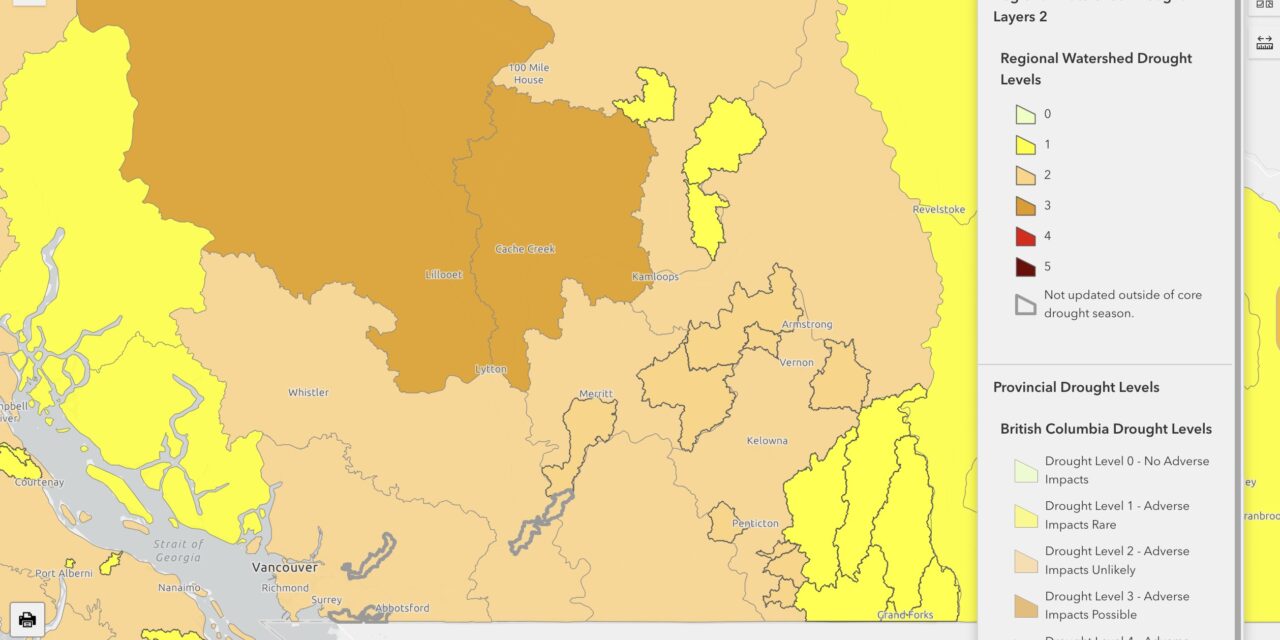
The Okanagan region has been moved to a Level 2 “Very Dry” drought rating as a result of the lingering effects from the 2023 drought, low winter snowpack, low precipitation, and warmer than normal temperatures causing an early freshet.
In the province’s May 15 update of the BC Drought Information Portal the Okanagan region has been moved to Level 2 on a scale from 0-5. At this level, there is an emphasis on curtailing unauthorized water use and water suppliers may consider implementing water restrictions.
Local water restrictions (stages) are set using different indicators than provincial drought levels, and water supply conditions vary across the region. Whether a municipality moves to a higher restriction stage depends on several factors, including customer demand, infrastructure capacity, and local water supply conditions.
None-the-less the Okanagan Basin Water Board (OBWB) urges, “everyone should be using water wisely”.
Customers of water utilities should comply with all watering restrictions and advice from their supplier the OBWB said, adding that water licence holders on streams and wells who are not customers of local water utilities should adhere to conservation measures communicated by the provincial government.
The OBWB also noted that while recent localized rains have helped, drought conditions will persist into 2024 unless the region experiences prolonged rain within the next few weeks.
“Okanagan water purveyors should closely monitor supplies and customer demand and begin communicating with customers in preparation for continuing drought conditions this summer,” the OBWB cautioned.
The Okanagan spent more than half of 2023 in drought, starting in June, and this drought is persisting into 2024, the OBWB added. The below normal snowpack this winter means, despite some rain in April, the Okanagan hasn’t seen significant recovery from last year’s drought.
In addition to the low snowpack, above normal temperatures have caused an earlier melt. By mid-May, typically 17 per cent of the annual BC snowpack has melted.
This year, as of May 15, approximately 31 per cent of mountain snowpack melted, according to the provincial River Forecast Centre (RFC) in their May 15 Snow Survey and Water Supply Bulletin released this week.
The snow basin indices throughout the province range from 34 to 101 per cent of normal, with a provincial average of 57 per cent of normal (43 per cent below normal). Warm weather in early May led to accelerated snowmelt in the first half of the month.
The For example, Brenda Mines reported the earliest ever snow-free conditions in its 28 year record. This early melt has led to an early freshet, bringing concerns for late season water supply. Projections are also calling for above normal temperatures and minimal precipitation to continue through to July.
The River Forecast Centre notes that the causes of drought in the province are multifaceted. “While snowpack can play an important role in areas, other factors such as the rate of snowmelt, spring and summer temperatures, and short- and long-term precipitation trends may have equal or greater importance in governing the emergence of drought this summer.”