Lyonel Doherty
Times-Chronicle
An update on the proposed national park reserve in the South Okanagan hasn’t quelled any concerns from at least two regional directors representing Oliver and Osoyoos.
But the South Okanagan Similkameen National Park Network is pleased that negotiations are back on track towards an establishment agreement.
Last week Parks Canada released an update on the park proposal which continues to trudge through the mire of COVID-19.
It reports that negotiations with the province and the syilx Okanagan Nation are ongoing, along with meetings with regional directors and municipal representatives.
Parks Canada says the proposed national park will protect a rare ecosystem, strengthen biodiversity and contribute to the recovery of species at risk. In addition, it will advance reconciliation and preserve opportunities for syilx/Okanagan Nation cultural practices. It will also provide long-term opportunities for sustainable tourism and jobs in the area.
The parks’ working boundary encompasses over 270 square kilometres (27,300 hectares or 67,500 acres) of natural and cultural landscapes in the Mt. Kobau, Spotted Lake and Kilpoola areas of the South Okanagan-Similkameen area, including the South Okanagan Grasslands Protected Area.
Parks Canada reiterates there will be no expropriation of private lands.
Interim measures are in place to ensure that no new mineral claims are acquired on Crown lands within the park boundary. In addition, commercial timber harvesting within the proposed boundary is temporarily suspended until a decision is made on park establishment.
Parks Canada noted that decisions on camping sites, outdoor activities, fire and invasive species management are not currently being discussed. These will be explored in detail through a planning process with First Nations, local government and the public.
Next steps will see negotiations towards a park establishment agreement.
Parks Canada mentioned that it recently deployed a 17-person incident management team to support the BC Wildfire Service in managing the Nk-Mip Creek wildfire.
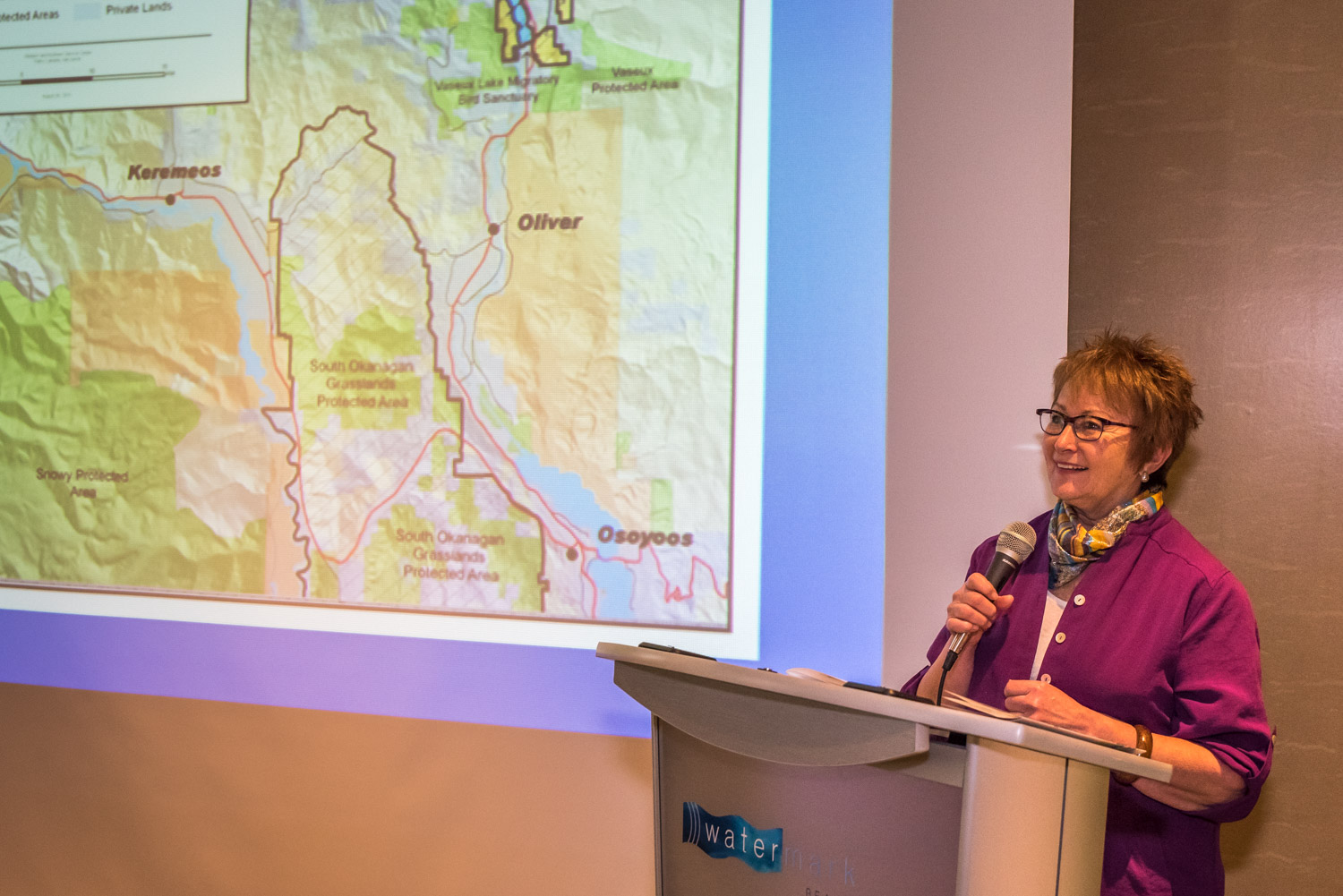
Doreen Olson from the SOS National Park Network is anticipating the establishment agreement.
(File photo by Richard McGuire)
Commenting on the update, Osoyoos Mayor Sue McKortoff said the town has asked a couple of Parks Canada officials to attend a council meeting to answer questions.
“The fire situation, which could continue for many weeks yet, has changed the priorities for Parks Canada, and we certainly understand that,” McKortoff said.
Oliver Mayor Martin Johansen said he appreciates the opportunity to meet with Parks Canada and the government of B.C. to share the concerns of residents.
“What remains to be seen is how these concerns will be addressed during negotiations with the Tripartite Committee to formalize a final agreement.”
Johansen encourages local residents to reach out to their elected officials and share their concerns.
“We will make sure to bring these concerns to the table, have them heard and responded to.”
Area C director Rick Knodel has been sitting in on some of the Parks Canada meetings with three regional directors whose areas border the park’s boundaries. He was the one who pushed for this consultation process, which he admitted doesn’t have a lot of influential clout.
“I’m just glad we’re sitting at the table with them (and being heard),” he said.
But he noted that Parks Canada is working from a position of power, which is why the stakeholders at the table need some negotiation strength.
Knodel said time is on their side since he believes the proposed national park won’t see the light of day for another decade.
“That will give us time to pound the bushes,” he said.
Knodel noted some of the issues being discussed include cattle grazing and mineral claims.
“They said no expropriation of private property, but they haven’t said no expropriation of mineral claims.”
The director said they must consider mining tenures since they hold a lot of value in the area.
Knodel acknowledged that Parks Canada has been talking to the cattlemens’ association, but he hopes they also talk to individual cattlemen in this area who are directly impacted by the proposed park.
In the end, Knodel said he will take Parks Canada’s “gift horse” in allowing regional directors a say in the negotiations, but he’s worried that people’s long-held concerns after the park is established won’t go anywhere.
Park proponent Doreen Olson, spokesperson for the South Okanagan-Similkameen National Park Network, said it appears the negotiating groups are half way through the most difficult part of the process heading towards the establishment agreement.
Olson noted she was happy that Parks Canada fire management specialists are helping to fight the Nk’Mip Creek wildfire which continues to threaten and destroy both human and wildlife habitat.
“Their assistance and expertise is a welcome and reassuring addition to the crews already working on this wildfire.”
Rural Osoyoos (Area A) director Mark Pendergraft said it’s hard to comment on the primary negotiations when you don’t know what’s going on there.
“The concerns I still have about the national park is that the public has been badly misled about what a national park, if established here, will actually protect. Most of the species they talk about as being endangered in the South Okanagan live in the valley bottoms and will not be protected by a park.”
Pendergraft said protecting the area from development is really a non-issue as private lands will still be able to develop as per current rules and how local governments choose, even if a park is established.
The director said there are many yet to be realized conflicts between park and farming activities on the perimeter.
“I am yet to be sold on the benefits of a national park in this area. Mostly it will be a headache for the majority of the locals.”
Lionel Trudel, spokesman for the South Okanagan Similkameen Preservation Society, questions why Parks Canada is proceeding with the proposal while the rest of the country is reeling from the pandemic and its associated costs on society.
“Surely with our federal government’s opening habits over the last two years, the prospect of affording a national park reserve must be low on the list of the initiatives relative to the plight of businesses, seniors and mental health issues that encompass Canadian society,” Trudel said.
He pointed out the update by Parks Canada is full of vague statements and goals, without mention of which elected officials they are working with. He added the reality is they are spending taxpayers’ money on a project that very few people have a say in.
(Below is a map of the national park reserve’s working boundary.)
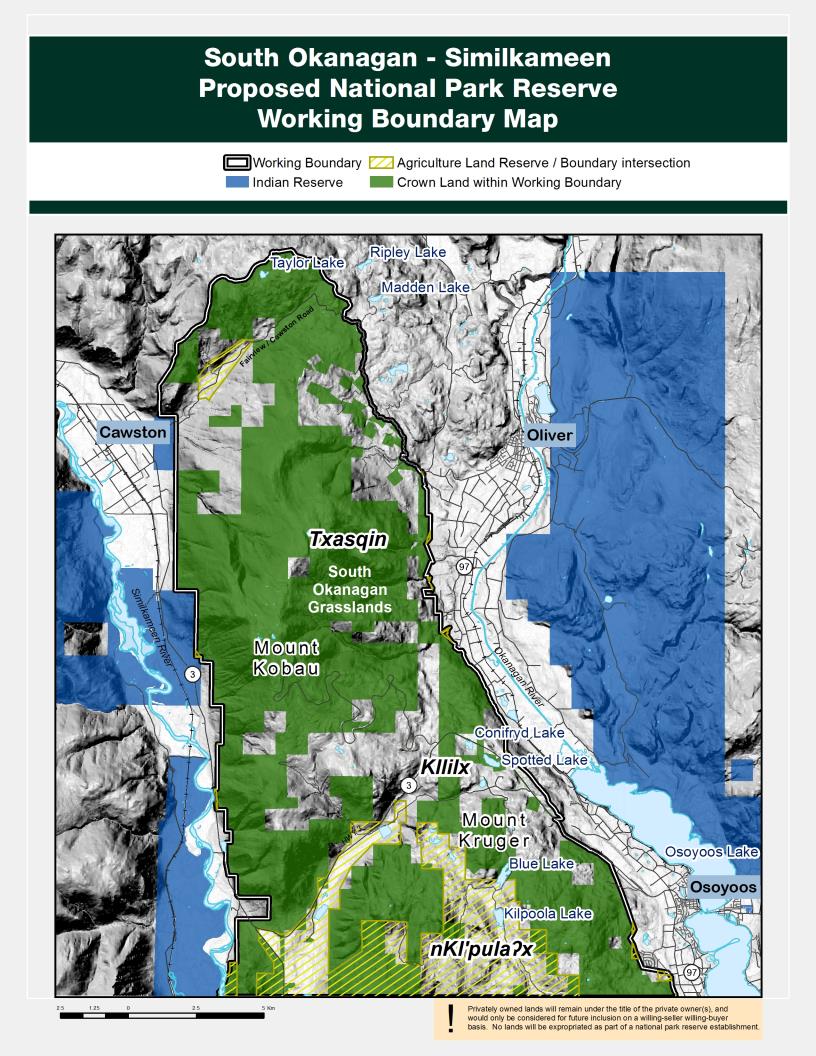
(Map provided by Parks Canada)