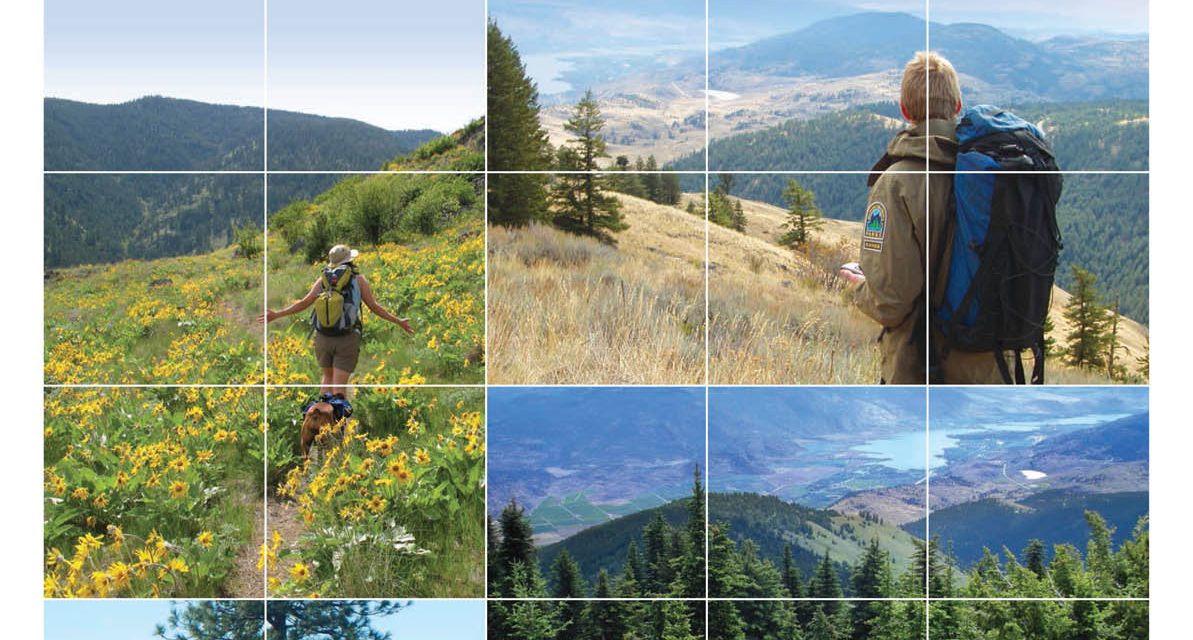
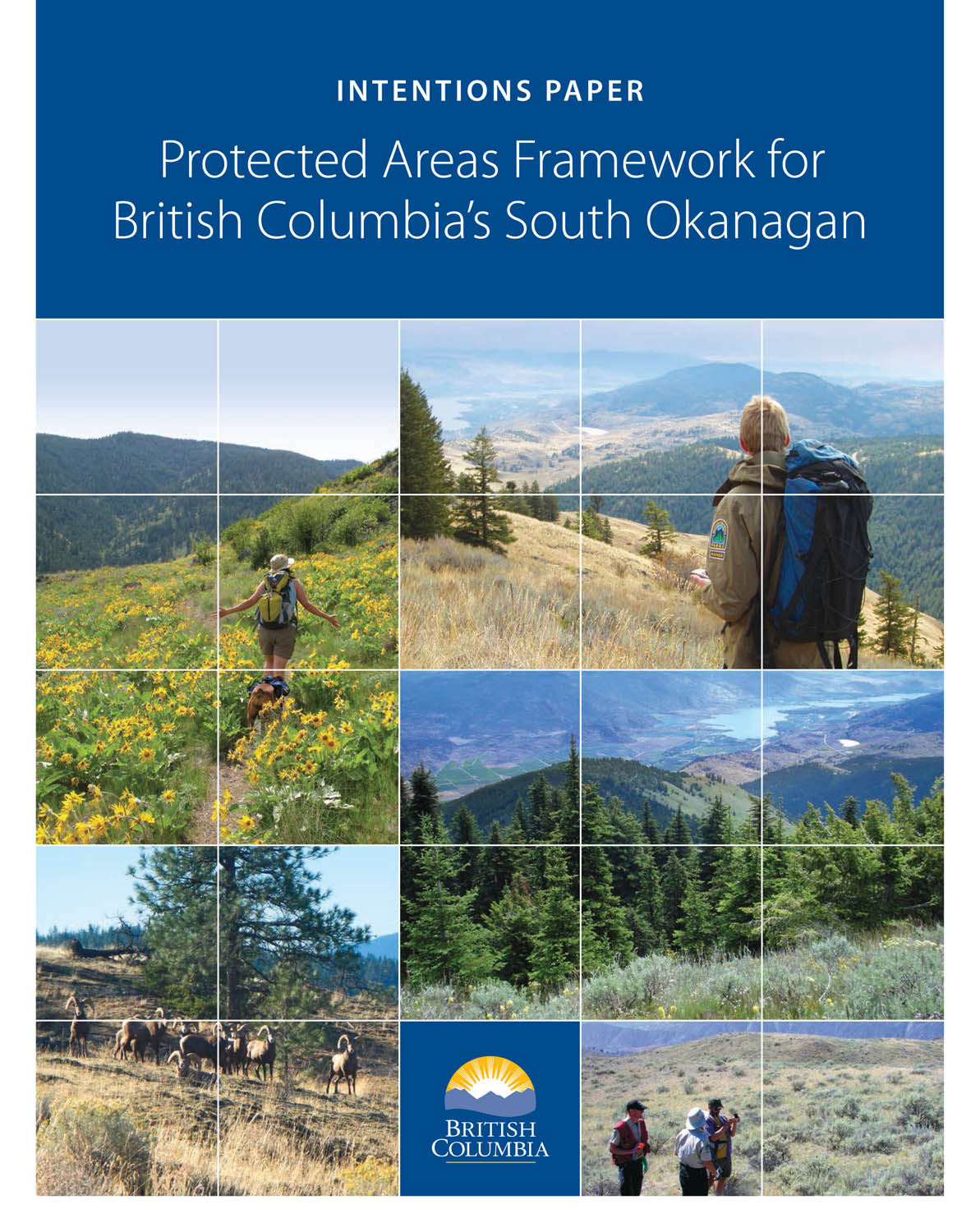
The provincial government has released an “intentions paper” outlining a broad framework proposal for protecting lands in the South Okanagan. The public has until Oct. 12, 2015 to comment.
Supporters of a national park reserve in the South Okanagan are pleased with the provincial government’s announcement last Thursday that it is willing to re-open discussion about establishing a national park.
Opponents, however, are more guarded in their response.
“You know the word ‘gobsmacked’?” said Doreen Olson, co-ordinator of the South Okanagan-Similkameen National Park Network (SOSNPN). “I’m gobsmacked.”
Olson was especially pleased to see that the province has added the White Lake area west of Okanagan Falls to Area 3, which the province now proposes for a national park reserve.
The province has released a discussion paper that also proposes a national park reserve in Area 1, south of Highway 3 to the U.S. border.
Also proposed is Area 2, west of Oliver down to Highway 3. That area would be protected as a provincial conservancy, which allows more economic activity and some resource development that would not be allowed in a national park.
The public has until Oct. 12 to respond to the proposals.
“I’m very excited. It’s a great day,” said Holly Plante, past president of the South Okanagan Chamber of Commerce (SOCC), who has continued to be the SOCC’s point person on this issue.
“For a lot of us as stakeholders, this is what we have been hoping for for quite some time now, that discussions could be opened up again,” Plante said. “I think the province has done a good job of making sure that everyone is looked after, existing ranchers, existing business owners, First Nations.”
Opponents, however, have been less enthusiastic, even though the province’s proposal requires guarantees that existing ranching tenures would be maintained and that private property could only be acquired on a willing-seller, willing-buyer basis.
Also, the area closest to Oliver, where some of the strongest opponents are based, would remain under provincial protection.
“I would have to say that I’m still opposed to a national park,” said rancher Mark Quaedvlieg, who added the province’s proposal is too wide open because it invites the public to suggest modifications to the boundaries of the areas being considered.
Quaedvlieg operates a ranch he leases in Area 2, which would remain under provincial protection.
He points out that the areas needing protection were already identified under the Okanagan-Shuswap Land and Resource Management Plan (LRMP) done more than a decade ago.
“I don’t want it to start over and delve into alternate areas and one side getting greedy,” he said. “The province, I think, should have been a little more forceful in saying this can be fine-tuned, but there’s been a lot of negotiation and compromise. It’s really time to put this thing to rest.”
The Osoyoos Times attempted to reach MLA Linda Larson, who has been a staunch opponent of the national park.
Her office, however, said she was on vacation and out of reach of communication.
She did, however, issue a prepared statement that offered no praise for the province’s proposal, but instead asked residents to speak up, whether they agree or disagree, and to make any suggestions.
“My concern has always been how to protect the agricultural land and the farmers/ranchers who make a living on this land, while still gaining some security from development for the eco-sensitive areas,” Larson’s statement said. “There are also recreational activities such as hunting and fishing that are part of the local culture and history.”
Osoyoos Mayor Sue McKortoff is thrilled the province has made this move.
“I’m very pleased that they considered all the things that needed to be looked at,” said McKortoff, who has been a supporter of a national park along with other council members. “From what I can tell they’ve done a very good job of trying to be considerate of all of the interest groups. Compromise in government is a big thing, absolutely.”
Glenn Mandziuk, president and chief executive officer of the Thompson Okanagan Tourism Association (TOTA), was also happy and excited by the province’s announcement.
“I’m very, very pleased,” said Mandziuk. “We’re pleased to see that one of the key principals around the program is that tourism is actively promoted. That obviously is why we have been strongly advocating for this initiative to get people back around the table.”
Tourism is a $1.75 billion industry in the TOTA area, said Mandziuk.
National park recognition gives the area the cachet to draw national and international tourists and also opens the door to potential future recognition as a UNESCO World Heritage Site, something TOTA is currently seeking for Wells Gray Provincial Park at the northern end of its region, he said.
“What we’re trying to do is build anchors on both corners of the region, both north and south,” said Mandziuk. “This helps to grow tourism without question because visitors around the world want to come to see places that the country or the UN (United Nations) has identified as an important location in the world to go to. It becomes part of people’s bucket list.”
The proposed Area 1, which the province suggests should become a national park reserve, would include the Osoyoos Desert Centre.
Osoyoos Desert Society President Lee McFadyen said she’s delighted by the province’s proposal.
“I’m really delighted that the provincial government is opening up discussions again and that we can move forward,” she said. “I’m delighted to see an initiative that is going to permanently protect a major part of that sensitive habitat.”
The fact that the Desert Centre would be included in the national park area would give it the permanent protection that it needs, she said.
Currently the site is almost six years into a 30-year lease, but when the lease runs out, it could be vulnerable to changing priorities, she said.
“When that lease runs out, political stripes may have changed,” McFadyen said. “There can be a whole different attitude toward that site. It could be seen as a wonderful opportunity for an industrial park or a shopping mall.”
As an interpretive centre for the pocket desert, the Osoyoos Desert Centre would complement the national park, McFadyen said.
“The goals really run parallel lines with what a national park would be achieving,” she said.
Peter Wood, terrestrial campaigns director with Canadian Parks and Wilderness Society (CPAWS) B.C. chapter, was also pleased with the province’s announcement.
“We think this is a really positive move forward,” he said. “We’re still considering the merits of the draft paper, but we think this is reflective of the current mood in the region.”
The original park proposal called for national park protection for all three of the areas in the plan, Wood said, noting that for reasons of habitat connectivity and species at risk, this is important.
“Ideally we’d like to see that vision achieved, but we think that as an initial first step, we’re willing to consider it as a chance to get people talking again.”
Under the provincial proposal, Area 2, between Oliver, Cawston and Highway 3, would be a provincial conservancy with a lower level of protection than a national park reserve.
Over the next 60 days when the public has a chance to provide comments, CPAWS will be explaining why it concluded that a national park offers the best potential for conservation and for economic activities.
Wood said he believes Parks Canada will be interested in moving forward with this proposal. They have not been able to comment publicly since the province withdrew from participation in 2011, he said.
“I’d really like to make a plug for all British Columbians to weigh in on this in the next few days,” said Wood. “It’s an absolutely crucial time for people to let their views be known.”
RICHARD McGUIRE
Osoyoos Times