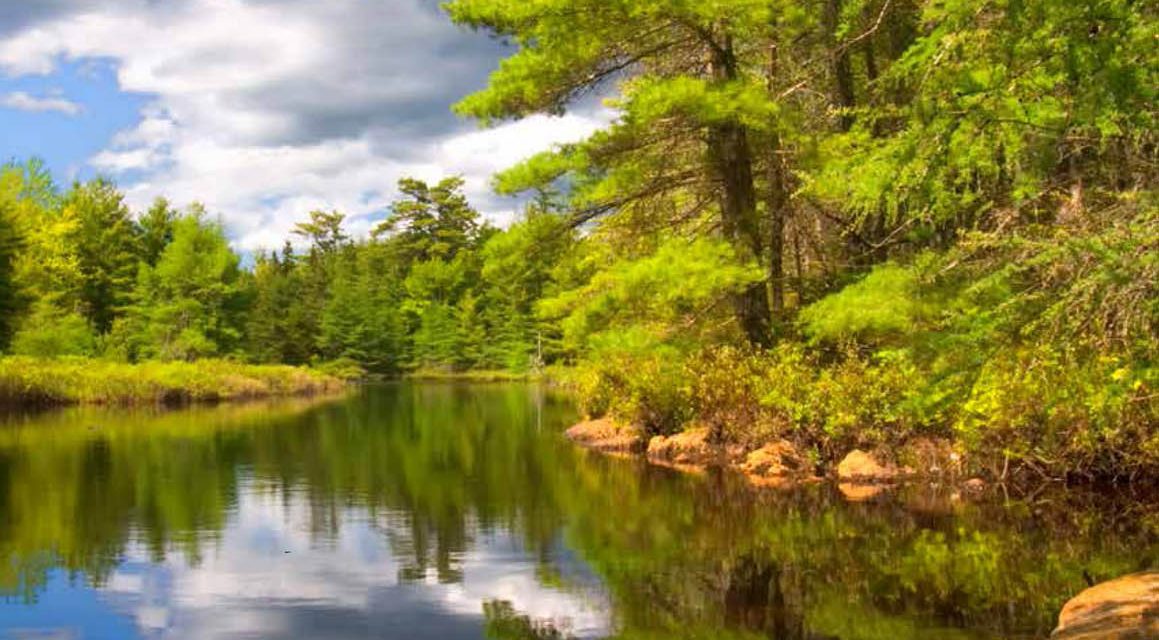
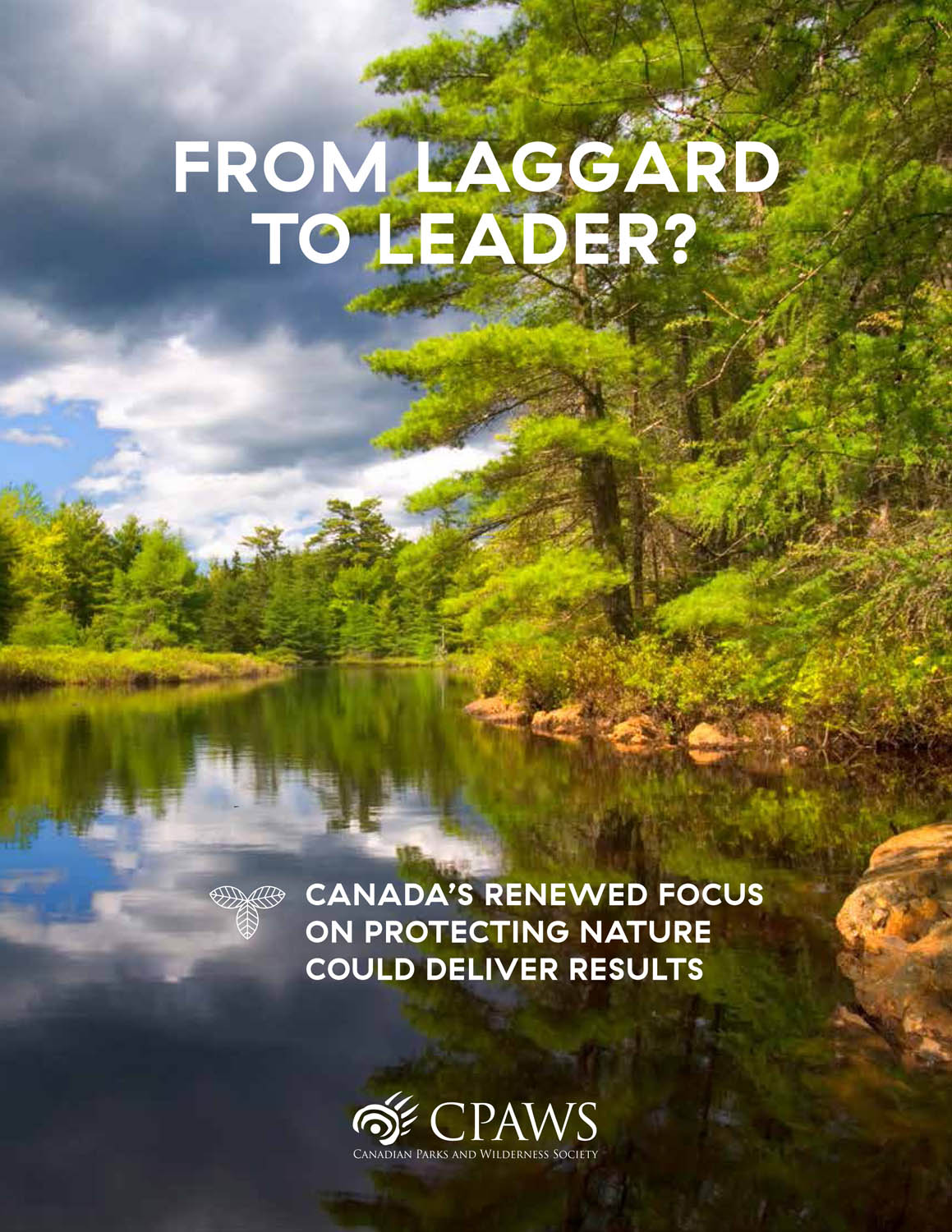
A report by the Canadian Parks and Wilderness Society identifies a national park in South Okanagan-Similkameen as one of 13 priorities in Canada and the only one in B.C. as it calls on Canada to meet international conservation commitments. (Cover image of CPAWS report)
The Canadian Parks and Wilderness Society (CPAWS) has named a national park reserve in the South Okanagan-Similkameen as a top priority for Canada to meet international commitments for conservation.
The report, “From Laggard to Leader?”, was issued Monday and it singles out the South Okanagan as one of just 13 locations in Canada and the only one in B.C. for early action.
The report notes that in 2010, Canada committed under the United Nations Convention of Biological Diversity to protect at least 17 per cent of land and inland waters by 2020.
Currently Canada ranks last among the G7 countries, with only 10.6 per cent of land and freshwater protected, the CPAWS report says.
“We were looking to highlight places where a significant amount of work has already been done to keep the place protected,” said Jessie Corey, terrestrial conservation manager with the CPAWS B.C. chapter.
She noted that the national park reserve here already has support from both levels of government and from the Okanagan Nation Alliance.
“It’s got a great economic case for support from local businesses,” she said. “The Okanagan represents this really immediate opportunity for the new (B.C.) government to take decisive action.”
Corey acknowledges that with its small area, a national park reserve in the South Okanagan will only make a small contribution to meeting Canada’s 17 per cent commitment, but she suggests it’s a case of quality over quantity.
“A big important part is making sure you have different ecosystem types represented as protected areas,” she said. “Globally, grasslands are one of the most endangered ecosystems on the planet and one of the least represented in protected area systems within Canada. This has been a big gaping hole in our national parks system plan since that was established in the 1970s.”
Corey added that the South Okanagan-Similkameen grassland is also important for species migrating north from places like Arizona and Utah as a result of climate change.
“It might be small, but in terms of bang for your buck, you couldn’t get a better place to put a new protected area,” she said.
Corey notes that it’s still early days for the new NDP provincial government led by Premier John Horgan, but she said CPAWS has been in touch informally to support the national park reserve here.
It was mentioned in the NDP’s election platform, she added.
She said CPAWS also had good relations with the outgoing B.C. Liberal government, noting support from former Environment Minister Mary Polak and Boundary-Similkameen MLA Linda Larson.
The B.C. Liberals insisted that existing land uses must be protected, but they were moving forward with a plan to protect the area prior to the May provincial election.
Corey said the two user groups primarily affected are hunters and off-road ATV (all-terrain vehicle) users, but she said it’s important to make sure talks continue with all stakeholders.
“We can’t just draw a line on a map and say ‘poof, there’s your park,’” she said.
Discussions need to occur to figure out where there are locations outside the proposed park boundaries that displaced hunters and ATV users can continue their activities, she said.
“There’s a lot of threat to this landscape and if it continues under the status quo, it will inevitably be lost forever,” said Corey.
She said in the past five years that she’s been working to obtain a national park reserve in the South Okanagan, a lot of progress has been made in obtaining support from governments, First Nations and stakeholders.
“I’m very hopeful,” she said. “We have seen it come an enormous way. I’m really looking forward to seeing where we can go now that we have this unprecedented amount of support from all governments and stakeholders.”
Corey said the nationally co-ordinated report was a collaborative effort involving CPAWS chapters across Canada.
Among the other 12 locations across Canada highlighted in the report are ones in Yukon, Northwest Territories, Alberta, Saskatchewan, Manitoba, Ontario, Quebec, New Brunswick, Nova Scotia and Newfoundland and Labrador.
RICHARD McGUIRE
Osoyoos Times