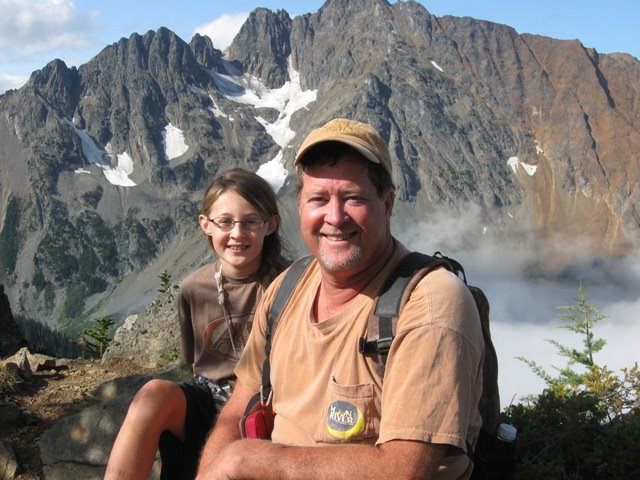
American conservationist Jay Kehne is hosting a walking tour as part of the Meadowlark Festival on May 17. (Contributed photo)
By Dale Boyd
Osoyoos Times
Navigating the hurdles of boundaries made by humans and habitat, American conservationist Jay Kehne looks to connect across borders.
Kehne is based out of Omak, WA. working for Conservation Northwest, dedicated to protecting and connecting wildlife habitat. He will be guiding a tour on Sageland heritage connectivity on May 17 from 1 to 3 p.m. The tour starts from the Sonora Community Centre.
Geology, soil, wildlife, birds and the many species in need of protection in the area will be discussed on the tour. As well, Kehne will look at the shared habitat between the U.S. and Canada.
An example of what it is like to work between the nations, Kehne is working on a cross-border project to financially compensate those who hunt Lynx in northern Canada to supplement the dwindling populations in Washington.
“My organization is going to work with these trappers to see if we can arrange kind of a trade where instead of killing the animal for fur we find a way to send it down to augment our population and you get paid that way,” Kehne said. “So that’s the kind of thing I enjoy doing across the border with people who want to seek solutions.”
The interconnected habitats will be covered by Kehne during the walking tour.
“We do highlight one of the stops that looks back across the U.S. line, I usually talk about the connectivity aspect and the importance of keeping habitat connected for different species of wildlife,” Kehne said. “Of course wildlife doesn’t know there’s an international boundary there.”
Conservation Northwest focuses on the area from the Cascade Mountains to the Rockies working with Canadian and U.S. governments, non-profits and conservation organizations.
“We are interested in what goes on in Canada and support efforts to keep habitat in habitat,” Kehne said.
Kehne will discuss efforts going on in the U.S. and how it connects to the shared habitats across borders. Working with different states and provinces with varying goals can have its challenges.
“There’s a lot of different things to get used to, especially whether it’s a project or a ‘proh-ject’,” Kehne joked. “Of course a lot of things are done through local efforts, but also through government, through non-profit organizations and grants. So that really does change across the border.”
Different objectives and goals enter the mix when working across the U.S.-Canada border especially when it comes to politics.
“There’s differences in local government, state or provincial government, programs. What is a park and what is a wilderness area? All of that comes in to play, but there are some real basics too that are the same,” Kehne said.
Economic development and natural resources are crucial and common threads on either side.
“That often has to be balanced with the expectation that we want to reserve some of these areas for wildlife or protect these areas. So there’s differences, but also similarities we get to work with,” Kehne said.
Wildlife can’t exist without their habitat, but that includes humans, like ranchers and farmers, Kehne said. His organization does not treat the use of natural resources as enemies, but instead finds ways to work together to improve the environmental and economic bottom line.
“That can go on whether there’s a border there or not. That we recognize the communities, as well as we recognize the need for habitat for those communities to enjoy and those wildlife species that occur on them,” Kehne said.
Sharing data or goals can make all the difference for conservationists.
He pointed to badgers as an example, which are more rare up in the Okanagan reaching the end of their natural habitat around Vernon.
“Basically, farmers will just shoot them down here just because, whereas up north they are sort of treasured. Rattlesnakes are kind of the same way,” Kehne said. “Especially when you can see the end point of an ecosystem and a species is thinning down you start to think, wow, we really are connected.”
Admission is by donation to Kehne’s walk, part of the 2019 Meadowlark Nature Festival from May 16 to 20. For ticket information on other events or more information visit www.meadowlarkfestival.ca.