OSOYOOS TIMES-May 20, 2009
By Karen Knelsen
Osoyoos Times
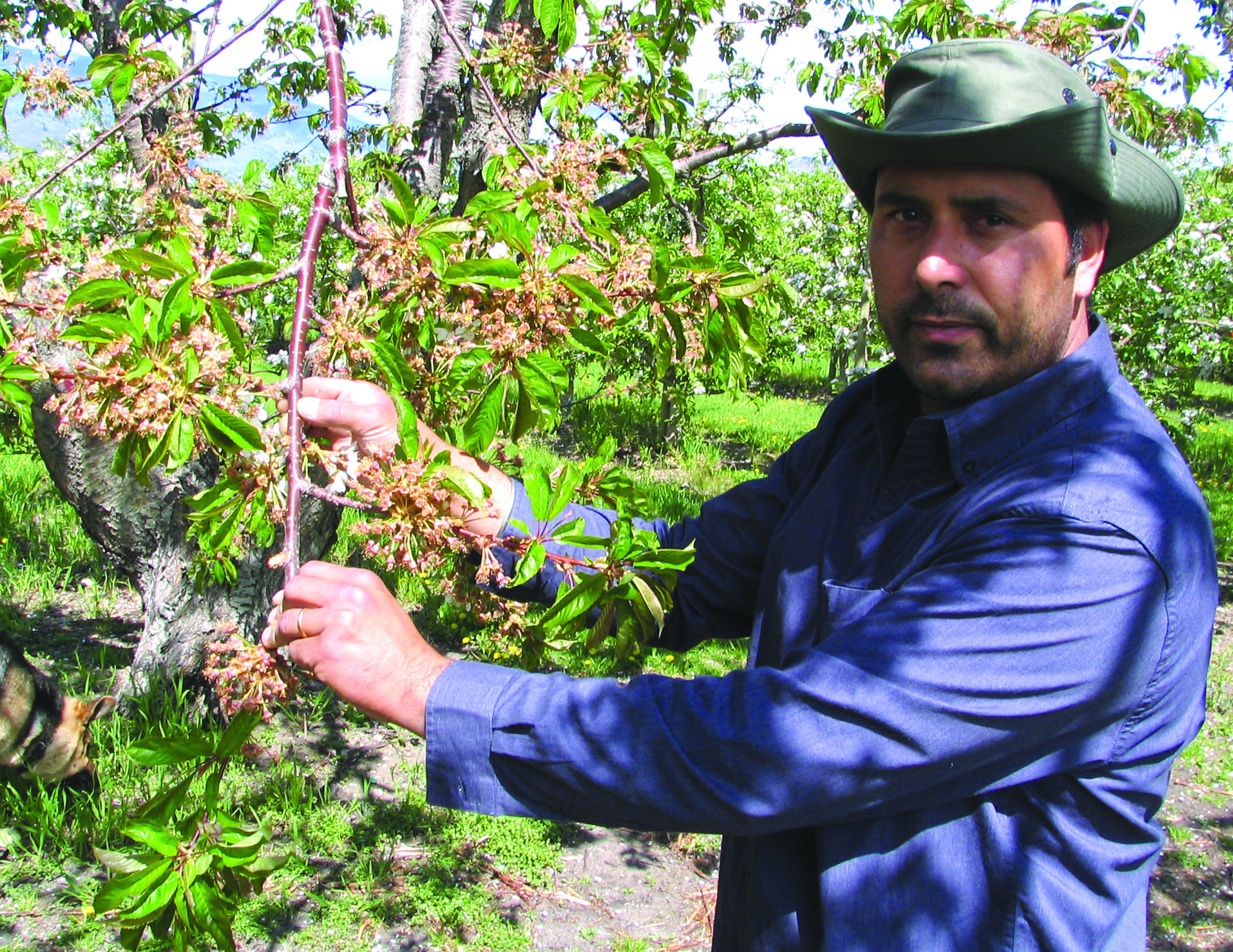
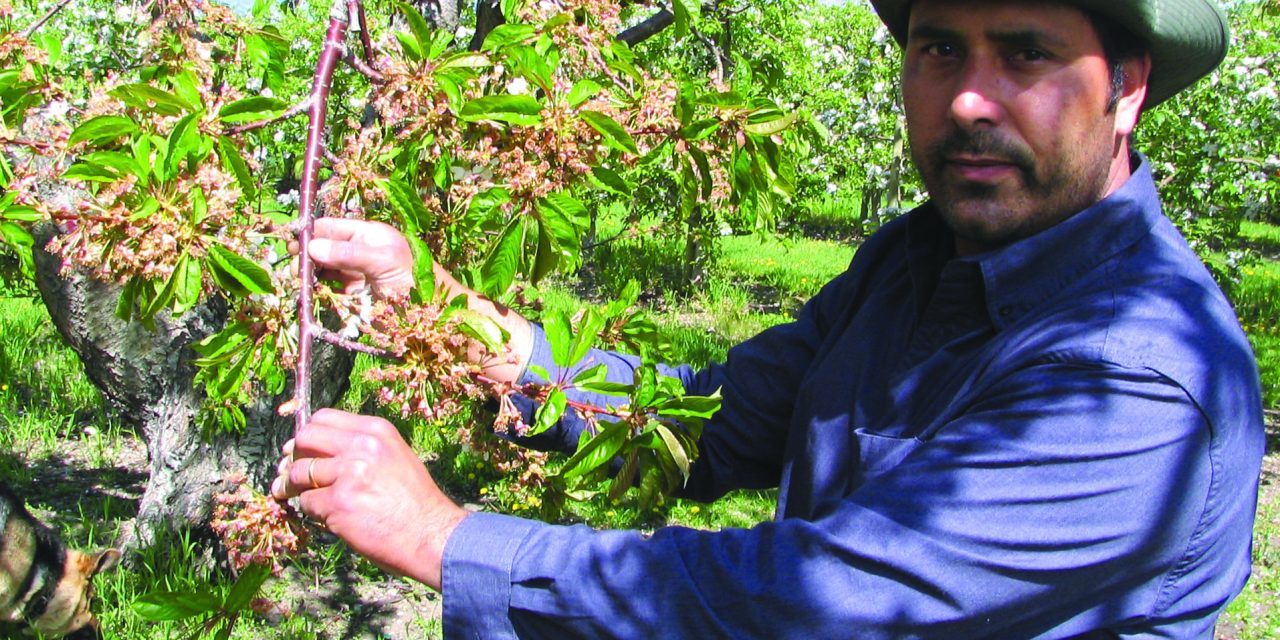
Paul Gill, owner of Paul’s Greenhouses in Osoyoos, inspects the peach trees in his orchard. He said some peach blossoms were damaged due to the cold winter and late spring. Photo by Karen Knelsen
The 2009 growing season has started off cooler and dryer than normal in the South Okanagan, and whether you’re growing grapes or tree fruit, the below-normal temperatures and lack of precipitation are likely to have taken their toll.
“It has had some effect on the development,” said Manfred Freese, an Osoyoos grape grower and president of the B.C. Grapegrowers Association. “We’re expecting a fair bit of damage.”
Freese said damage to grape crops might be as high as 80 per cent, especially in south Osoyoos.
Gabor Fricska, a warning preparedness meteorologist for Environment Canada’s Penticton office, said so far this spring Osoyoos has received about 75 per cent of its normal rainfall and temperatures have also been below normal.
The normal mean temperature for March is 6 C.
This year, Friscka said, March’s mean temperature was recorded at 3.8 C.
And in April the temperature normally would have averaged out at 10.8 C but this year it was 9.8 C.
And until May 10 the average temperature this month has been 11.9 C while the normal temperature for the month is 13.6 C.
As of May 16, the average temperature for Osoyoos this month was 12.4 C.
Osoyoos usually receives 22.5 millimetres of rainfall in March, but this year the community was showered with 16.7 millimetres.
In April we can generally expect about 23.4 millimetres but this year Osoyoos received 9.6 millimetres.
As for precipitation, about 37.4 millimetres usually falls in May.
Up until May 16, 20.6 millimetres of rain had fallen and Fricska said that total is on track to meet the normal monthly tally.
Freese said it’ll be awhile before growers know the extent of the damage to grapes from the cold and dry weather.
“It’s going to be another three weeks before we really see.”
And because the South Okanagan is filled with microclimate zones, Freese said the amount of damage done to any one person’s vineyard is dependent on where it is located.
“Somewhere between one-quarter and one-third (of growers) will be reporting damage,” Freese said.
Freese said grape growers are just hoping summer will be hot and will show up early.
“We need the warmer weather,” he said.
Viticulturalists aren’t the only ones looking for warmer temperatures.
Joe Sardinha, president of the BC Fruit Growers’ Association, said he’s desperate for the warmer weather.
“We’ll take anything at this point,” Sardinha said last week. “We should be getting temperatures in the low 20s this time of year and here we are in the teens.”
He said growers were told ahead of time to be ready for an accelerated bloom this year due to a warm spring.
But the opposite has been true so far, Sardinha said.
However, because orchardists are also dealing with a smaller bee population for pollination this year, the cooler temperatures could prove to be a good thing, Sardinha said.
“The flowers actually stay fresher,” he said.
So if the bees in the area haven’t gotten around to your fruit trees yet, don’t panic.
It might only take a couple of warm afternoons to get the job done.
“They can do a lot of pollinating in a few short hours on a warm sunny day,” Sardinha said.
For stone fruit growers, the cool spring and lack of bees isn’t the only thing to worry about.
An unusually cold winter also caused some damage to the trees and their buds.
“This was a case of just very chilly winter temperatures and the dormant season,” Sardinha said.
But it’s not all bad news.
“We had snow cover, so there was root protection.”
Sardinha added that the Similkameen area took the brunt of the hit of the cold due to the lack of any large bodies of water there.
Lakes warm up the ambient temperature of the valley, he said and the majority of the lakes in the Interior are in the Okanagan Valley.
Sardinha said he is still optimistic about the season, despite the poor start to the year.
“We’ve dealt with less than ideal weather before,” he said, adding that farmers are generally an optimistic bunch.
He did recommend that if you’re a grower and you haven’t purchased your hail insurance yet, now is the time to do it.
“The message is buy your hail insurance early, Sardinha said.
“Don’t get caught without it.”
Paul Gill, who owns a garden centre greenhouse and an orchard located just north of town, said his orchard escaped most of the damage, though it wasn’t unscathed altogether.
His peach blossoms suffered some damage in certain areas of his orchard, he said, adding that his greenhouses served their purpose and protected the plants housed there.