— Scientists & citizens mull water quality solutions —
(OSOYOOS TIMES — September 25, 2007) —
By Maureen ParriottrnOsoyoos Times
The health of the Okanagan Valley's water system is fading fast, but the many brilliant minds gathered at last week's Osoyoos Lake Water Science Forum began the process of administering some much-needed CPR to the key waterway.
Town Councillor Stu Wells hosted this first-ever event at the Nk'Mip Desert Cultural Centre and the Sonora Community Centre from Sunday, Sept. 16 through Tuesday, Sept 18.
He termed the forum an important step in focusing attention on the needs and challenges involved in sustaining the ecological health of the lake along with the related well-being of the (Okanagan Water) Basin's residents and visitors. Lake sustainability will depend on all who work, live or visit the basin, and all those involved in governance.
At the Forum, scientists from many agencies “ Fisheries and Oceans Canada, the International Joint Commission (IJC) and its joint U.S.-Canadian Osoyoos Lake Regulatory Board, the Osoyoos Indian Band (OIB), the Colville Confederated Tribes, Environment Canada, the University of British Columbia, the Washington State Department of Ecology, the B.C. Ministries of Environment and Agriculture, and the Okanogan (Washington) Conservation District “ joined representatives from the B.C. Lake Stewardship Society, the Okanagan Oxbows Restoration Society, ESSA Technologies, and governmental figures from Osoyoos, Oroville, and their respective regional districts.
Former federal Fisheries Minister Tom Siddon was in the audience as well. Ninety-three“year-old Web Hallauer, a former Washington legislator with a passionate interest in the lake, was present to give an overview of its history, as was Brian Symonds, Director of the Regional Water Stewardship Division of the Ministry of the Environment.
The kickoff Sunday evening reception and the Monday conference plenary session opened with prayers by Osoyoos Indian Band elder Modesta Betterton and a welcome to traditional OIB territory by Tony Baptiste. Additional welcomes were extended by Senator Ross Kilpatrick, Osoyoos Mayor John Slater, Oroville Mayor Pro-Tem Walt Hart, IJC Commissioners Irene Brooks and Jack Blaney, and Mark Pendergraft, Director of the Okanagan-Similkameen Regional District.
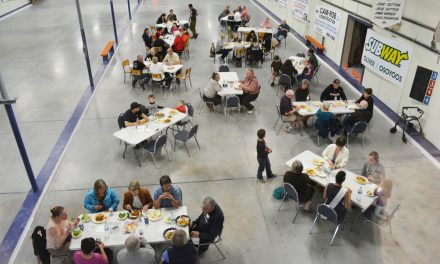
Almost 200 attendees occupied the Sonora Centre's gym and made use of strategically-placed floor microphones that encouraged lively dialogue with the individual presenters and panels.
They identified well-known water villains “ channelization of the river's cleansing oxbows, sluggish water flow, high temperatures, low oxygen levels, agricultural, residential and recreational pollutants, loss of habitat friendly to salmon and kokanee, burgeoning human populations, and too much water being taken out and too little going into the system.
And now there is a new member of the gang: Global warming.
Dr. Kim Hyatt of Fisheries and Oceans Canada said, Temperatures are increasing rapidly and will be 1.5 to three degrees higher by 2050. Major changes are inevitable and will be greater than anyone has ever seen.
He also predicted that precipitation and fresh-water runoff in the Okanagan Valley will alter dramatically and will be accompanied by earlier snowmelt, a longer growing season, heavier autumn rains, and less water flow.
There will be a net 44-per-cent reduction in the water coming through the system, Hyatt told the Forum.
Other distinguished scientists described in detail their studies of the disappearing fish populations, what core samples of lake and river sediments reveal about contemporary and 'legacy' pollutants, the many factors affecting surface and groundwater quality and quantity, and past and present explorations of diverting water from the Similkameen River into Lake Osoyoos.
Encouraging developments already underway throughout the watershed include the Osoyoos Indian Band's and Confederated Colville Tribes' salmon and riparian restoration programs, examples of a successful combination of First Nations vision and Western science; the innovative storm-water runoff containment system being installed in Osoyoos and described by assistant town planner Steve Shannon as a significant barrier to lake pollution; Oroville's completion of a major sewage main on East Lake Osoyoos and its realization that it must create ways to deal with intense developmental pressures; the Oroville-Tonasket Irrigation District's dual role of providing water to farmers in summer and raising fish in its settling ponds in winter; the B.C. Lake Stewardship Society's use of volunteers, students and scientists to monitor water quality in 74 lakes and restore damaged shoreline plants; and Osoyoos Town Council's movement in the direction of water monitoring and usage fees to control excessive consumption.
Presenters and audience members alike began to question what to do with all the information they now possessed. You have a big toolbox to work with, commented IJC member Irene Brooks.
Forum facilitator Clint Alexander, of the consulting firm ESSA Technologies, addressed their concerns: The Okanagan is speeding toward a tipping point. We can either prepare now or react later, when the problems are intractable. The actions needed will not be popular with the leadership, but more awareness is needed NOW.rnAlexander suggested establishing and regularly updating an Okanagan Basin water budget, on the basis of which extraction proposals would be approved or rejected; creating more potent and enforceable regulations and restrictions for surface and groundwater licensing; strengthening endangered species legislation; extending ecosystems' 'rights' to water; and promoting adaptive management experiments on mitigating water temperatures and the oxygen squeeze on fish populations.
The issue of leadership immediately arose. In response to an audience member's statement that scientists, as the people with the data, should provide it, Fisheries and Oceans' Hyatt replied, You can't expect scientists to solve the problem of integration. You must go to the political level to demand cross-disciplinary projects.
Scientists should come to forums like this to explain and inform people in ways they can understand, so you can go to your representatives, MPs, senators, MLAs to say you'll lobby for your 'hit list'.
Another panelist agreed: The challenge that this group faces is who's going to be the leader, step forward and take charge. We need that leader, that champion, in this valley. You haven't made it a priority for your governments. How are we as a society going to adapt to the coming changes?rnSubsequent discussion between panelists and audience revealed that while all accepted personal responsibility to educate themselves and others, even to run for office, most felt a formal organization is needed in order to be truly effective. While the IJC was proposed as the most natural choice, several speakers felt that creating an Okanagan Water Management Board composed of Basin citizens was preferable.
We're looking at cultural change, observed a panelist when it was apparent that the audience was committed to taking action after the meeting ended.
In concluding the Forum, Councillor Wells announced that a full report of the proceedings will be available at the Town office by the first week of October. Wells closed by quoting a sign he once saw on a counter-culture bus: We all live downstream.