Lyonel Doherty, Times Chronicle
The war against invasive species is going to take everyone’s cooperation if that battle is to be won.
That was evident after a presentation to the regional district on April 7.
Lisa Scott, executive director of the Okanagan and Similkameen Invasive Species Society (OASISS), gave the board an update on its activities in 2021.
Scott started off by saying that none of their staff contracted COVID-19 during the pandemic, adding they had established protocols and risk assessments. She noted there were fewer community events and reduced contact with private landowners. But it was a “fruitful year,” she pointed out.
Scott said their focus is invasive plants, but they also address aquatic species, such as mussels and invasive clams.
“I don’t believe we have them here, but if you don’t monitor, you don’t know,” she said, adding they are continuing to survey Osoyoos Lake.
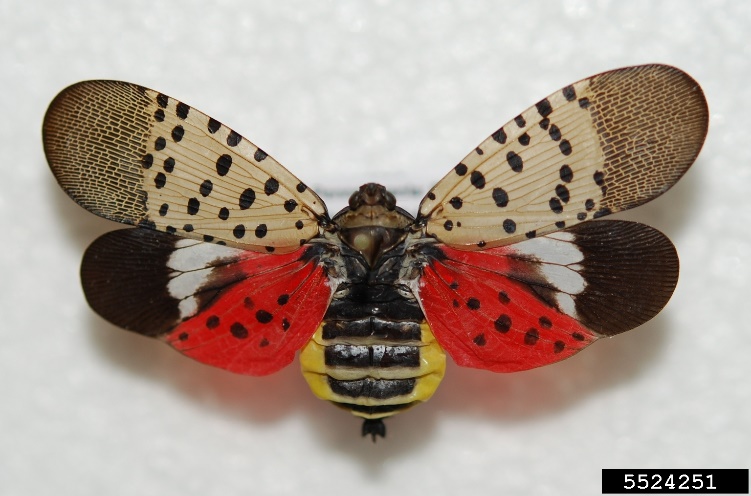
Scott said the emerging species in the region are insect pests, such as the spotted lanternfly – a new species of concern. She lumped this pest in with the brown marmorated stink bug, both of which love their host, the tree of heaven. She added that both of these pests gravitate towards fruit trees and grapes, hence they can invade vineyards and cause problems.
Scott reported the Society targeted 29 invasive species last year and conducted 964 chemical treatments over 25 hectares. They also carried out 278 mechanical treatments over eight hectares.
“I’m excited to say there were 281 sites surveyed with no (invasive) plants found,” she said.
The executive director reported they logged 70 person hours treating Scotch thistle in Garnet Park in Heritage Hills where 100 kilograms of weeds were removed – a 93 per cent decrease (of the weed) from 2020.
“We’re pretty excited with what we’re seeing in this park,” she said.
Scott said the Society formed a new partnership with the District of Summerland with the target being the hoary alyssum. The fee-for-service project covered 95 sites (8.3 hectares).
She noted this invasive plant on roadsides can infiltrate pastures and hay fields, posing a hazard to horses by causing a toxic reaction that can lead to death.
“It’s on the move,” Scott said, noting it has been found in 95 locations. She said the Society is encouraging roadside mowing and manual/chemical treatment. It is also going door-to-door to encourage treatment on private lands.
Scott highlighted their engagement with First Nations communities. For example, they collaborated with an ecological knowledge keeper in the White Lake basin area.
Scott reiterated their work on high priority treatment areas through door-to-door contact with residents.
The Society is assisting private landowners with required action on species such as the hoary alyssum, a problem in Princeton, and blueweed that is sneaking its way into Area C along Green Lake Road.
Scott pointed out they are having success with organic growers in Cawston where puncturevine is a problem. She noted this invasive plant is also a challenge in the Black Sage Road area in Oliver.
Scott pointed to their success through digital outreach with enhanced videos and information. For example, one posting of a boy who suffered facial blisters via contact with myrtle spurge went viral.
The Society is entering its 26th year of operation.
“We’re still battling a war with our invasive plants, and I’m really proud where we’ve come over the last 25 years.”
During question period, Scott was asked what people should do if they come across the stink bug. She noted that downtown Kelowna is the hotspot for this invasive pest, but fortunately the bug is not considered established in the Okanagan yet. However, sightings should be reported.
Scott said it’s important to take a photo of the insect and collect a sample of it in a vial or plastic bag.
People can report sightings to Scott at [email protected]