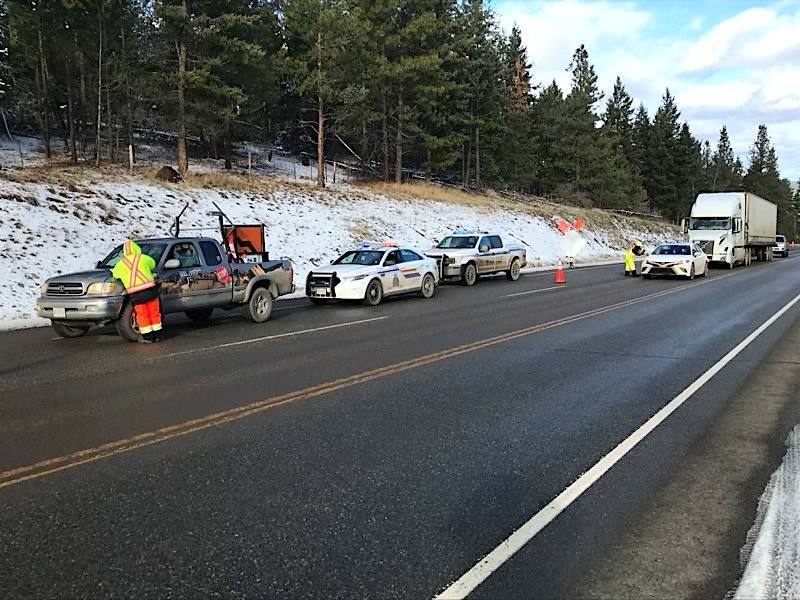
The interior is now reconnected to the Lower Mainland through the gradual restoration of routes with Hwy 1 being the latest to partially reopen on Saturday, Nov. 20.
The reopening of highways impacted by the extreme weather event is limited to essential travel only with roadblocks to monitor the situation.
Hwy 1 is now open to a single lane of traffic in each direction between Hope and Highway 9 east of Chilliwack, according to the latest update today (Nov. 20) from B.C.’s Ministry of Transportation and Infrastructure. The road remains closed however from Abbotsford to Chilliwack.
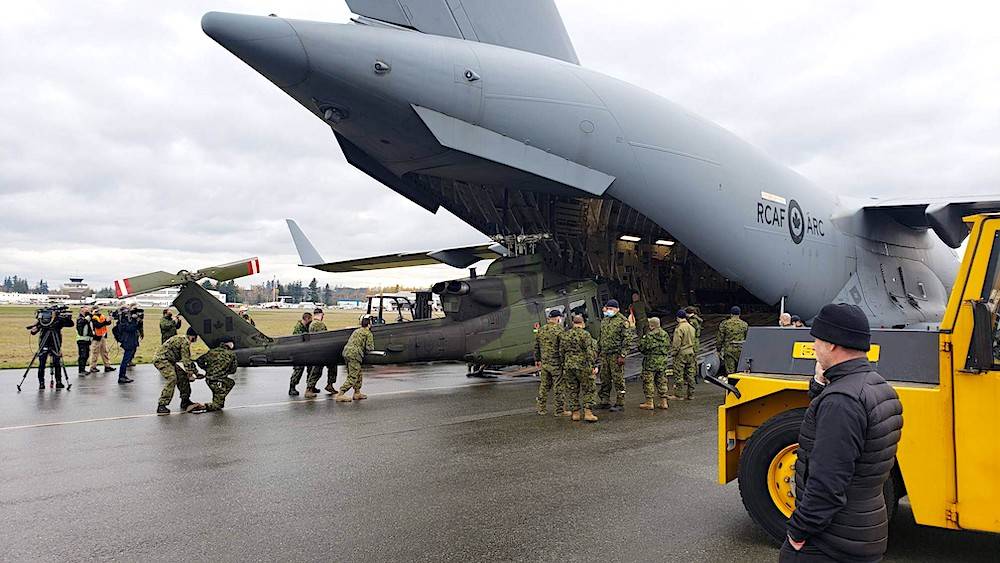
An RCAF_ARC CC-177 is unloaded in the Fraser Valley after transporting three CH-146 from 430 Sqn, QC to aid in recovery efforts.
In a statement, the ministry said its highway maintenance contractor will continue to remove debris and repair road surfaces to restore the highway to normal condition.
Drivers should expect delays and be prepared for construction conditions and reduced speed limits, it said.
“While this section of Highway 1 through the Bridal Falls and Popkum areas does not fall under the Province’s Travel Restrictions Order, drivers are asked to limit travel to essential purposes only while cleanup and repairs continue”, it said.
Meanwhile, Highway 3 between Hope and Princeton was re-opened Friday as was Hwy. 7 west of Hope. “This will re-establish a vital link allowing for the movement of essential goods and services to and from the Lower Mainland,” Transportation Minister Rob Fleming said during a press conference.
On Hwy 3, two sections of the Crowsnest Highway that had been closed including a section between Princeton and Keremeos – between Taylor Mill Road and Old Hedley Road – is now reopened allowing trucks to access Princeton.
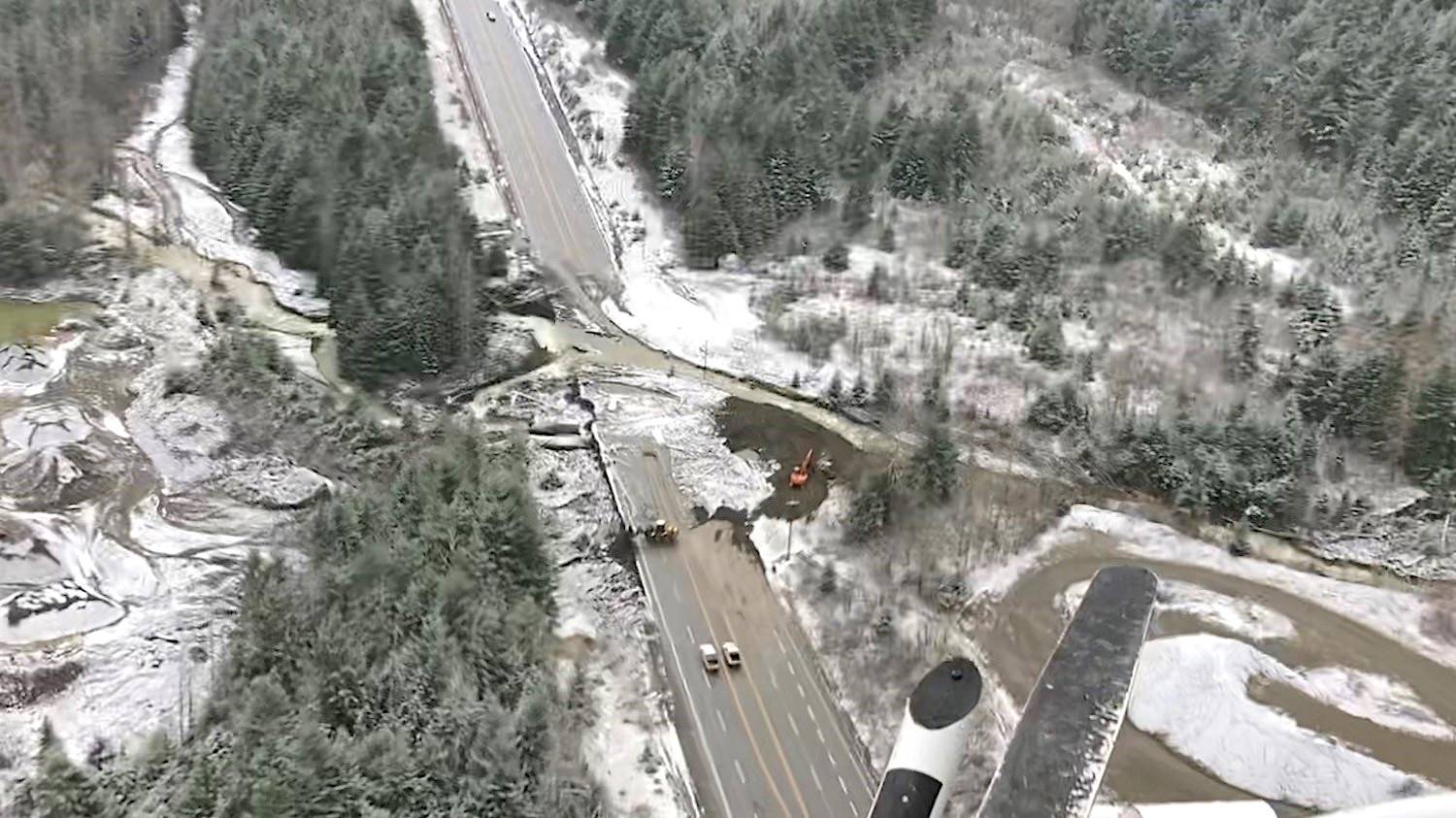
Hwy 3 between Hope Slide and Sunshine Valley from earlier this week. BC Transport photo.
A larger incident saw mudslides damage 37 km of road east of Hope between Sunshine Valley and Allison Pass Summit for (17 to 54 km east of Hope). This partially reopened on Friday as was Hwy. 7 west of Hope enabling many of the 1,200 people trapped in the town since Monday to return home.
Hwy. 3 is now open one lane in each direction with three areas of single lane alternating traffic, again for essential travel only and RCMP checkpoints have been set up along the route.
Under the government’s definition of essential travel, these highways are open for commercial transport trucks, refrigerated trucks, grocery deliveries, mail and courier vehicles, road repair crews, and emergency vehicles. People who’ve been cut off from their principal residence can use the highways to get home, according to Fleming.
In the latest update from a news conference Saturday, Flemming said that crews are still working to repair Hwy. 99 between Pemberton and Lillooet, but that as of 12 p.m., it was safe enough for passenger vehicles on essential travel only.
“We are able, while that work is continuing, to open that highway now,” Fleming said. The route has been opened to two lanes, and maintenance contractors will patrol it, he said, but “because of the terrain, nothing larger than a cube truck will be allowed on the highway at this time.”
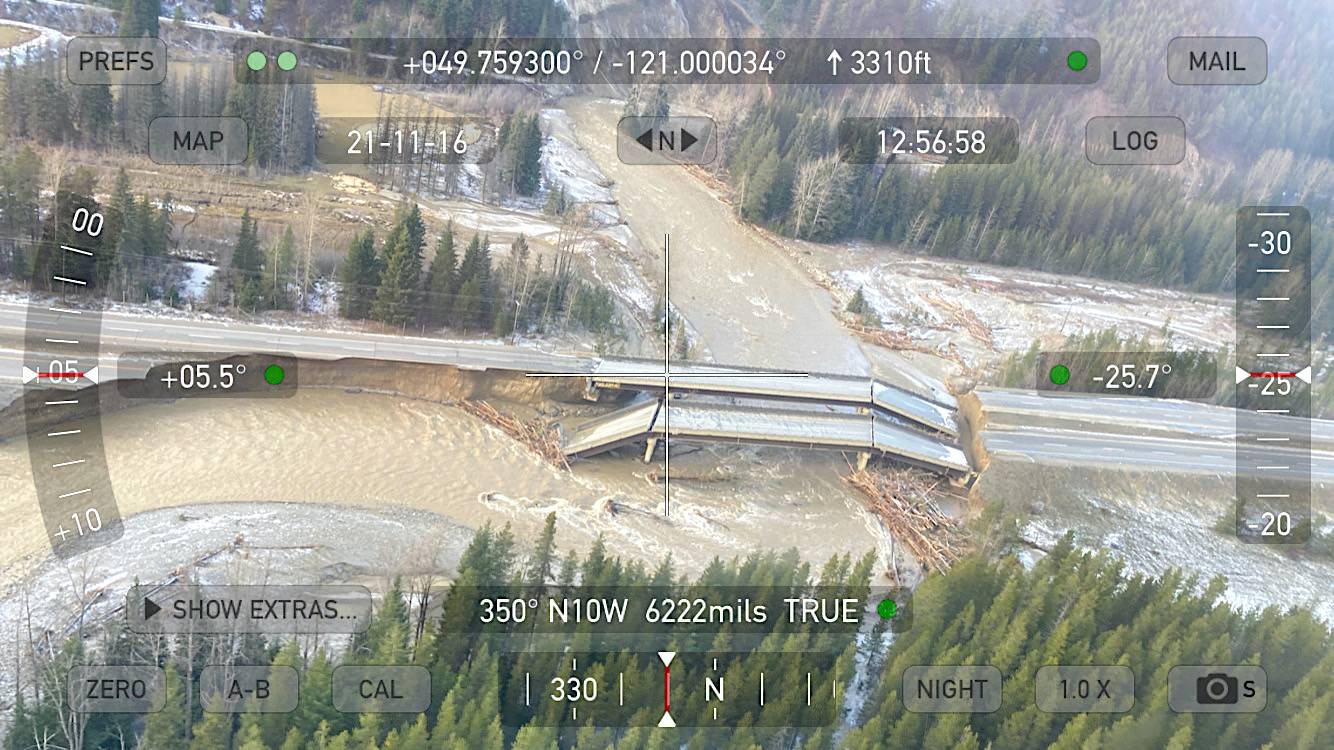
The Coquihalla Hwy 5, is not expected to be fully operational for months. The province is understood to already have begun sourcing temporary Bailey Bridges across North America. BC Transport photo.
Weight restrictions are in place on this route from just north of Pemberton through to the community of Lillooet. The route is a “steep mountainous road with narrow sections and sharp curves. High volumes of commercial vehicles cannot be safely accommodated.”
Regular passenger vehicles such as cars, SUVs, vans and trucks under gross vehicle weight of 14,500 kilograms are able to travel on this corridor. Vehicles over the weight restriction are directed to use Hwy 3, which opened to essential travel on Friday, Nov. 19.
Highway 1 (the Trans-Canada) and Highway 5 (the Coquihalla) remain closed with serious damage and there is no forecast re-opening date. The province has confirmed it will take months to repair the heavily trafficked route connecting the Lower Mainland to the Central Interior.
Fleming has said five areas of concern have been identified on the Coquihalla and there is no timeline for when temporary repairs might be completed.
Highway 8 experienced the most significant damage with large portions of the highway obliterated. Crews are continuing to assess the situation there.
Travel Restrictions
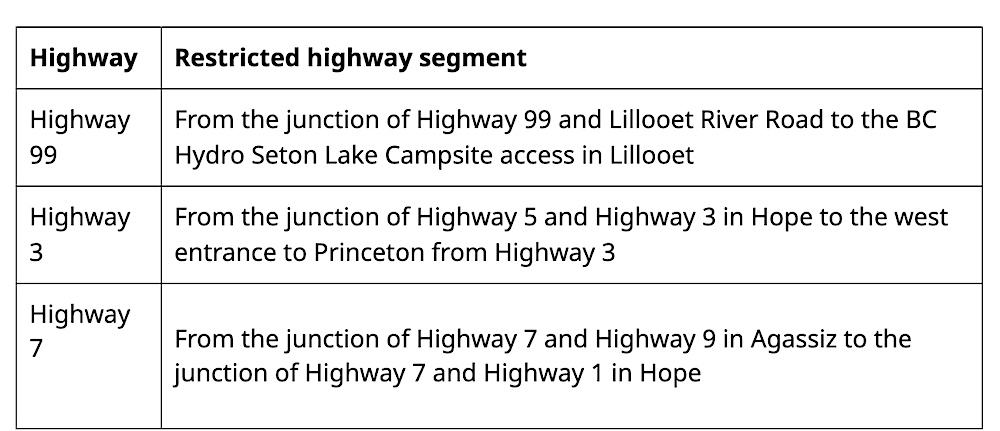
According to the provincial government, essential travel reasons include:
- Transporting essential goods and supplies, for example:
- Food, water and other beverages
- Fuel and gasoline
- Health care goods, pharmaceuticals and medical supplies
- Personal hygiene, sanitation and cleaning goods
- Transporting livestock, agricultural or seafood products and supplies
- Livestock producers returning to a farm to provide care for animals
Responding to emergencies, including search and rescue operations - Evacuations for medical reasons and urgent medical treatment
- Transporting essential personnel
Highway repair and maintenance - Commercially transporting goods
Returning to your principal residence - Assisting vulnerable or at-risk people
- Exercising an Aboriginal or treaty right as recognized and affirmed by section 35 of the Constitution Act, 1982.
Fuel restrictions
Meanwhile, fuel restrictions are in place in the affected areas restricting purchases to maximum 30 litres per fill-up. B.C.’s fuel order is in place for the next 10 days, partly reflecting the amount of time the Trans Mountain Pipeline is expected to be offline because of the flooding.
The emergency order covers drivers in the Lower Mainland-to-Hope region, the Sea-to-Sky region, Sunshine Coast, the Gulf Islands and Vancouver Island, and will be in effect until Dec. 1. Essential vehicles including emergency responders, public transit, commercial transport vehicles, infrastructure repair vehicles and health-care transportation will not be limited.
“It’s 10 to 11 days that we have to pull together as a province. If we’re greedy, we’ll fail,” Farnworth said.
“When I made the announcement, I said I expect there will people who will not want to respect that. I also know this: The overwhelming majority of British Columbians will do the right thing and respect that 30-litre limit,” B.C.’s Public Safety Minister Mike Farnworth said.
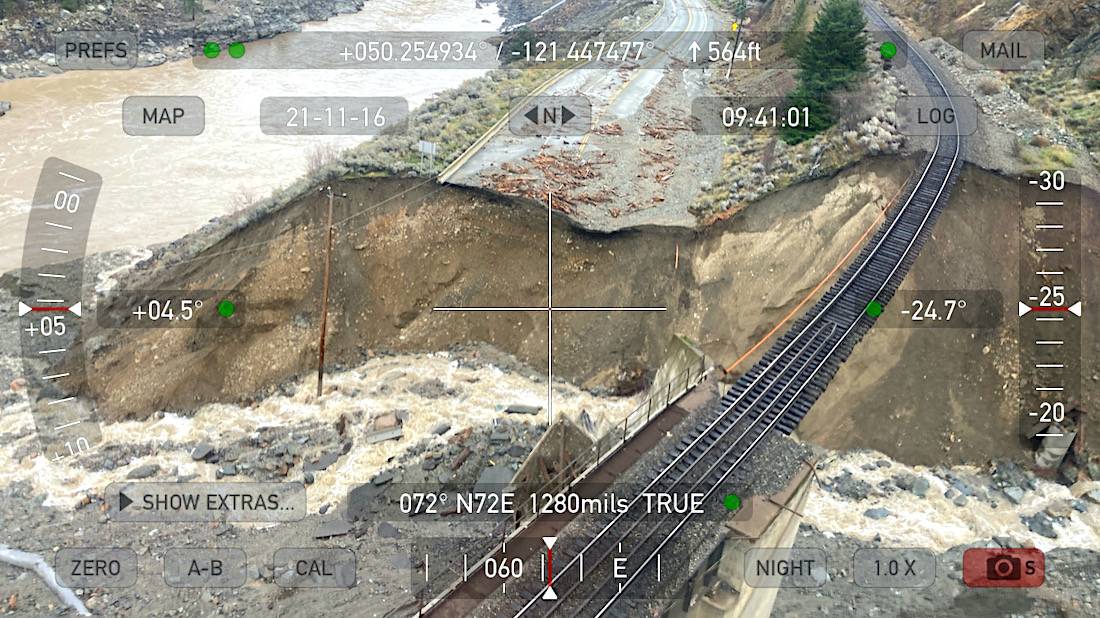
Hwy 1 between Lytton and Spences Bridge. BC Transportation photo.